


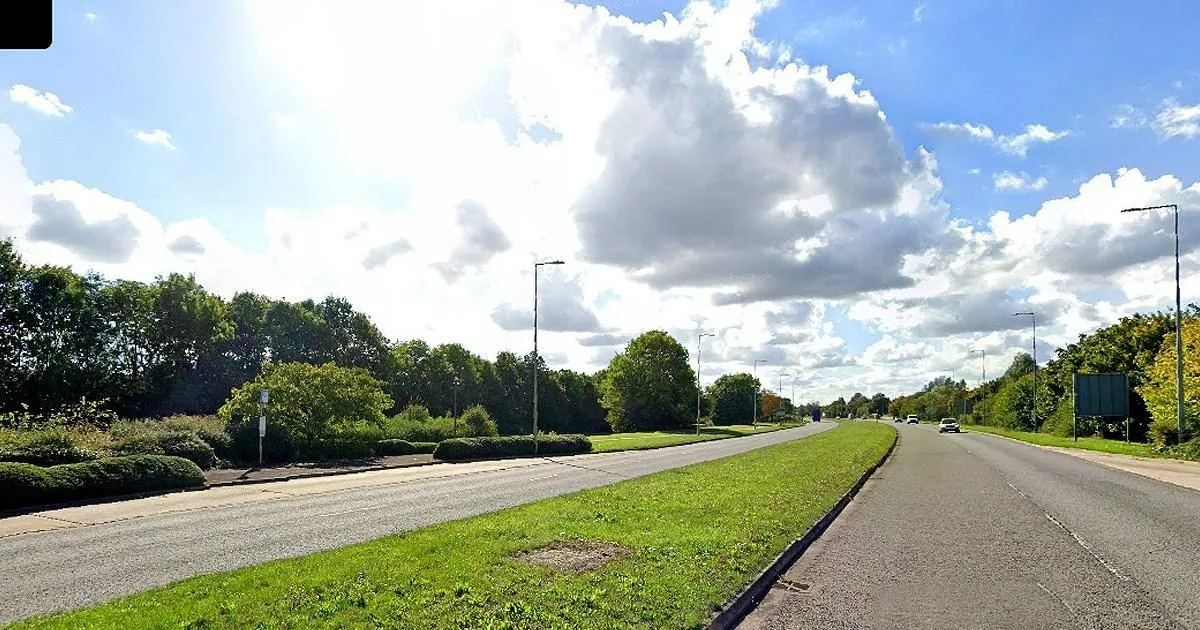
The tragic story unfolding at Aylesbury Crown Court is a harrowing reminder of how quickly a family’s life can be shattered by a single, irresponsible decision. Emmanuel Sakyi, 31, stands accused of causing the death of his seven-month-old daughter, Emmanuela, in a devastating collision that occurred on Bletcham Way in Milton Keynes. Prosecutors allege that on the evening of December 4, 2022, Sakyi climbed behind the wheel while significantly over the legal alcohol limit. What should have been a routine drive turned into a nightmare when the car, carrying his own child on her mother’s lap, collided head-on with an oncoming Fiat 500.
The details presented to the jury paint a picture of a driver who was dangerously oblivious to his surroundings. According to the prosecution, Sakyi drove for a considerable distance on the wrong side of the road, ignoring the desperate attempts of the other driver, Shannon Willison, to warn him. Despite Willison flashing her lights and sounding her horn, Sakyi allegedly continued on his path, leading to a collision that resulted in catastrophic internal injuries for baby Emmanuela. Tragically, the infant succumbed to blunt force abdominal trauma in the hospital during the early hours of the following morning, leaving a void that no legal outcome can ever truly fill.
Perhaps the most distressing aspect of the incident, as highlighted in court, is what happened in the immediate aftermath. Rather than staying to face the consequences or provide aid to his injured child, prosecutors claim that Sakyi fled the scene. Ms. Willison, who had attempted to swerve into the opposite lane to avoid the impact, testified that she saw a man—identified as Sakyi—exit the vehicle before “vanishing” into the night. It is a detail that feels particularly cold given that his daughter lay critically wounded in the wreckage. Left behind were the other passengers, who remained at the scene to face the intervention of emergency services and the devastating reality of the collision.
The investigation that followed revealed a pattern of deflection and evasiveness. When police finally caught up with Sakyi at his home in the early hours of the morning, they arrested him and took him to the hospital for assessment. During the medical intake, he allegedly attempted to shift the blame, telling staff that the collision occurred because the other car was on the wrong side of the road. When subjected to standard drink-driving testing, he denied consuming alcohol, claiming his only recent intake had been a meal from McDonald’s. However, back-calculations performed by forensic experts suggest he was operating the vehicle at twice the legal alcohol limit.
During the trial proceedings, the weight of the evidence began to emerge through the testimony of Shannon Willison. Her account of that night was chillingly clear; she described the feeling of inevitability as she watched Sakyi’s car barreling toward her, realizing that a crash was unavoidable despite her frantic attempts to steer clear. Her testimony underscores the sheer terror of that moment, a stark contrast to Sakyi’s choice to remain silent during his later police interviews. By refusing to answer questions under caution, and by his absence from the opening of his trial, the defendant has left many questions about the night unanswered, leaving the court to piece together the tragic sequence of events without his own voice.
As the trial continues, this case serves as a somber reflection on the irreversible nature of negligence. Whether the jury finds Sakyi guilty of causing death by dangerous driving or the alternative charge of causing death by careless driving whilst unfit through drink, the verdict will do little to mitigate the trauma felt by those affected. A seven-month-old life was cut short before it had truly begun, lost to a combination of intoxication and a complete abandonment of parental and civic duty. It is a profoundly sad narrative that underscores the absolute necessity of responsibility every time a person turns an ignition key, reminding us all that human error, when fueled by alcohol, is fundamentally incompatible with the safety of others.