



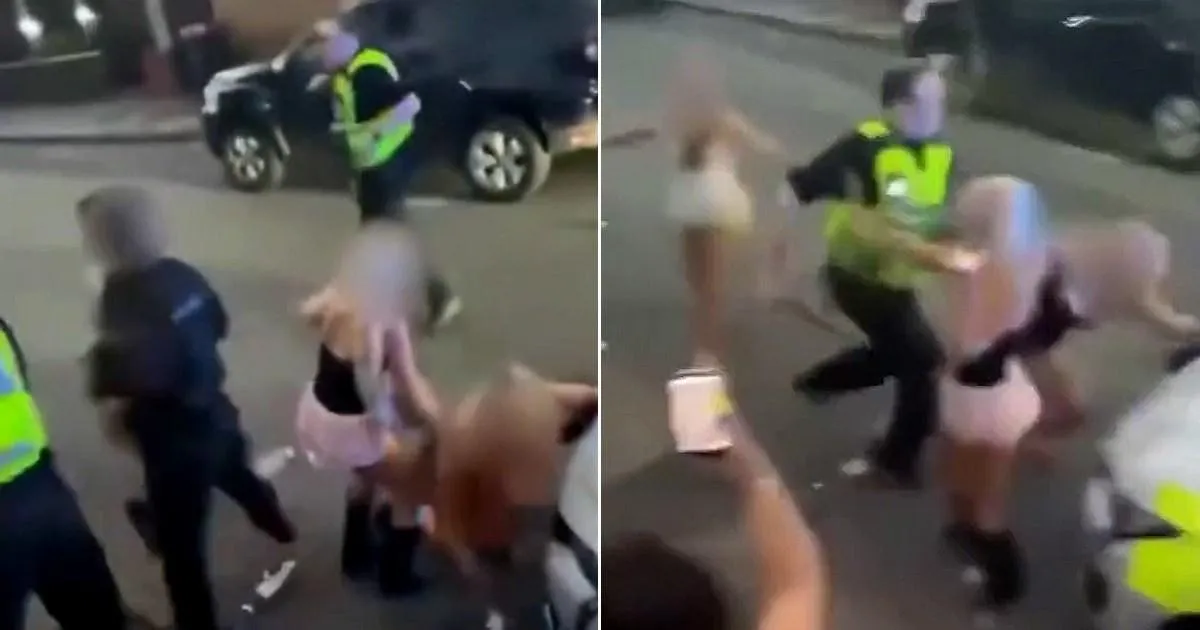
The recent viral footage capturing a physical confrontation between South Yorkshire Police officers and a group of teenage girls in Rawmarsh, Rotherham, has ignited a firestorm of public debate. The videos, widely circulated across social media, show officers surrounded by young women dressed in party attire before the situation spiraled into a chaotic scene. Viewers witnessed officers shoving teenagers, drawing batons, and ultimately pointing Tasers at the girls, many of whom ended up on the ground during the struggle. For many observers, the images were startling, raising immediate questions about the level of force deemed acceptable when dealing with young people in a social setting.
In response to the growing public outcry, the South Yorkshire Police launched an internal investigation to determine whether the conduct of their officers was appropriate. After reviewing the incident—which notably included the footage from the officers’ own body-worn cameras—the department issued a statement confirming that they believe the use of force was “proportionate, necessary and justified” under the circumstances. The force maintained that while the optics of the situation were admittedly difficult for the public to process, the officers on the scene were acting within the scope of their duty to manage a volatile and escalating environment.
The police were quick to point out the inherent dangers of judging such an event solely through the lens of a brief, isolated social media clip. They emphasized that the viral video represents only a few seconds of what was a much more complex and prolonged police response to a 999 call reporting a large fight. By providing this context, the authorities argued that the video lacks the nuance of the moments leading up to the confrontation—moments that, in their view, necessitated the intervention that occurred. They acknowledged that, when viewed in isolation, the visceral nature of the footage understandably leaves the community concerned about the balance of power between police and the public.
To address these concerns and maintain transparency, the South Yorkshire Police took the unusual step of seeking an external perspective. Recognizing that public trust is the cornerstone of effective policing, they requested a peer review from an independent police force, even though the incident did not strictly meet the national criteria for such an assessment. This move was clearly designed to provide a layer of accountability beyond the department’s internal hierarchy. Ultimately, the external reviewers upheld the initial findings, supporting the original determination that the officers’ actions were legally and operationally sound.
Despite this validation, the department did concede that the situation was not flawless. In their official communication, they noted that there was an “opportunity for learning around de-escalation.” This admission reflects a broader ongoing conversation in modern policing: how to safely neutralize threats or manage unruly crowds without resorting to force that can appear aggressive to the average bystander. While the legal findings offered the officers a sense of vindication, the force’s acknowledgement of a need for refined technique highlights the high standard to which the public expects officers to be held, especially when the subjects involved are young.
Ultimately, this incident serves as a poignant reminder of the tension that exists between the complex realities of emergency response and the digital age’s demand for instant visual justice. Policing continues to be an incredibly difficult and often fast-moving profession where split-second decisions carry life-altering consequences. While the authorities have closed their formal review of this incident, the broader dialogue regarding police conduct, youth interactions, and the influence of social media narratives remains very much open, reflecting a community still wrestling with how best to reconcile police power with the need for public trust and compassionate intervention.