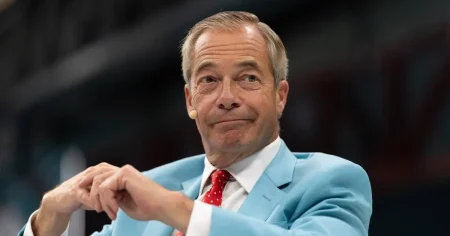



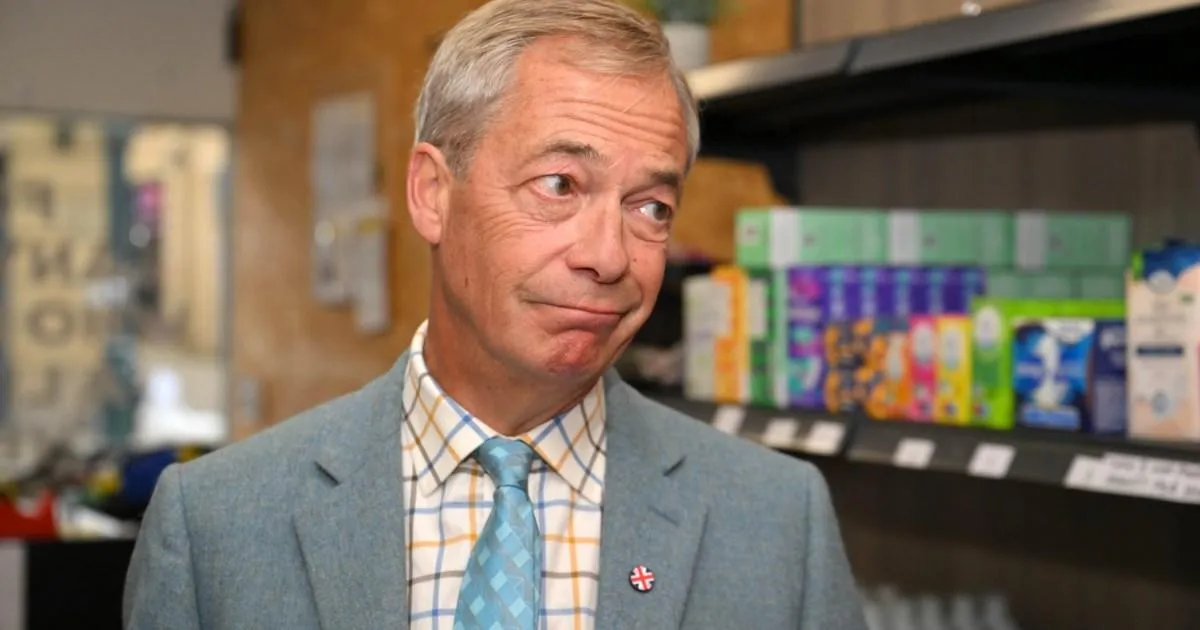
Nigel Farage has announced that a Reform government would effectively pull the United Kingdom out of the asylum system for five years. During a visit to Hyndburn in Lancashire, the Reform leader said that if his party wins the next election, it will suspend the entire asylum process for a full parliamentary term. Existing applications would be declared void, all asylum tribunals would be scrapped, and the legal refugee routes and resettlement schemes that currently provide a lifeline to some of the world’s most vulnerable people would be closed. The roughly 90,000 outstanding asylum and humanitarian protection appeals waiting to be heard would not be processed; instead, the claimants would be deported. It is worth pausing on what the phrase “suspend the asylum system” actually means in practice. It would not just mean fewer people arriving, or longer queues, or tougher decisions. It would mean a complete shutdown of the legal machinery that is supposed to protect people fleeing war, torture and persecution. There would be no credible fear screening, no independent tribunal, no right to put a case before a judge. In human terms, picture a woman who fled Syria, spent years in a refugee camp, and finally reached Britain only to be told her case no longer exists. Picture a child who has grown up in British schools, who barely remembers the country they were born in, suddenly facing removal to a place they have never known. Farage’s justification is that the country faces a “national security emergency” and that the first duty of government is to protect its citizens. He argues that Britain cannot accept more asylum seekers while the government has “no idea how many people are in the country illegally” or what threat they pose. For his supporters, this is the tough, decisive action they have been waiting for. For refugees and asylum seekers, it would mark the end of any hope of a fair hearing. It is also a fundamental break with the post-war consensus that a country should not send people back to danger without at least looking at the evidence.
The plans go much further than simply freezing new claims. A Reform government would impose visa bans on several countries that already have large diasporas in the UK, including Pakistan, Somalia, Eritrea, Syria, Afghanistan and Sudan. That would mean not only that refugees from those countries could no longer seek safety in Britain, but that ordinary people — students, business travellers, family members visiting relatives — would be blocked from entering the UK altogether. The choice of countries is not accidental. Each of them has been marked by severe conflict, state collapse, or political violence; each has produced displaced populations and diaspora communities around the world. The party frames their presence in large numbers as a problem, not as a sign of how migration connects Britain to the wider world. The party has also promised to immediately close the resettlement schemes that Home Secretary Shabana Mahmood recently indicated would reopen. Under those schemes, around a quarter of the people expected to be admitted were Palestinians fleeing Gaza and women and girls from Afghanistan seeking safety from Taliban rule. Reform says there is “no mandate” for such programmes and that anyone who arrived through them would be deported. Even people who have already been granted asylum in the last five years would have their cases reopened and reviewed by the Home Office. That creates a terrifying sense of impermanence for people who thought they had finally found a safe home. A family that fled Afghanistan in the chaos of 2021, who have built a life in a terraced house in Bolton or Bradford, could suddenly be told that their refugee status is under review. A Somali nurse who has spent years working for the NHS could lose everything. The language of “deterrence” and “control” begins to sound very different when it is applied to a neighbour, a classmate, or a colleague. Behind every visa statistic there is a person with a name, a face, a history — and the loom now hanging over them is an anonymous policy promise made at a campaign stop.
Farage’s announcement did not happen in a vacuum. It follows earlier proposals to impose “visa freezes” on countries that refuse to accept deportees, and to use sanctions, tariffs and airline bans to pressure countries with significant trade relationships with the UK. In other words, the plan is not simply to stop asylum claims at the border; it is to use the entire machinery of the state, including economic and diplomatic tools, to force other countries to take back citizens Britain no longer wants. The party is positioning itself as the toughest voice in British politics, saying that a Reform government will “always put British people first and protect our borders”. But the timing is also political. Farage recently said Reform was on an “emergency footing” and predicted a snap election in months. The party has faced a series of scandals, including police investigations, and now faces a growing challenge from Restore, a rival party that appears to be pulling votes from the same right-wing base. Some observers will see the asylum announcement as an attempt to stop that drift and regain the initiative. That is normal political calculation, but it is worth remembering that the people affected are not pawns in a Westminster game. For an Eritrean man who escaped compulsory military service, or a Sudanese mother fleeing ethnic violence, the difference between a political party’s messaging strategy and a concrete policy is the difference between life and death. They cannot simply board a flight back home because a politician in Lancashire wants to look strong. Yet under these proposals, their legal right to remain would be erased, and they would be expected to leave. The policy might win headlines and rally a core vote, but the human consequences would be borne not by the politicians who made the speeches, but by ordinary people already living in fear.
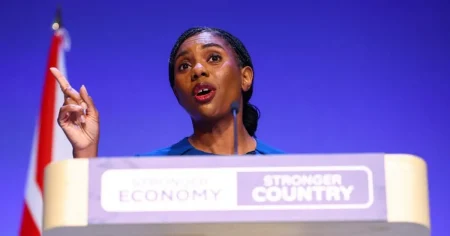
Labour was scathing in its response. The party called the plans “a clear sign of desperation and weakness”, and chairwoman Bridget Phillipson accused Farage of “casting around for more and more extreme policies” in an attempt to distract from scandals, police investigations and the challenge from Restore. She described the asylum policy as a “carbon copy” of what another party was already offering, and said it was “running away from basic decency” by abandoning people who are escaping war and persecution. Phillipson added that the vast majority of British people would reject the policy as “an assault on our common values”. Her words were designed to frame Farage not as a strong leader, but as a panicked one. That may be a clever political attack, but it also points to something deeper. The argument is no longer only about numbers at the border; it is about national character. Do we define Britain as a country that offers safety to those who need it, or as a country that slams the door and refuses to review the cases of 90,000 people? Labour’s response suggests it believes compassion is still a winning political message. It also suggests that the party sees Farage as vulnerable, despite his poll ratings, and wants to tie him to some of the most contentious proposals in British political history. For a voter watching at home, the exchange can feel distant and procedural. But the question is not merely who wins the next election. It is what happens to a family in Glasgow whose asylum case has been pending for years, or to an Afghan woman in London who thought she had finally found safety. Their futures would be decided by this argument.
Perhaps the most revealing response came from the Conservative shadow home secretary, Chris Philp, who said Reform’s proposals were not really new — they were mostly copying Tory policy. He pointed out that banning asylum claims by illegal immigrants, abolishing the immigration tribunal and ending Labour’s resettlement routes were all already Conservative policy. The Conservatives, Philp said, have their own detailed BORDERS plan, under which they would leave the European Convention on Human Rights, remove all illegal immigrants within a week of their arrival, and close the legal loopholes around modern slavery claims and judicial review. This is a striking moment in British politics. The centre-right party is not disputing the severity of the policy; it is arguing that it thought of it first and would implement it better. For a refugee, the distinction between a Conservative plan and a Reform plan is meaningless. If both major parties on the right are competing to see who can be harder on asylum seekers, the practical outcome is the same: fewer people allowed to stay, more people removed, and a legal system stripped of its ability to protect the vulnerable. Voters who care about refugee protection may be forgiven for feeling that the whole immigration debate has turned into a bidding war, with human lives used as currency. The Conservatives’ response also highlights how far the political ground has shifted. A generation ago, the idea of abolishing the asylum tribunal and withdrawing from the European Convention on Human Rights would have been considered an extreme fringe position. Now it is mainstream enough for opposition parties to trade claims of “we said it first”. What is lost in that scrap is any serious conversation about why people flee, what Britain owes them under international law, and whether a society that prides itself on fairness can honestly deport 90,000 people without looking at their cases.
At its core, this policy raises questions that no soundbite can answer. What happens to the 90,000 people whose cases would be thrown out? Are they deported to countries from which they fled? What if they are stateless? What about children who have grown up in Britain and know no other home? What about people who have been here for years, who pay taxes, who contribute to communities? The plan to review everyone granted asylum in the past five years would place an enormous burden on the Home Office and would create a climate of fear among people who believed their ordeal was over. It would also almost certainly face legal challenges and diplomatic confrontations, since many of the countries targeted by visa bans and sanctions would refuse to cooperate. The word “mandate” is also slippery. Reform says there is no mandate for resettlement schemes, yet no one in a general election is asked to vote specifically on abandoning refugees. The idea that a manifesto pledge gives a government the moral authority to deport a family to a country where they could be imprisoned or killed is more complicated than the slogan suggests. Behind every statistic is a human story: a doctor who escaped the Taliban after treating women against their rules, a gay man who fled Iraq where his sexuality would get him killed, a family from Sudan who left after their village was burned. To suspend the asylum system is to tell these people that their suffering does not count. Farage says he wants to put British people first, but the policy also asks what kind of Britain we want to be. We can have secure borders and still be humane. We can manage immigration and still treat asylum seekers with dignity. The danger is that in chasing headlines and winning bids to be the toughest party, politicians forget that the people arriving on these shores are not abstractions. They are human beings, and how we treat them says more about us than it does about them.