
The night was supposed to be a triumph. Zack Polanski had spent months telling anyone who would listen that Holborn and St Pancras was exactly the kind of seat the Green Party could win: a diverse, densely populated corner of north London filled with young voters, renters, and people who cared passionately about the climate, public services, and social justice. As the count unfolded in the early hours, the excitement in the Green camp was palpable. Volunteers had flooded in from across the country, and Polanski himself had campaigned with a kind of tireless optimism, knocking on doors, shaking hands in markets, and promising a new kind of politics if he were sent to Westminster. But when the final numbers were read out, the mood shifted. Labour’s Sagal Abdi-Wali had taken the seat with 12,292 votes, while Polanski, the Green Party leader, had secured 8,928. It was not the landslide defeat some might have expected in one of Labour’s safest seats, and the Greens could point to a massive swing in their favour, but it was still a loss. Polanski would not be becoming an MP, at least not this time. The dream, so carefully nurtured and so passionately pursued, had come just short, and the disappointment was written across the faces of his supporters as they tried to find comfort in the numbers.
To understand the weight of that disappointment, you have to remember what this constituency meant. Holborn and St Pancras had been Keir Starmer’s seat for a decade, ever since 2015, and he had carried it with a majority of more than 11,000 votes at the last general election. When Starmer resigned from the Commons last month, it triggered a by-election that was never going to be ordinary. Every political observer knew this was a test not just of Labour’s hold on its heartland, but of the new prime minister, Andy Burnham, and his appeal in a capital city where Labour’s support had been cracking. In May’s local elections, Labour had lost control of ten councils across London, a devastating sign that the party’s coalition of urban voters was fracturing. Camden, which covers much of the constituency, had stayed in Labour hands, but even that victory had felt less secure than before. For Polanski, the opportunity was obvious. He had singled out Holborn and St Pancras long before Starmer announced his departure, seeing it as a place where Green politics could finally break through. After his own election as party leader in October, membership had surged and polling numbers had jumped, and this seat seemed like the perfect stage for a political earthquake. The party hoped that in this corner of north London, with its leafy squares and busy high streets, its university students and young families, its mix of artists and activists, the Green message could resonate loudly enough to unseat Labour.
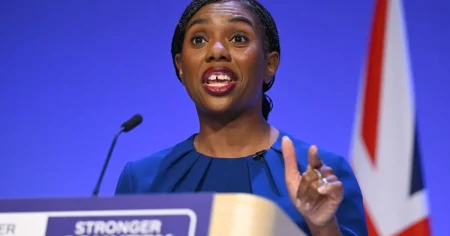
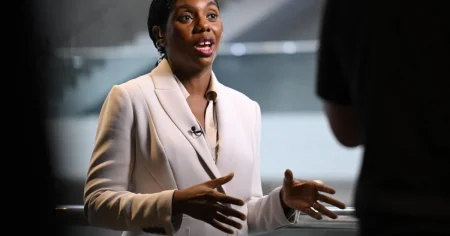
But the voters made a different choice, and their choice was embodied by Sagal Abdi-Wali. She had not been a familiar face on the national stage before this campaign, but locally she was known and, by all accounts, respected. Since May, she had been the leader of Camden Council, a role that put her at the centre of some of the most difficult decisions a local authority can face, from housing shortages to social care pressures to the constant fight over funding. In that sense, her victory was not a rejection of change so much as a vote for a particular kind of continuity. The people of Holborn and St Pancras knew her work, had seen her at community meetings and local events, and when they weighed the idea of sending a Green troublemaker to Westminster against the reality of a Labour leader who was already running one of their public institutions, they chose the devil they knew. The result was not a rout for Labour. It was a hold, but a fragile one. The turnout was just 39 percent, strikingly lower than the recent by-elections in Clacton and Makerfield, and that low turnout tells its own story. Many voters simply did not feel inspired enough to come out, while those who did were largely loyalists. Abdi-Wali’s majority, at a little over three thousand votes, was far smaller than Starmer’s had been, and in that narrow margin was the evidence that the ground is shifting beneath Labour’s feet, even in the places where it feels safest.
For Polanski, the defeat came at a difficult time. In recent weeks, he had faced mounting pressure from within his own party and beyond it. The national polls that had once surged after his election had begun to fall, and the optimism of his early leadership was giving way to more anxious questions about whether the party was heading in the right direction. On top of that, there was the controversy over a parliamentary vote concerning Israel. Members had voted to oppose two amendments that Polanski himself had supported, in a decision that was framed around opposing the existence of an Israeli state. The debate had been bitter and divisive, exposing deep fractures in a party that often seemed to pride itself on unity. For Polanski, it meant that he headed into this by-election carrying not just the hopes of his activists but the weight of an internal crisis. Every question about Israel and Palestine threatened to overshadow his local message; every conversation about falling polls suggested he was leading a party that was already losing its moment. The loss in north London, then, was not simply a single political setback. It was a moment that could be used against him by opponents inside the Green Party who believed a new direction was needed. They would argue, perhaps unfairly, that the man who had promised to lead the Greens into the mainstream had failed to win one of the most targetable seats in the country. They would say that if he could not win here, where could he win? And they would use the defeat as proof that the party needs fresh faces, new energy, and a sharper strategy.
The Green Party’s official response was defiant, and it tried hard to present the night as a kind of moral victory. The concession came at around 2.30am, after the result had been confirmed and the scale of the experiment was clear. In the cold light of that hour, a spokesman stood before reporters and delivered a message that was equal parts resilience and ambition. The party, he said, was “here to stay and just getting started.” He pointed to the fact that the Green vote share had increased by 22 percent since the general election, a huge swing in one of Labour’s safest seats, and one that had happened during the honeymoon period for the new prime minister. He acknowledged the disappointment, but he rejected any suggestion that the result marked a return to business as usual. “Any ideas of a return to the cosy two-party system is just wishful thinking on the part of the establishment,” he said. There was something admirable in that defiance. Politics is a game of momentum, and the Greens had clearly moved forward, cutting Labour’s lead from more than eleven thousand votes to just over three thousand. In a different electoral system, with a higher turnout, with a few more weeks of campaigning, who knows what might have happened. But democracy is not a game of what-ifs, and the fact remains that the Greens did not win. They came close, and then they came no further. For the activists who had poured their hearts into the campaign, the phrase “here to stay” was a comfort, but it was also a reminder of how far they still have to go.
What does this by-election mean in the end? For Labour, and for Andy Burnham, it is a relief. The party may have lost control of ten councils in the capital, and it may be watching its majorities erode in one safe seat after another, but it can still win when it matters. Abdi-Wali will go to Westminster with a mandate, however small, and Labour will argue that the so-called progressive alliance is still not strong enough to loosen its grip on urban Britain. For the Greens, the result is more complicated. They can celebrate the swing, the increased vote share, the sense that they have become the true challenger in seats like this, but they must also face the reality that they have not yet learned how to close out a win. Polanski’s future is uncertain, and his opponents will not go quietly. The low turnout should worry everyone, because it suggests that the excitement of a by-election, with all its national media attention and local drama, did not translate into mass participation. It suggests that many voters are tired, apathetic, or simply disillusioned with the choices on offer. In the end, Holborn and St Pancras voted to stay with Labour, but it did so without passion, without energy, and with a much thinner margin than before. That is not the kind of victory that guarantees safety. It is the kind that leaves a party grateful for the win but uneasy about the future. And for Zack Polanski, standing in a crowded room at three in the morning, watching his political dream slip away by a few thousand votes, the future must feel very uncertain indeed. He is still the leader of his party, still a voice for a greener, fairer politics, but this night will stay with him, a reminder that hope is not the same as victory, and that in politics, the hardest gap to close is often the last one.