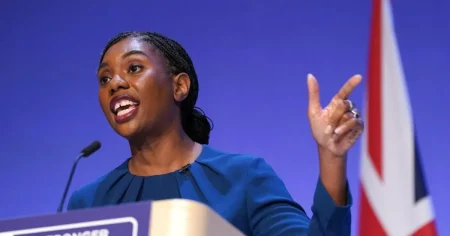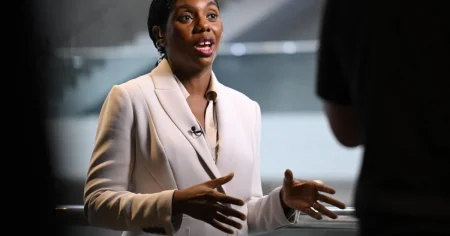



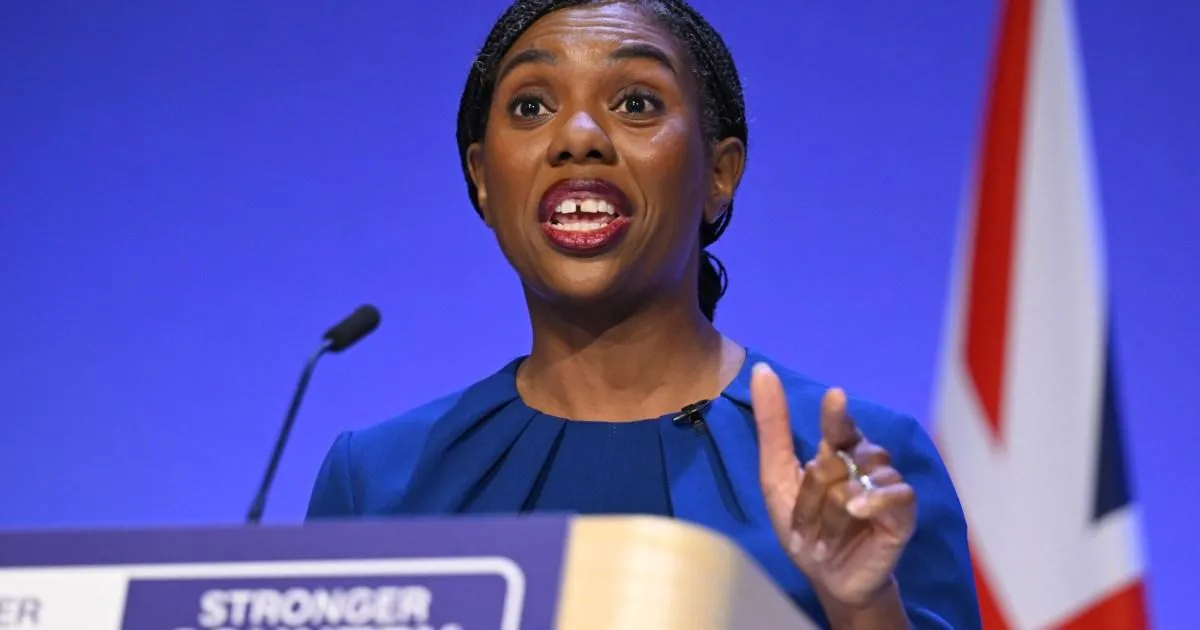
Kemi Badenoch walked onto the Conservative Party Conference stage with a promise designed to reach deep into the emotional core of British life: no one should have to pay inheritance tax on the family home. It was the kind of announcement that sounds simple, even sentimental, but in political terms it was deliberately explosive. She framed it as a matter of human instinct, not economics. Passing on your home to your family, she said, is one of the most natural things a person can do. She accused Labour of treating that instinct as selfish, and she positioned the Conservatives as the true party of home ownership and family continuity. The room erupted. Delegates rose, clapped, and cheered, not because they had scrutinized the costings, but because the message touched something deeply personal. It is hard to reduce a policy to a spreadsheet when it is about the house where you grew up, the street where your parents raised you, and the hope that everything they worked for might become yours someday. In that moment, Badenoch was not just announcing a tax cut. She was telling a story about what families owe each other, and what the state should be allowed to take from ordinary people who have spent their lives building something to leave behind.
The details of the policy mattered, even if they were delivered in broad strokes. Under the Conservative plan, couples would be allowed to pass on an extra one million pounds tax-free to their children, on top of existing allowances. That would effectively mean many family homes could avoid inheritance tax altogether. Badenoch admitted that her real ambition was to abolish inheritance tax entirely, but she could not quite commit to that dream right now because it would interfere with her other promises on spending. She insisted that every inheritance tax bill would be cut and that the number of families forced to pay it would fall by more than half. For supporters, this was a welcome recognition that ordinary families should not be punished for owning their own home in an era when property prices have gone far beyond the reach of most young people. A home is not just an asset; it is the physical embodiment of a lifetime of work, memory, and sacrifice. But critics were sharp and immediate. The Trades Union Conference responded with a stark warning: this was a party siding with inherited wealth, not with workers. The argument is familiar. Inheritance tax, in its current form, only touches a small minority of estates, and when it does, the burden often falls on families who have a house but not much liquid cash. To the left, the policy was a gift to the wealthy, dressed up in the language of family values. To the right, it was a long-overdue correction of a tax that felt like a punishment for success. Either way, Badenoch had succeeded in making a deeply technical issue feel intensely personal.
But inheritance tax was only the opening chord in a much larger speech about the state of Britain and the direction of the Conservative Party. Badenoch pledged to make more than seventy billion pounds in savings, with over thirty-five billion pounds going toward cutting the deficit. That is the kind of number that might make voters glaze over, so she quickly turned it into a moral argument. Welfare became her target. She accused the Labour government of being addicted to welfare, of spending too much while drowning the country in debt, and of failing to distinguish between people who genuinely need support and people who could work if they were given the right encouragement. She said it was morally wrong to tell people suffering from mild anxiety that they are disabled and cannot work. Those are not the words of an economist; they are the words of a cultural warrior. She is asking the public to think about fairness in a particular way: fairness to the taxpayer, fairness to the worker, and fairness to the person who might rise if the state stopped treating them as fragile. It was also a direct challenge to the kind of welfare system that many voters have come to distrust. There is an emotional pulse underneath the policy jargon. It speaks to the person who works long shifts and wonders why someone else gets paid to stay at home. It speaks to the small business owner who struggles to find staff and blames a benefits system that makes work feel optional. And it speaks to a deep-seated cultural anxiety about whether the state has become too soft, too big, and too willing to label ordinary struggles as disabilities. Whether the savings are realistic or humane is another question entirely. But as political theatre, it was effective.
The sharpest moment of the speech came when Badenoch turned her fire on Reform UK. She rejected the pressure to unite the right with a bluntness that surprised many in the room. There has been growing chatter in British politics about whether the Conservatives and Reform should merge, share candidates, or at least stop attacking each other. Badenoch dismissed all of that in a few sentences. She said she did not want to live in a country run by people who threaten journalists, call veterans traitors, or debate whether her mixed-race children are English. She painted Reform as a force that would take the country backwards. Then she made it deeply personal, describing what it would feel like to watch an England match with her son and try to explain why some people do not think black players are English. The line was calculated to draw a sharp line between the Conservative Party and the populist right. It was also a reminder that identity politics cuts both ways. For Badenoch, the question of who belongs is not abstract; it is written into her own family. She used her biography as a shield and a sword, declaring that Reform MPs are not like us, that the Conservative Party stands for a different kind of country. Nigel Farage was quick to respond on social media, saying that the speech confirmed what we already knew: she has no vision for the country. But Badenoch did not seem to care. She was not trying to win over Reform voters in that moment. She was trying to define her own party against the forces she believes threaten its soul. It was a gamble. Uniting the right might be the path to power for some Conservatives, but Badenoch was betting that doubling down on a more inclusive, tolerant, and traditional kind of patriotism is what the country actually wants.
Then came the spending promise that seemed to cut against the frugal mood. Badenoch announced that a future Conservative government would invest ten billion pounds over ten years in a new Britannia Shield defence system, designed to protect Britain from drones and missile attacks. It was a striking piece of imagery: a protective shield around the nation, built by a party that had just promised to slash government waste. The contradiction was obvious, but the politics were clever. Defence is one of those areas where many voters want their leaders to be strong and spend heavily, even if they distrust welfare spending or foreign aid. A shield is also a powerful metaphor. It suggests that the world is dangerous, that Britain needs to be ready, and that the state has a fundamental duty to protect its people from physical harm, not just economic hardship. The promise also created a dividing line with Labour, which is struggling to balance its own spending priorities. For Badenoch, the Britannia Shield was proof that Conservative cuts were not about making Britain weaker. They were about redirecting money toward the things that truly matter. It was a return to a very traditional Conservative positioning: fiscal discipline at home, strength abroad, and a nation that stands on its own feet. Whether such a system is feasible, whether the technology actually works, and whether the money would ever appear were questions left for another day. On the conference stage, the image was enough. It allowed her to tell the audience that the Conservative Party could be trusted with the nation’s security, even as it promised to shrink the state and cut taxes.
So what are we to make of all this? Badenoch’s speech was not really a policy launch in the normal sense. It was an attempt to reconstruct Conservative politics around a set of emotional loyalties: home, family, work, nation, security, and belonging. She wants voters to feel that the Conservative Party is on the side of normal people, the people who build something, hand it down to their children, and want the state to get out of the way. But the speech was also full of contradictions. It promised to cut inheritance tax for wealthy families while cutting benefits for vulnerable people. It promised billions of pounds for defence while promising to slash government spending. It attacked welfare dependency while telling a deeply individualistic story about success and failure. It rejected Reform UK’s brand of nationalism while insisting on a very particular vision of British identity. In human terms, the speech was an attempt to answer a simple question: in a confusing, anxious, and divided world, who is on your side? Badenoch’s answer was clear. The Conservatives are on the side of the family home, the person who works hard, the parent who wants to leave something behind, and the child who wants to feel that they truly belong. It is a powerful story, especially for voters who feel that politics has drifted away from their lives. But stories are not enough. The costings will be scrutinized, the welfare cuts will be challenged, and the defence plan will face questions. In the end, whether Badenoch’s vision wins over the country will depend not just on the elegance of her language, but on whether people can feel the change in their own lives. And that, perhaps, is the most human test of all.