

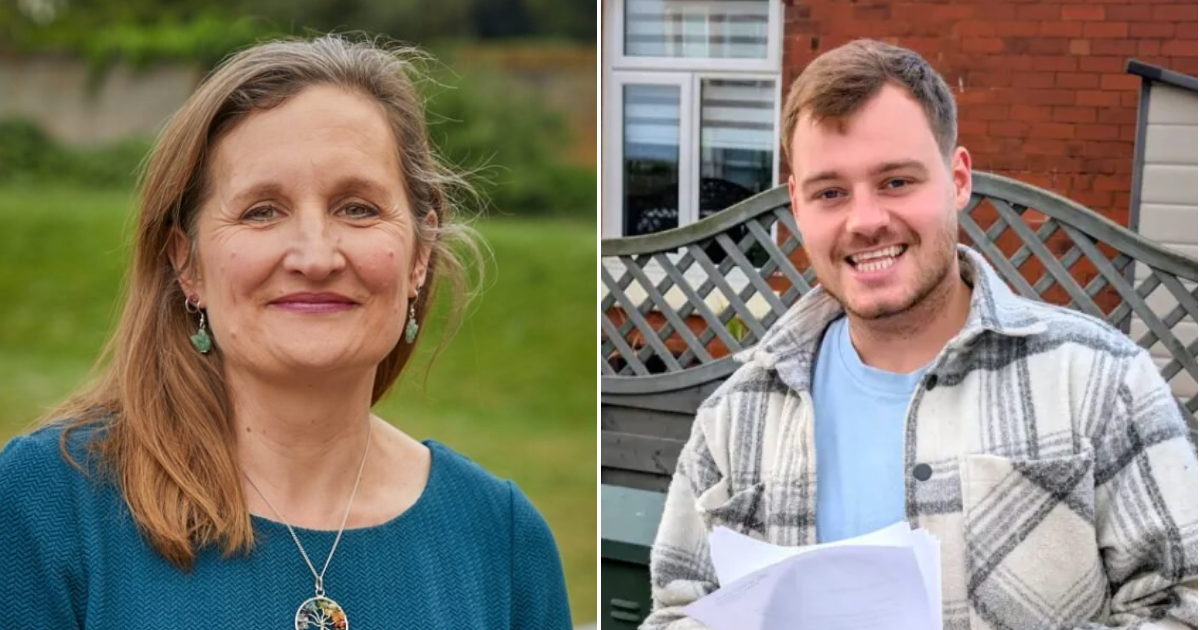
The Green Party’s annual conference was supposed to be a moment of triumph, a chance to celebrate a movement that had surged from a fringe concern to a formidable political force. Instead, for many inside the hall, it became a scene of anguish and rupture. When the delegates voted through the “Zionism is Racism” motion on that fateful Sunday, the air seemed to leave the room. For Andrée Frieze, a Jewish woman who had served eight years as a Green councillor in the London Borough of Richmond upon Thames, the decision was not an abstract political statement—it was a declaration that her party no longer considered her, or people like her, truly welcome. She watched as fellow Jewish members around her reacted with shock, some with tears, others with a quiet, resigned despair. The vote felt personal, visceral, and deeply alienating. Andrée, who had served as opposition leader for the Greens on Richmond Council, later told reporters that she simply “cannot be a party member” anymore. Her voice trembled not with anger alone, but with a profound sense of loss. This wasn’t a policy she could disagree with and move on; it was, in her words, a policy that “makes Jews unsafe in the party.” The conference, which should have been a showcase of progressive unity, had instead transformed into a stage for a bitter reckoning over identity, belonging, and the very soul of the party.
Andrée’s story is not a simple tale of political disillusionment; it is a deeply human one, rooted in a lifetime of civic engagement and a belief that the Green Party could be a home for people of all backgrounds. She is Jewish, and for her, the motion was not merely an attack on a foreign government’s policies, but a fundamental denial of the Jewish people’s right to self-determination. In her own words, “There are 53 Muslim majority nations and 120 Christian majority countries, but we are saying the Jewish people cannot have a nation. Jews should be allowed, like any other group, to self-define.” The pain was compounded by the fact that a “safeguarding” amendment—one that would have explicitly prevented the motion from being used to “pressure, proscribe, or discipline members based on affiliation with Jewish community institutions”—was voted down. For Andrée, that vote was the final straw. It told her, louder than any slogan, that the party was willing to sacrifice its Jewish members on the altar of ideological purity. She had already stepped down as a councillor in May, sensing the direction the party was taking. But now, she felt there was no way to stay and remain true to herself. “I do not want to stay and be hounded,” she said, her voice carrying the weight of someone who had given years of her life to a cause and now felt cast out. She didn’t blame the original Greens, the ones who had been there for years fighting for climate justice and social equality. Instead, she pointed to a troubling transformation: “Unfortunately the Green Party has been infiltrated by people who do not have the environment at their heart. They have made the Green Party about this one issue.” Her words reflect a broader anxiety within the party—a fear that the influx of new, single-issue members is pulling the Greens away from their foundational purpose and into a divisive culture war that leaves scars in its wake.
Kieran Dams’ experience offers another, equally human window into the fallout. At just twenty-three years old, Kieran is a current Green councillor in Sefton, Merseyside, and he had joined the party as a teenager in 2021, full of hope and idealism. He came to the conference expecting debates about climate policy, housing, and social justice. Instead, he witnessed a scene that would stay with him: grown adults, Jewish members of his own party, sitting in the conference hall with tears streaming down their faces after the vote was counted. “The party is going down a dark route which is going to be harmful for lots of Jewish people,” he said. “I was disgusted by what I saw at the party conference. This motion has unleashed the beast and that is not going to be easy to get it back in the cage.” For Kieran, the decision to leave was not about the motion itself, but about the message it sent to the people he had stood alongside in canvassing drives and community meetings. He saw friends, mentors, and colleagues in the Jewish community being told, in effect, that their heritage and their connections were suspect. He could not be part of that. He has now chosen to sit as an independent councillor, a lonely and difficult position for a young politician who once dreamed of rising through the Green ranks. But his disillusionment runs deeper than the vote itself. He believes the party has undergone a dramatic, unsettling change in its membership. When he first joined, the Greens were a relatively small, values-driven party with around 68,000 members. Today, after a massive spike in numbers, that figure has swelled to more than 200,000. While this growth might seem like a success, Kieran sees a darker side: “There has been an influx of members. A lot of these members do not hold beliefs which align with the party. People may be in for a rude awakening but that is not my problem anymore.” His words are tinged with sadness, not just for himself, but for the institution he once loved and the people it is now failing.
Not everyone who is horrified by the motion has chosen to walk away. Some, like the veteran human rights campaigner Peter Tatchell, believe the fight to reclaim the party must come from within. Peter’s reaction to the vote was one of deep personal hurt. “I’m heartbroken,” he said, his voice heavy with the weight of decades spent fighting for justice. “The Greens already have a strong policy condemning the dispossession of the Palestinian people by the Israeli state.” He acknowledged that the underlying intent of the motion—to highlight the suffering of Palestinians—was “commendable,” but he argued that the “careless, unwise wording” risks undoing years of hard work by progressives to build a credible, effective political party. He has already lost six friends who told him they are leaving the Greens over the motion, and he fears more departures are coming. Yet he is determined to stay and fight, not to defeat the motion entirely, but to amend it, to strip it of its harmful rhetoric, and to keep it out of the party’s election manifesto. His approach reflects a belief that the Green Party is too important to abandon, and that the values of environmentalism, social justice, and international solidarity are worth defending, even when the path forward is painful. Similarly, Vivien Lichtenstein, the chair of Jewish Greens, finds herself caught in a painful limbo. She has not yet decided whether to leave or remain, and she is planning to hold urgent talks with senior party members about the way forward. She insists, with a note of hope, that Jewish people are still welcome in the party, despite the vote. But her uncertainty is a telling sign of just how deep the wound has become. The fact that even the chair of a Jewish caucus within the party is questioning her own place shows that this is not a simple political disagreement—it is a crisis of belonging, a moment when people are forced to ask themselves whether the institution they have served is still worthy of their loyalty.
The backlash to the motion has not been confined to the party’s internal ranks; it has reverberated across the globe, drawing censure from international bodies and political allies. The European Green Party, the broader family of Green parties to which the British Greens belong, issued a stern statement demanding clarity from the party’s leadership on how they square the motion with the self-determination of Israelis and Jews and the protection of Jewish members. Israel itself took the unprecedented step of banning Zack Polanski, the Green Party leader, from entering the country, accusing the party of legitimising “the destruction of the State of Israel” with a “clear antisemitic text.” At home, nine Labour MPs referred the party to Sussex Police, asking for an investigation into whether “possible antisemitic offences” at the conference merit a criminal inquiry. Within the party, the opposition was just as fierce: four of the party’s five MPs opposed the policy, as did former leader Adrian Ramsay. The motion had been spearheaded by an internal pressure group called Greens for Palestine, but its passage has opened a chasm between the party’s elected representatives and its activist base. In the face of this mounting criticism, the Green Party has attempted to strike a conciliatory tone. A spokesperson said: “We remain committed to upholding our own Code of Conduct and our duties under the Equality Act, and to ensuring the Green Party continues to be a safe place for all members.” Zack Polanski, for his part, has insisted that no one will be excluded from the party “because of the religious or communal body they are part of,” and he has pledged to make sure everyone feels safe and welcome. Yet he also defended the broader direction of the party, citing the “atrocities carried out by the Israeli government in Gaza” and arguing that the Green Party’s stance has helped shift the UK government away from complicity with those acts. It is a delicate, almost impossible balancing act: trying to hold together a party that is tearing itself apart over a question of fundamental identity.
In the end, this story is about more than a single vote or a single political party. It is about what happens when passion for a cause crosses the line into exclusion, when words meant to condemn injustice are themselves experienced as acts of harm. The people who have left the Greens—Andrée Frieze, Kieran Dams, and the unnamed others who have quietly handed in their membership cards—are not simply statistics; they are individuals with histories, hopes, and deep attachments to the party they are leaving behind. They are mourning a loss, not celebrating a departure. The wider echoes of this controversy, from international rebukes to police complaints, suggest a party at a crossroads, uncertain whether it wants to be a broad, inclusive movement focused on climate and social justice, or a narrow, single-issue campaign group that sees the world through a single lens. For the Jewish members who remain, every meeting, every email, every doorstep conversation now carries an undercurrent of doubt: Are they truly welcome? For the councillors across the country who are torn between staying to fight and walking away in disgust, there is the painful calculus of whether their presence can do more good than their absence. And for the leadership, there is the challenge of rebuilding trust in an environment where trust has been shattered. The Green Party has grown rapidly, but growth without cohesion is a fragile thing. As the dust settles on this moment of rupture, one question remains: can a party that claims to stand for the environment, for peace, and for the dignity of all people find a way to heal the wounds it has inflicted on its own? The answer, for now, lies in the hands of those who still believe the Greens are worth saving, and in the memories of those who no longer feel they can call it home.