


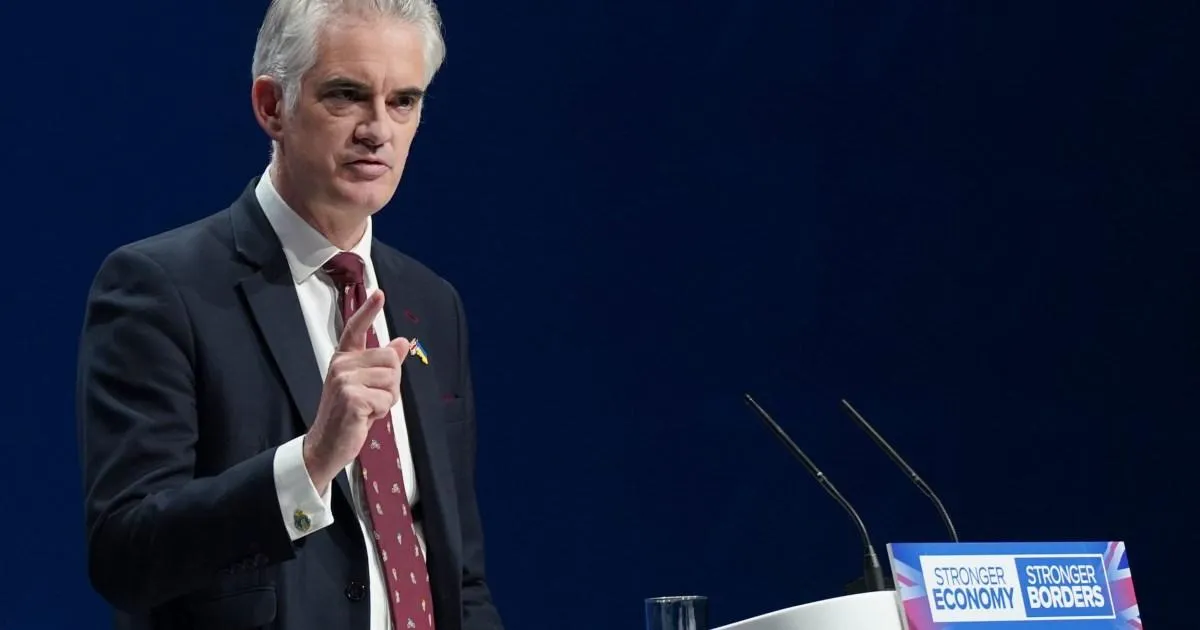
In a political season where every policy announcement feels carefully staged, the Conservative Party has chosen its annual conference in Birmingham to unveil something genuinely eye-catching: a homegrown British version of Israel’s Iron Dome. The headline promise, set to be made by shadow defence secretary James Cartlidge, is a system called the “Britannia Shield,” designed to protect the country from the kind of missile and drone threats that have become a defining feature of modern warfare. It sounds dramatic, futuristic, and reassuring all at once, but as with most political pledges, the devil is in the detail. The Tories are talking about investing up to £10 billion over a decade, installing advanced radar systems, and significantly increasing the UK’s stockpile of interceptor missiles. The plan is ambitious, but it comes with its own built-in caveat: during the party’s first term in office, if they were to win the next election, they would only deliver a “minimal deployable capability.” In other words, the full shield would be a work in progress, a promise of layers of protection that would be strengthened and expanded over time. It is the kind of announcement designed to grab headlines and project strength, but it also raises immediate questions about feasibility, cost, and whether this is a serious defence strategy or just a carefully crafted political slogan.
The comparison to Israel’s Iron Dome is impossible to miss, and the Conservatives themselves used that frame in their press release, describing the scheme as “in essence, a British Iron Dome.” Israel’s system is world-famous for intercepting rockets and missiles before they can hit populated areas, and it has proven itself in real-time conflict. But the UK is not Israel. It does not face the same relentless short-range rocket fire, and its geography and threat environment are completely different. Still, the basic idea of using radar, tracking systems, and interceptor missiles to shoot down incoming drones and missiles has obvious appeal. Drones have transformed conflict in Ukraine, and the threat of aerial attacks on critical infrastructure is no longer science fiction. The Conservative plan would focus on defending military bases and key national infrastructure rather than every square mile of British soil, which in itself is a significant distinction from the Israeli system. The phrase “Britannia Shield” suggests a protective umbrella over the whole nation, but the actual policy is more targeted and, perhaps, more realistic. That difference between the grand title and the modest initial ambition is where the political trouble begins, because critics are already sharpening their knives.
The Liberal Democrats were quick to pounce, using the classic political charge of “Truss-style fantasy economics” to describe the Conservatives’ pricing. Defence spokesperson James MacCleary didn’t hold back, arguing that £10 billion would not even begin to cover the cost of a truly nationwide Iron Dome. His comment about a “Patchwork Dome” was deliberately cutting, suggesting that the plan would leave some parts of the country protected while others were left exposed. This is a powerful line of attack, because it taps into a broader sense of distrust in Conservative economic management. After the turbulence of the mini-budget under Liz Truss, voters are wary of eye-catching numbers that don’t add up. The criticism is not just about the price tag, though. It is also about credibility. The Tories are in opposition, far behind in the polls, and trying to convince the public that they are ready to govern again. Every policy they announce is scrutinised not just on its merits but on whether it feels like a genuine blueprint or a desperate attempt to sound strong. Defence spending is normally an area where the Conservatives feel confident, but the Iron Dome comparison gives opponents an easy way to mock the plan as overblown and undercooked.
Kemi Badenoch, the Conservative leader, seemed keenly aware of the problem and moved quickly to distance herself from the language that had generated so much attention. In an interview with Times Radio, she was asked directly whether this was a British Iron Dome, and her answer was blunt: “No, not at all.” She stressed that James Cartlidge, as a former defence procurement minister, had been speaking to senior military figures and knew what he was talking about. Her message was clear: this is not a gimmick, it is a serious response to changing threats. She emphasised that the UK faces different types of dangers, including drones and missiles, and that the military must adapt accordingly. But crucially, she also clarified that the system would not be exactly like Israel’s Iron Dome, and pointed out that the Conservatives had never officially called it that. This is the classic political dance: let the press and your own press release create a vivid image, then step back and say the image is not quite accurate. The shift is significant because it changes the nature of the promise. Instead of offering blanket protection for every family in Britain, the Conservatives are now talking about defending critical national infrastructure and military bases. That is a very different pitch, one that requires voters to understand the logic before they can feel reassured.
When asked about the apparent contradiction between saying the plan would protect Britain and focusing on infrastructure, Badenoch brushed it off with a phrase that is likely to be quoted for some time: “I think you’re splitting hairs here.” Her argument was that critical national infrastructure is the backbone of the entire country, and if any key part of it were lost, the whole nation would be in serious trouble. In that sense, protecting power stations, communication networks, military ports, and other vital assets is a way of protecting everyone. It is a reasonable argument, but it also reveals the limits of the political message. An Iron Dome is a visceral, emotional symbol of security because it makes ordinary people feel safe. A plan to defend substations and radar installations is more abstract, less visually dramatic, and harder to explain in a soundbite. The Conservative strategy seems to be a delicate balancing act: using the emotional resonance of the Iron Dome to capture attention, while quietly walking back expectations to something more achievable. That approach might appeal to defence experts who understand the technical realities, but it risks confusing voters who were initially sold on a simpler, stronger promise.
Underneath the political fireworks, there are real policy questions that deserve sober consideration. The Conservatives have already committed to increasing defence spending to 3 percent of GDP by 2030, and they say the Britannia Shield would be funded through that increase, alongside cuts to welfare and a reprioritisation of existing budgets. These are not painless choices. The plan reportedly includes reforms to Housing Benefit and reintroducing the two-child benefit cap, a policy that Labour scrapped last year. That connection between missile defence and welfare cuts is politically explosive, because it allows Labour and the Liberal Democrats to frame the entire project as a choice between protecting military assets and supporting struggling families. For the Tories, the hope is that voters will see a strong defence as a fundamental duty of government, worth making sacrifices for. But human nature is complicated: people want to feel safe from drones and missiles, but they also want to feel secure in their homes and bank balances. The Britannia Shield is still just a concept, a vision wrapped in a name, and it will need far more detail before it can be judged. For now, it has given the Conservative Party a dramatic story to tell at its conference, but it has also given its opponents plenty of ammunition. Whether that is a sign of strategic confidence or political desperation depends on who you ask, and that is exactly the kind of debate that will shape the months ahead.