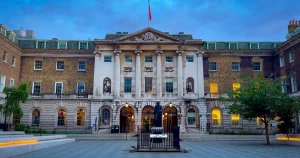

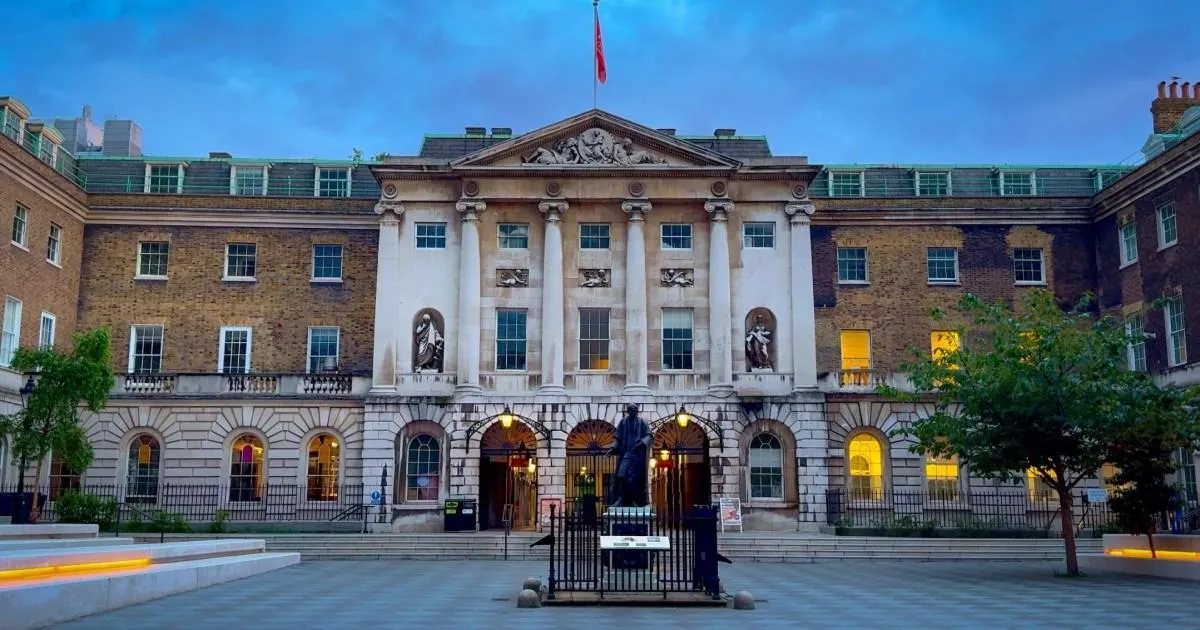
On Wednesday, central London will hold its breath. A pro-Palestinian student march, planned to begin at King’s College London on the Strand and end at University College London in Russell Square, is set to take place against the backdrop of the third anniversary of the October 7 attacks and a conflict in Gaza that still refuses to fade from the world’s conscience. For the students organising and joining the protest, this is not a theoretical debate or a social-media post; it is a physical act of solidarity, a chance to stand in the open air and say that they believe the people of Gaza have not been forgotten. But for many Jewish Londoners, the date carries an entirely different weight. It is a day of grief, remembrance, and fear, a day when the memory of being targeted for who you are becomes unbearably vivid. The simple act of walking from one university to another becomes, in this context, a deeply emotional gesture. The streets themselves are not neutral. They are lined with institutions that represent education, community, and the free exchange of ideas — exactly the values that seem threatened when war and extremism enter the conversation. The march is therefore not just a logistical event, but a collision of histories, loyalties, and hopes. Everyone involved knows that the eyes of the city will be on them. The police, the protestors, the counter-protestors, the shopkeepers, the commuters, the students who just want to get to a lecture — all of them will be sharing the same crowded pavement, each seeing this moment through their own personal lens. And while the march is expected to be peaceful, no one is quite naïve enough to call it ordinary. The announcement of the event has already stirred strong feelings, with some voices calling for it to be banned outright. The police have heard those voices, and they have not simply dismissed them. But they have also made clear that the law is not a blunt instrument, and that the right to protest is not something to be switched off whenever a demonstration becomes uncomfortable.
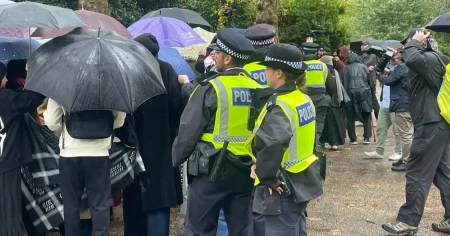
Under the conditions imposed by the Metropolitan Police, the event will not be an unstructured protest. Participants are being told to assemble in a designated area at Lincoln’s Inn Fields from 12.30pm on Wednesday, before moving in a managed way toward Russell Square. The rally must finish by 2pm, with everyone dispersing immediately. That might sound strict, and it is. Anyone who arrives expecting to roam freely through the West End will be disappointed. Anyone who pulls a balaclava or scarf over their face to hide who they are could be arrested. Police have made clear that officers will be out in force, and that breaches of the conditions — whether by ignoring the dispersal time, refusing to stick to the approved formation, or covering one’s identity — will be treated seriously. For ordinary Londoners, these restrictions are a reminder that protest in a crowded city is never just about the protestors. Shops need to open, students need to learn, patients need to reach hospitals, and commuters need to get home. The chosen route from the Strand to Russell Square runs through a bustling academic and commercial district, and the police are trying to ensure that the event makes its point without bringing the area to a standstill. It is a difficult line to walk, and it requires cooperation from everyone. The conditions are not there simply to make life difficult for students; they are there to create a container for an event that could easily overflow into chaos. The Met’s message is consistent: demonstrate, by all means, but do so within boundaries that protect the wider public. And for those who wonder whether such rules are really necessary, the police answer with a simple fact: on a day that means so much to so many, the risk of things going wrong is real. Their job, as they see it, is not to stop the march, but to prevent it from becoming something that leaves the city more divided and more wounded than it already is.
To understand why this particular march is so charged, one cannot separate it from the date. Wednesday marks the third anniversary of the October 7 attacks in Israel, a day that changed everything for so many families and communities. For Jewish Londoners, it is a day of deep mourning and fear — a time when memories of the dead, the hostages, and the ongoing threat of anti-Semitism feel painfully close. For many Palestinians and their supporters, the same anniversary is inseparable from the devastating military response in Gaza, the loss of tens of thousands of lives, the destruction of homes, hospitals and schools, and the sense that the world is not doing enough to stop the suffering. The result is a collision of grief. The police understand this. Deputy Assistant Commissioner James Harman has spoken openly about the day being one of “mourning and reflection” for many in London, and has acknowledged the serious concerns that the march has caused within Jewish communities in particular. That is not a small thing. It shows that the force is aware of the emotional landscape it is policing. But awareness does not mean prohibition. The Met has made clear that while it has received calls to ban the protest, the legal threshold for doing so has not been met. This is an important distinction. In a democracy, the right to gather and protest is not something to be discarded because a situation is uncomfortable or painful. It can only be restricted when there is a realistic threat of serious disorder, violence, or harm. Here, the police believe that those risks can be managed through strict conditions rather than an outright ban. That does not mean everyone has to like it. It means the law has spoken, and now the hard work begins — for the organisers, for officers, and for everyone who cares about peaceful protest. The challenge is not to silence anyone; it is to ensure that the voices raised are not shouting over the grieving whispers of others.
At the heart of the police strategy is a zero-tolerance approach to hate. Harman has been unambiguous: anyone who chants or displays placards calling for intifada, or encourages unlawful extremism, will be arrested. This is not simply about keeping order; it is about drawing a line between legitimate political speech and expressions that cross into intimidation, glorification of violence, or racism. The Metropolitan Police will not leave that judgement to chance. Officers will be watching, filming, and taking action where necessary. The message is aimed squarely at anyone who might use the march as cover for anti-Jewish hatred. At the same time, the decision not to ban the event reflects a broader commitment to free expression, even when the expression is controversial. Many people will struggle with that. They may ask: why allow a march on a day so painful for Jewish communities? The answer, in British law, is that the right to protest is not dependent on whether the majority approves of the cause. It is protected unless there is a clear and present danger that cannot be contained. By imposing “stringent conditions,” the police are trying to have it both ways — and in the best sense, that is exactly what policing a democracy should involve. They are saying: you may march, but you may not threaten; you may mourn, but you may not incite; you may voice anger, but you may not turn that anger into a weapon against others. Harman’s words are deliberately stark: anyone who breaches the conditions or commits offences should be under no illusion that they will face arrest. This is not a threat; it is a promise. The officers on duty will carry the weight of this balancing act. They will see the anger in the eyes of protestors and the fear in the eyes of those who oppose the march. Their job is not to take sides, but to hold the space open for both emotion and safety. It may be impossible to satisfy everyone, but it is possible to protect everyone.
Beyond the main rally, London is bracing for further demonstrations. A separate student protest has been planned for Marble Arch between 1pm and 4pm, and the police have already signalled that they will impose conditions to keep that event away from the Arch itself. Details are expected closer to the day, but the pattern is clear: the Met is proactively setting boundaries across central London, trying to ensure that no single protest overwhelms the city or creates a flashpoint. The existence of multiple protests shows how deeply this issue has mobilised people, especially the young. Students are not just signing petitions; they are taking to the streets, organising, and demanding that their voices be heard. For many, this is their first experience of political activism in a city that is already tense. It is a steep learning curve. They will have to navigate rules, police lines, and public hostility, all while trying to articulate a message that is genuinely important to them. Some will wonder whether the conditions placed on the march are too harsh, or whether they represent a fair way to balance competing rights. Others will wonder why the protests are happening at all so soon after a day of such grief. What is certain is that the eyes of London will be on these events. The response of the protestors will shape the way police handle future demonstrations. If the march remains peaceful, disperses on time, and refuses to be drawn into provocations, it will send a powerful message about the maturity of student activism. If, however, individuals ignore the conditions, hide their faces, and chant slogans of violence, they will not only face arrest — they will hand the police and politicians an easy argument for tighter restrictions on everyone in the future. The stakes, in other words, are much higher than a single afternoon in Russell Square. They are about whether a city defined by difference can still find a way to express that difference without tearing itself apart.
Ultimately, Wednesday is a test for London itself. It is a city that prides itself on tolerance, diversity, and the right to speak out. It is also a city that knows the cost of hatred and the ache of communal grief. For a few hours, the centre of the capital will become a stage on which these competing realities meet. The students who gather at Lincoln’s Inn Fields will be exercising a right that has been hard-won over generations. The police who watch over them will be doing a job that requires patience, professionalism, and an almost impossible degree of empathy. The communities who feel threatened are looking for reassurance that their safety will be treated as sacred. None of these demands cancel each other out. The best outcome — perhaps the only truly human outcome — would be for the march to happen without violence, without hate speech, and without tragedy. That would not heal Gaza, and it would not erase the pain of October 7. But it would prove that even in the midst of a bitterly contested conflict, people can come together in a public space without allowing their differences to become a weapon. The crowd will eventually disperse. The barricades will be taken down. The streets will return to normal. What remains, though, is the story of how London handled this fragile moment. Will it be remembered as a day when fear won, or as a day when the city held its nerve and let a difficult protest take place within the law? The answer lies in the choices that every person makes before, during, and after Wednesday. In the end, the march is not just a political event. It is a human event, full of grief and hope, anger and love — and all of it, for one tense afternoon, will walk the same pavements together.