



Paragraph 1: The Jarring Interruption of Normalcy
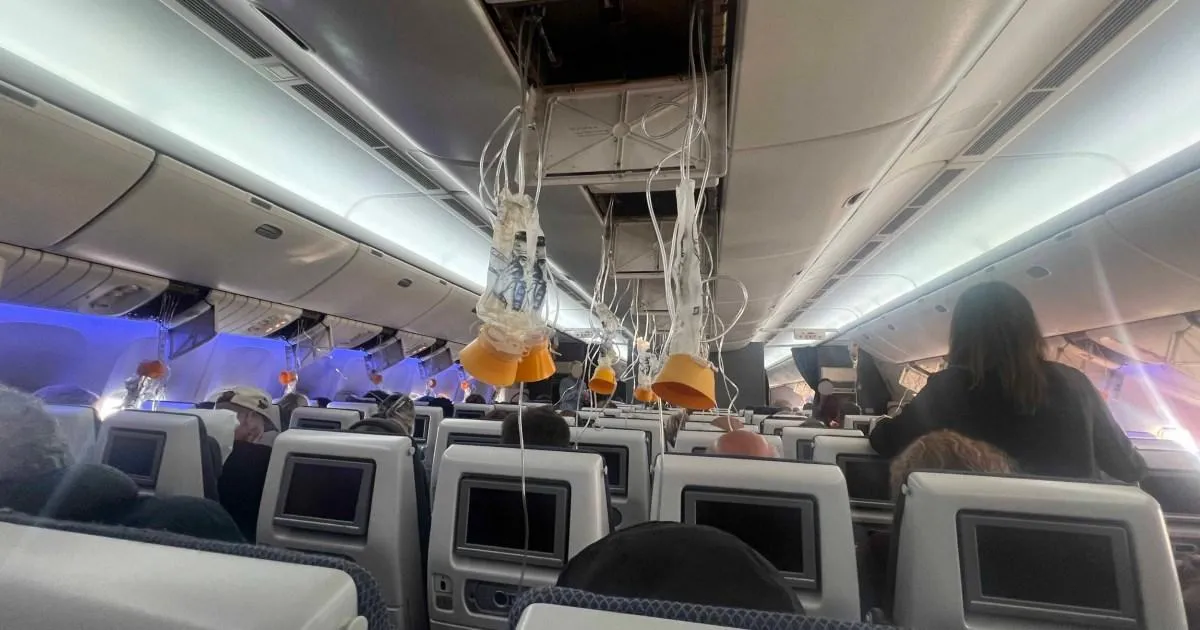
It was a scene of perfect, mundane normalcy, the kind of quiet routine that defines the long haul across the Atlantic. The cabin lights were dimmed to a soft, ambient glow, and the steady, hypnotic hum of the Boeing 777’s engines served as a lullaby for weary travelers. Passengers were settling into their seats, some flipping through in-flight entertainment, others dozing off with neck pillows, and a few, like Scott Tanner, a 39-year-old from Torbay, Devon, were simply trying to escape the monotony of the journey. Scott had plugged in his earbuds, selected an audiobook, and was letting the narrative wash over him, his mind drifting somewhere between the story and the gentle vibration of the aircraft. It was about an hour into the flight, a routine hop from London Heathrow to the sprawling metropolis of Chicago, and the initial bustle of takeoff had faded into a comfortable, drowsy silence. There was no turbulence, no warning, no crackle of the intercom to suggest anything was amiss. The world was peaceful, suspended 37,000 feet above the earth, where the sky outside the windows was a deep, endless sapphire blue and the clouds below looked like a fluffy, impenetrable blanket. Then, without a whisper of warning, the universe violently tilted on its axis. The plane gave a sudden, sickening lurch, a deep, gut-wrenching drop that felt like the floor had been yanked out from beneath everyone’s feet. Glasses rattled, loose items floated for a split second, and a collective gasp tore through the cabin. In that same instant, a mechanical thump-thump-thump echoed through the fuselage as the bright yellow oxygen masks deployed from the overhead compartments, dangling ominously in front of every startled face. The quiet, orderly world of the cabin was shattered in a heartbeat, replaced by a primal, terrifying chaos that no amount of pre-flight safety demonstrations could ever truly prepare a person for.
Paragraph 2: The Terrifying Descent and the Silence of Shock
The physical sensation of the descent was unlike anything Scott had ever experienced. It wasn’t a smooth, gradual glide; it was a violent, stomach-churning plummet, a feeling akin to being on the world’s most terrifying roller coaster, but with the horrifying realization that there was no track, no guarantee of a safe stop. The aircraft was dropping at an alarming rate, shedding altitude with a terrifying urgency. Flight tracking data would later confirm the stark reality: the plane had reached its cruising altitude of 37,000 feet, and within minutes, it had plunged to a mere 9,000 feet—a staggering loss of 27,000 feet in a matter of moments. The air inside the cabin grew thin and cold, and a strange, high-pitched whistling sound could be heard as the pressure differential strained against the fuselage. The flight attendants, trained for such emergencies, immediately began shouting authoritative commands, their voices cutting through the rising panic: “Put on your masks! Pull the strap to tighten! Breathe normally!” But for Scott, the most overwhelming and terrifying aspect of the ordeal was not the physical drop, nor the chilling air, but the profound, deafening silence that followed the initial chaos. For ten agonizing minutes, the cabin was enveloped in a thick, suffocating quiet. There were no screams, no wailing, no frantic questions. Just the muffled sound of panicked breathing inside the plastic masks, the rustle of clothing as people gripped their armrests, and the low, ominous groan of the aircraft as it fought to stabilize. It was the silence of pure, unadulterated shock—a collective paralysis where the human mind, overwhelmed by the sheer impossibility of the situation, simply shut down. Everyone was staring at the yellow plastic in front of their faces, their eyes wide with terror, locked in a shared, unspoken nightmare, each person alone in their own private hell of uncertainty.
Paragraph 3: The Internal Monologue of a Passenger
In that suffocating silence, Scott’s mind became a cacophony of racing thoughts, a frantic scramble to process the unthinkable. The audiobook that had been playing moments ago was now a distant, forgotten noise, drowned out by the thundering of his own heart. He thought of his home in Torbay, the rugged Devon coastline, the familiar faces of his friends and family. He thought of all the mundane, trivial things he had left undone—the unwashed dishes in the sink, the emails he hadn’t replied to, the plans for the weekend that now seemed impossibly distant and fragile. He looked at the stranger in the seat next to him, a middle-aged man whose face was a mask of frozen terror, their eyes meeting over the rims of their masks in a silent, desperate acknowledgment of their shared vulnerability. He tried to calculate the odds, to remember the statistics about how rare such emergencies were, but the numbers felt meaningless in the face of the immediate, visceral reality of the plummet. He found himself praying, not in a formal, religious sense, but in a raw, primal plea to the universe, a desperate bargain to be given another chance. He stared at the oxygen mask, feeling the cool, rubbery plastic against his face, and wondered if this was it—if this was the moment his life would end, 30,000 feet above the ocean, in a metal tube filled with strangers who had become his de facto companions in the face of death. The ten minutes stretched into an eternity, each second feeling like an hour, the silence amplifying the frantic beat of his own pulse until it felt like it would burst from his chest. He wasn’t just scared; he was utterly, profoundly helpless, a passenger in the most literal sense of the word, with no control over the terrifying trajectory of his own existence.
Paragraph 4: The Professional Response and the Long Return
While the passengers endured what felt like an eternity of suspended terror, the flight deck was a hive of controlled, urgent activity. The technical issue, which British Airways would later describe as a mechanical fault, was severe enough to trigger the automatic deployment of the oxygen masks and necessitate an immediate descent to a lower, breathable altitude. The pilots, highly trained professionals, executed a textbook emergency procedure, communicating with air traffic control and declaring a formal emergency. The decision was made to turn the aircraft around and return to London Heathrow, the safest available option given the circumstances. The initial, terrifying drop from 37,000 to 9,000 feet was the necessary, violent maneuver to stabilize the cabin pressure and ensure the passengers could breathe without supplemental oxygen. Once the plane leveled off at the safer altitude, the immediate physical danger had passed, but the psychological ordeal was far from over. The captain’s voice eventually crackled over the intercom, a calm, steady voice that explained the situation and confirmed they were heading back to London. The relief that washed over the cabin was palpable, a collective exhale that seemed to release the tension of the past minutes. But it was a hollow relief, tinged with the lingering shadow of what had just occurred. The flight back to London took another five hours, a long, agonizing purgatory where the adrenaline slowly ebbed away, leaving behind a deep, bone-weary exhaustion and a jittery, nervous energy. The cabin remained eerily quiet, the usual chatter and laughter replaced by hushed whispers and the clinking of water bottles. When the wheels finally touched down on the runway at Heathrow, a spontaneous, ragged cheer erupted from the passengers, a sound of pure, unadulterated gratitude for having made it back to solid ground.
Paragraph 5: The Lingering Trauma and the Recalibration of Reality
The aftermath of such an event is a strange, disorienting landscape. For Scott, the physical return to safety did not mean the end of the ordeal. The journey home to Devon was a blur, his mind replaying the terrifying descent on a loop. He found himself checking the news, reading the reports about flight BA295, trying to find some external validation for the internal chaos he was feeling. The silence of that ten-minute descent haunted him, a stark contrast to the noisy, vibrant world he had returned to. He described a feeling of profound detachment, as if he were watching his own life from a distance, the mundane routines of grocery shopping and work feeling surreal and insignificant in the wake of his brush with mortality. The fear of flying, a concept he had never truly considered, was now a visceral, physical presence in his life. He couldn’t stop thinking about the fragility of it all—how a single mechanical failure could so violently interrupt the trajectory of a life. He felt a strange, unexpected intimacy with the strangers who had shared that flight, a bond forged in the crucible of shared terror, even though he would likely never see them again. The experience had recalibrated his understanding of safety, reminding him that the illusion of control is just that—an illusion. He was grateful, profoundly and deeply grateful, to be alive, but that gratitude was interwoven with a new, sharp-edged awareness of his own mortality, a shadow that would linger in the corners of his mind for a long time to come.
Paragraph 6: The Universal Human Story of Fragility and Resilience
Scott Tanner’s story is not merely a recounting of a technical malfunction on a transatlantic flight; it is a stark, humanizing reminder of the thin line that separates the ordinary from the extraordinary, the routine from the catastrophic. In the grand, indifferent tapestry of the universe, a mid-air emergency is a violent tear in the fabric of our assumed safety, a brutal confrontation with the fact that we are, ultimately, fragile beings hurtling through space in a metal container. It strips away the pretense of control, forcing us to look into the abyss and acknowledge our own vulnerability. Yet, within that terrifying void, there is also a profound revelation of the human spirit’s resilience. It is found in the calm, authoritative voices of the flight crew, who performed their duties with unwavering professionalism while facing the same mortal danger as their passengers. It is found in the silent, shared solidarity of the passengers, who, in their individual terror, found a collective strength. Scott’s experience, with its haunting silence and its eventual, blessed resolution, echoes a universal truth: that we are all passengers on this journey of life, subject to forces far beyond our control. Sometimes, without warning, the masks drop, the floor falls away, and we are left clinging to hope in the darkness. But the story also reminds us that we can survive those plunges, that we can find our way back to solid ground, forever changed, perhaps, but deeply, achingly grateful for the gift of another day. The silence of that descent was a testament to fear, but the landing was a testament to hope, and the journey home was a quiet, personal victory for every soul on board who learned, in the most visceral way possible, just how precious and precarious life truly is.