

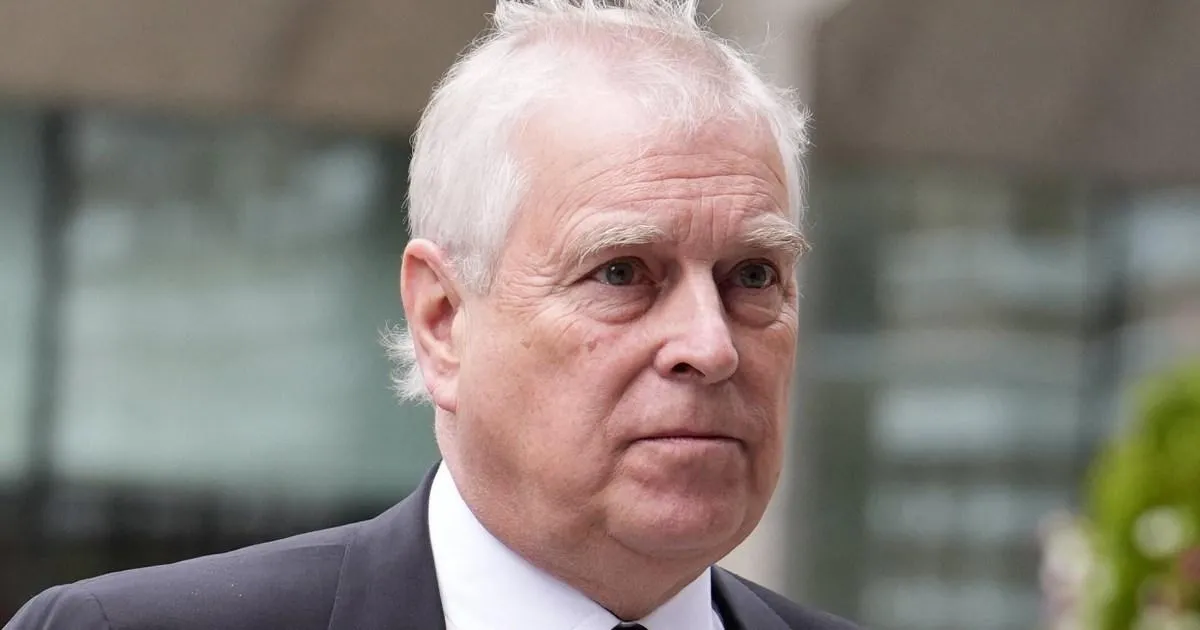
Some cars are bought for their engines, some for their leather, and a rare few for the stories they carry. The Bentley Flying Spur currently sitting on a showroom floor in Doncaster belongs to that third category. It is believed to have belonged to Andrew Mountbatten-Windsor, once widely known as the Duke of York, and the dealership marketing it has no qualms about saying so. Portland of Bawtry is advertising the luxury saloon as an “Ex Royal Family Car,” with an asking price of £124,975. That is a great deal of money by any measure, but it is strikingly less than the reported £220,000 the car is said to have cost when it was bought new around six years ago. What makes the price more understandable, in a strange way, is the fact that the odometer shows only about 7,000 miles. This is not a car that has been used and worn; it is a car that has been preserved, as if kept for special occasions rather than daily life. Clive Watson, the dealership owner, describes it as “beautiful, in flawless condition,” and after only seven thousand miles it should be. Yet the real attraction is not the mileage. It is the name attached to the car, the world it came from, and the complicated human history pressed into its seats. For a certain kind of buyer, this is not simply a used Bentley. It is a relic, a chance to own a small piece of recent royal history, even if that history is difficult to summarise in a single sentence. Cars like this do not often appear on the open market, and when they do, they tend to invite as many questions as bids. The phrase “ex royal family car” is strange to read, because it implies that the royal family is something one can be ex of, just as one can be ex of a club or a job. Yet for Andrew, the distance between past and present has become very real, and this car now embodies that distance in polished metal and hand-stitched leather.
To appreciate what the Flying Spur once meant, it helps to picture Andrew behind the wheel. The former Duke of York was previously photographed driving a Bentley Flying Spur with the personalised number plate A03 DOY, a small but telling detail. DOY stood for Duke of York, and the plate acted as an instant identifier for a man who had been defined by titles from birth. He used the car for moments that carried real emotional weight. In 2021, he was seen driving it to the funeral of his father, Prince Philip, a journey that must have felt heavy in ways no amount of royal protocol could lighten. The following year, the same car appeared at a christening in the family, a moment of joy and continuity. These are the occasions on which cars become more than machines; they are witnesses, containers of silence, grief, relief, and tentative smiles. The dealership says the car’s service history was unusual enough to raise questions. “We found it had a very strange service history so made some inquiries and realised it was a royal household car,” Watson told The Times. That sentence is remarkable in its calmness. Most car dealers are trying to explain away a minor repair or an odd gap in paperwork; here, the strange history turned out to be the history of a royal family in transition. The car has also been given a fresh identity of sorts. It was reportedly resprayed in Barnato racing green, a rich shade with motor-racing heritage, and its interior is lined with linen and Cumbrian green diamond-quilted leather. Underneath, it has a six-litre engine, four-wheel drive and 22-inch polished alloy wheels. It is a machine built for effortless power, but also for quiet comfort. It can glide down a motorway or make an entrance outside a cathedral. In that sense it is a perfect metaphor for its former owner, who was trained from birth to be noticed, then to disappear into ceremony.
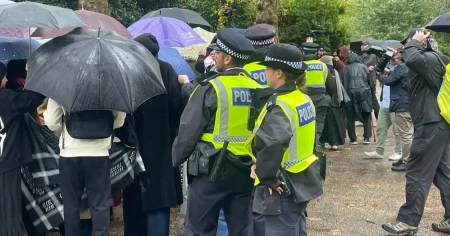
The sale arrives at a delicate moment. Andrew is preparing to take legal action against Thames Valley Police and the Central Criminal Court in an attempt to quash search warrants linked to his arrest in February. The arrest itself carried a strange kind of symbolism: he was taken in for questioning on his 66th birthday, a day that should have been about cards and cake, not suspicion of misconduct in public office. The accusation against him is serious. It follows allegations that he shared sensitive information with the convicted sex offender Jeffrey Epstein while Andrew was serving as the UK’s trade envoy. Andrew has denied any wrongdoing, but that has not stopped the investigation from casting a long shadow over his public life. The warrants in question allowed police to search his residence on the Sandringham Estate and his former home in Windsor, meaning that the most private corners of royal life suddenly became subject to the scrutiny of law enforcement. A High Court hearing is due to take place on Thursday, when judges will also consider a Thames Valley Police application to restrict access to certain documents. The force says its investigation into alleged misconduct in public office remains ongoing. For anyone who has followed Andrew’s story, the contrast between the polished Bentley on the showroom floor and the courtroom drama is impossible to ignore. The car is immaculate, static, ready to be admired. The man once connected to it is caught in a legal process that shows no sign of disappearing. In a way, the car and the case are both objects of public curiosity, but they could hardly be more different. One is solid, gleaming metal and leather; the other is a shifting collection of allegations, documents and legal arguments. Selling the car now might be coincidence, or it might be part of a broader effort to simplify a life that has become more complicated than anyone could have imagined when the Bentley was first bought.
There is something profoundly human about the way objects accumulate meaning. The Bentley is not only a luxury car; it is a time capsule. It carried a son to his father’s funeral and a grandfather to a christening. It wore a number plate that once seemed permanent, only to have that plate surrendered in October, around the time the King announced that Andrew would be stripped of his titles. The plate is no longer listed on the DVLA website at all. That small detail may seem insignificant next to search warrants and legal hearings, but it matters. A number plate is a kind of identity. For Andrew, A03 DOY was a way of saying who he was without saying anything at all. Letting it go was a quiet admission that the title no longer defined him in the same way. The car itself, however, remains. It has been resprayed, detailed, and prepared for a new owner. Its history is now part of its marketing, not a private matter. That is the strange fate of royal objects: they remain personal for a while, then become public property in a way their owners cannot control. The seats are upholstered in fine leather, the carpets are soft underfoot, and every surface has been polished. But no amount of polishing can erase the questions that surround the man who once sat behind the wheel. This is not because the car is guilty of anything. It is because people inevitably look at an object that belonged to a controversial figure and ask what it says about them. The answer, of course, is that it says very little. Cars do not judge their drivers. They simply carry them from place to place, through the ordinary and the extraordinary, through the moments people plan and the moments that happen out of nowhere.
Perhaps the most striking thing about this whole episode is how easily a royal car can move from one world to another. At one moment, the Bentley is part of a royal household, parked behind gates, used for ceremonial duties and family occasions. At the next, it is on a forecourt in Doncaster, advertised online like every other used car, albeit with a far more interesting description. The dealership has made the provenance part of the appeal. “Ex Royal Family Car” is not a subtle phrase. It tells buyers that this is a car with a story, a car that has lived a life most cars never experience. For someone with money and a love of unusual objects, that story is part of the purchase. It is also, in a quieter way, a lesson in impermanence. Nothing illustrates the fragility of status better than a high-end car being sold with the owner’s history attached. When the Bentley was new, it probably seemed like a permanent feature of Andrew’s life. It was reported to have cost around £220,000. It was equipped with everything a wealthy person could want. Yet here it is, priced at £124,975, waiting for someone else. The low mileage suggests it was never used for the mundane tasks of life, no school runs, no daily commutes, no long holidays in the sun. It was a ceremonial car, a car for occasions, a car that existed to make a statement. Now the statement has changed. Instead of saying “this is a member of the royal family,” it says “this is a collector’s item with a complicated past.” In human terms, the sale is a reminder that we are all more than the labels we once wore. The man who drove this car has had many titles, some inherited, some earned by accident of birth, and some removed. The car, by contrast, has no titles. It simply is.
Whether anyone pays the asking price remains to be seen. There are plenty of luxury cars on the market, but very few come with a story like this one. For £124,975, a buyer gets a near-new Bentley, a piece of recent royal history, and a conversation starter that will never grow tired. For Andrew, the sale is something else entirely. It is another step away from the world he once knew, another personal possession released into the public realm, another reminder that the old certainties no longer apply. The legal case will continue; Thames Valley Police has confirmed its investigation is ongoing, and the High Court will be asked to decide on access to documents as well as Andrew’s attempt to quash the warrants. No one can predict with confidence how that will end. But the car, at least, offers a kind of closure. Once it is sold, it will belong to someone else, and its royal associations will become a matter of interest rather than identity. Clive Watson and his team at Portland Autos have already done what any good dealer would do: they found the car’s history, told its story, and put it on the market. Metro has contacted Portland Autos for comment, but the advertisement speaks for itself. In the end, this is a story about transformation. A car is built to be driven; it is meant to move. The Bentley Flying Spur has not moved very much in its life, at least in terms of mileage, but it has travelled a great distance in other ways. It has gone from royal palace to police investigation, from private family moments to public sale. It has witnessed grief and celebration, loss and change. Now it sits in a showroom, polished and silent, waiting for the next chapter. Whoever buys it will not be buying just a car. They will be buying a memory, a mystery, and a small piece of a very human story.