

There are certain sentences in public life that should never be delivered with a straight face, and “we’ve investigated ourselves and found we did nothing wrong” has to be near the top of the list. It belongs in the same category as “the check is in the post” or “I’m from the government and I’m here to help.” So when Reform UK announced this week that it had published a 27-page report clearing its own advisers of any wrongdoing in the donations row that erupted on the eve of its conference, you could be forgiven for assuming it was a sketch from a satirical website. But no, this was real. This was a genuine, official publication from a political party that wants to be taken seriously as a force for changing British politics. And it was, by any reasonable standard, a masterpiece of circular logic. The party investigated itself, gave itself a clean bill of health, and then had the audacity to present that as some kind of triumph. If this were a school, it would be a pupil marking their own homework and awarding themselves an A+, complete with a gold star and a note to parents saying everything is fine. The only problem is that the rest of us can see exactly what is going on, and it doesn’t look fine at all.
To understand why this matters, it’s worth recalling what the fuss was actually about. Channel 4 News and the investigative outlet Verbatim filmed Dan Jukes, Farage’s longtime media adviser, and James Orr, a policy adviser, discussing how a US company had funded three opinion polls Reform had commissioned, to the tune of £32,500, and how a £500,000 donation from an alleged American financier might be channelled through his UK-based son. Orr was captured on tape saying the party could “easily get away with it.” That is not the sort of language that inspires confidence in a political movement, especially one that claims to stand for transparency, accountability, and cleaning up the swamp. Since the story broke, both men have denied any wrongdoing, and the police are still investigating. So what did Reform do? Did it call in an independent QC, invite outside scrutiny, and open its books to the public? No. Instead, it appointed its own legal secretary, Adam Richardson, and its own general secretary, Tom Waterhouse, to conduct the inquiry. No external oversight, no independent eyes, no one to challenge the findings before they were published. It was the political equivalent of a defendant writing their own character reference and then submitting it to the judge with a confident smile. Anyone accused of anything would love that system. It is not just a waste of everyone’s time; it is an insult to anyone who believes that justice should be seen to be done.
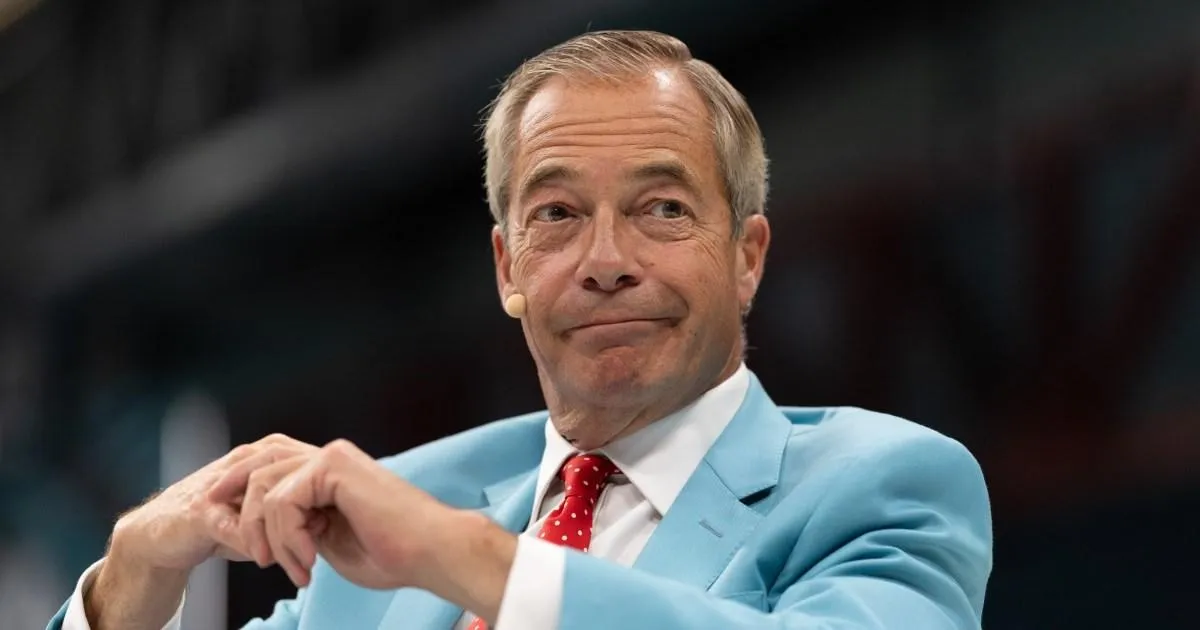
The report’s specific defences are even flimsier than its structure. It argues that the polls weren’t a problem because Jukes was merely a “contractor” rather than someone at the heart of the party. This is the same Jukes whom Farage has described as “like a son,” which rather undermines the idea that he was a distant outsider with no real influence. When the men were filmed discussing foreign donors supposedly giving money through their children, the report waved it away because Jukes says he invented the whole thing so as not to derail the conversation. That is described as “foolish, loose talk.” But let’s think about that for a moment. The defence has shifted from “it never happened” to “I was making it up.” Neither version is remotely reassuring. If he was telling the truth, there is a serious problem. If he was lying to the people he was speaking to, there is still a serious problem, because it suggests a casual attitude towards electoral law that sits very badly with a party that claims to be above the old rules. And then there’s Farage himself. He was filmed at the Clacton lunch where the £500,000 plan was discussed, but he says he “wasn’t even listening.” He told the BBC’s Laura Kuenssberg that he is not a compliance officer, while simultaneously insisting that he knows electoral law “better than anybody.” It has to be one or the other, Nigel. If you know the law that well, you know that ignorance is no excuse. If you’re not a compliance officer, then why are you claiming expertise? The contradictions pile up so quickly that you start to wonder whether anyone in that party has ever been asked a difficult question before. It is almost as if they have spent so long telling their own supporters exactly what they want to hear that they have forgotten how to answer to anyone else.
The sheer hypocrisy of it all is staggering. Reform’s entire pitch to the British public is that they are different from the “uniparty” in Westminster, that they are the outsiders who will break the mould, that they will take a baseball bat to the establishment and its cosy little arrangements. Yet here they are, closing ranks, circling the wagons, and declaring themselves clean without a single independent check. If Labour or the Conservatives had tried this, Farage would be first in line, in front of as many cameras as possible, screaming about stitch-ups, cover-ups, and the corrupt old parties protecting their own. The fact that he now wants to sue the reporters who exposed the story only makes it worse. You couldn’t make it up, and someone may well accuse him of doing exactly that. The British public has always been willing to forgive a lot, but we have never had much time for people who don’t understand fair play. It runs through our national character, and Farage wouldn’t be the first politician to be taken out by failing to grasp it. Fair play means accepting scrutiny, not investigating yourself and then demanding applause. Fair play means letting the public see the evidence and make up their own minds, not publishing a self-serving document and hoping everyone will go away. The more Reform insists that it is above the old rules, the more it looks exactly like the establishment it claims to despise. That is not a rebel movement; that is a closed shop with better branding.
The political consequences are already beginning to show, and they are not good for Reform. Since Andy Burnham took over the leadership of the Labour Party, polls have started to put Labour back in front, and YouGov has found that six in ten Britons believe Reform is untrustworthy. Even an anonymous senior Reform figure has privately admitted that the scandal has left the party looking “a bit like a pirate ship.” That is a devastating image, but it is also an accurate one. The bigger danger for Reform is not anger; it is mockery. Angry voters can eventually be won back, but it is much harder to win back voters who have decided you are a laughing stock. Just ask Liz Truss. Once a political party becomes a joke, everything it does is viewed through that lens. Its policies are dismissed, its pronouncements are derided, and its self-justifications are met with eye rolls. Reform has spent years positioning itself as the voice of the people, the party that says what everyone else is afraid to say. But now it is the party that investigated itself, cleared itself, and then tried to sue the people who caught it out. That is not the behaviour of a serious governing force. That is the behaviour of a group that thinks it can rewrite reality to suit itself. And the public, as ever, can see through it with remarkable clarity.
In the end, the report tells us far more about Reform than any of its glossy pages intend. They have marked their own homework and, quelle surprise, awarded themselves an A*. But that grade means nothing without independent verification, and everyone knows it. The party has shown that when the pressure is on, its instinct is not transparency but self-preservation. It has shown that its anti-establishment credentials are skin-deep, and that underneath the rhetoric lies the same old impulse to protect the inner circle at all costs. It has shown that it would rather sue journalists than answer their questions, and that it would rather issue a self-serving report than face the scrutiny that every political party in a democracy should be able to withstand. The scandal may fade from the headlines, but the memory of Reform clearing itself will linger, and it will be a gift to satirists, commentators, and voters who value honesty. Farage may believe he is above the rules, but the electorate will have the final say. The report says no wrongdoing. The British public says no trust. That is a verdict no internal inquiry can overturn. What a joke.