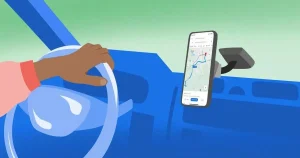

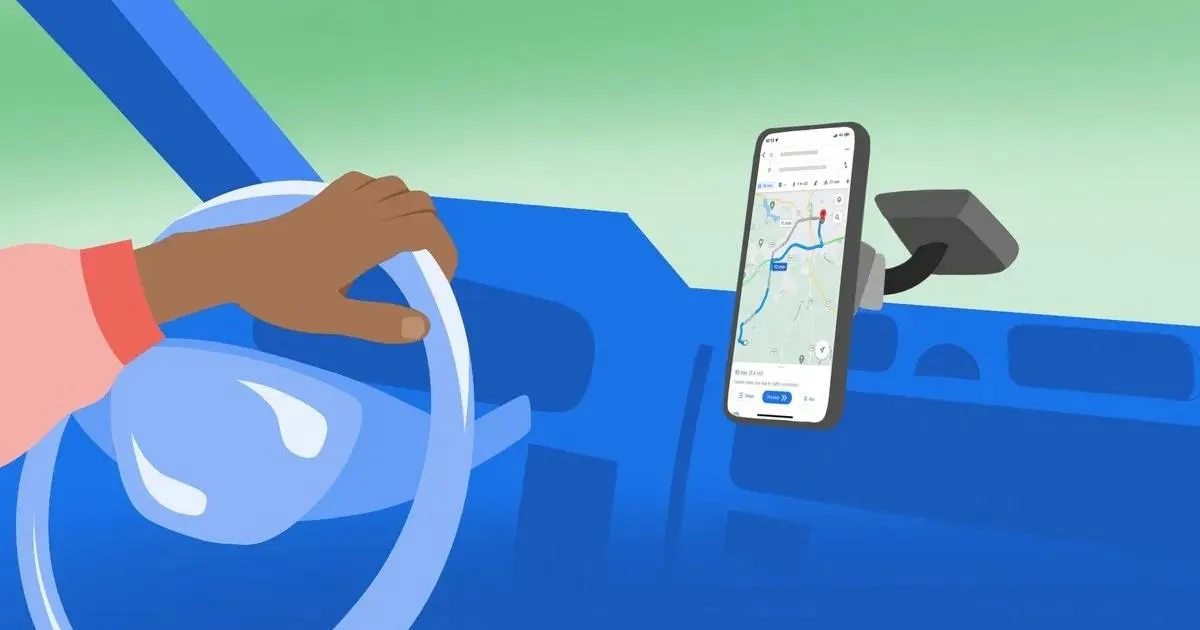
Imagine this: you’re running late, the fuel light is glowing, and you pull into the nearest petrol station only to gasp at the numbers on the pump. It’s a scene playing out across the country as petrol prices continue their relentless climb. The cost of filling up has become one of the most visible and frustrating signs of a turbulent global moment. Wars, supply chains, and international politics have all collided to make something as ordinary as driving to work feel like a luxury. But amid the gloom, there’s a small piece of practical help arriving. Google Maps is stepping in with a new feature designed to take some of the guesswork and anxiety out of finding fuel. Starting today, the platform will show not only where petrol stations are located, but also what they’re charging. That means drivers can check prices before they even leave home, compare options, and avoid the dreaded pump shock. It’s a simple idea, but one that could make a real difference to household budgets. For anyone who has ever driven from station to station in search of a cheaper price, or felt forced to fill up at the most convenient but expensive garage, this is genuinely useful. The feature is being rolled out with a clear promise: accuracy matters. Google Maps isn’t just scraping random numbers from the internet; it’s working to verify the prices it displays. The company says it will keep checking fuel price data independently to ensure the information is reliable. That’s important, because nothing would be more frustrating than being lured to a station by a low price that turns out to be outdated. So while the broader picture remains expensive, this small digital tool offers a little bit of control in a situation where most drivers feel powerless. It won’t lower the price of oil, but it can help you make smarter choices about where and when to fill up.
The new Google Maps feature is more than just a convenience; it’s a response to a genuine crisis of confidence at the pump. Sarah-Jayne Williams, Google Maps’ product partnership director, explained the thinking behind it. “Accuracy is very important,” she said, “so we will still show the petrol station and where it is, but you’ll only see a price if we have high confidence that it’s the right price.” That cautious approach is reassuring. It means the company is aware of how quickly fuel prices can change, especially in such volatile times. A price that was correct this morning might be wrong by the afternoon, so Google is choosing to show prices only when it has strong evidence they’re current. For drivers, this could be a game-changer. Instead of relying on word of mouth or driving around in circles, you can open the app, see a list of nearby stations, and head straight to the one that won’t empty your wallet. It also adds a layer of transparency to a market that often feels opaque. Why does the station on one side of the road charge 10p more than the one opposite? Why do prices vary so wildly between neighbouring towns? With this feature, at least you can see the landscape and make an informed decision. The rollout starts today, and it’s likely to be welcomed by millions of drivers who have been watching fuel costs spiral. Of course, it’s not a magic bullet. The underlying problem is the price of oil itself, which is being pushed up by global events far beyond any app’s control. But in a world where so many things feel out of our hands, knowing where to find the cheapest petrol is a small but meaningful victory. It’s the kind of practical help that people need right now, especially as the cost of living continues to bite. And it might even encourage a bit of healthy competition among stations, because if drivers can easily compare prices, the pressure to offer a fair deal increases. That could be good news for everyone.
The timing of this feature is no coincidence. Fuel costs have been making headlines for all the wrong reasons. This week, the price of diesel reached a painful milestone, crossing a threshold that would have seemed unthinkable just a few years ago. Petrol, meanwhile, has climbed a staggering 41p compared with what it cost seven months ago, before the war in Iran began. For the average driver, that adds up to a significant chunk of change every time they fill the tank. It’s not just a number on a sign; it’s the difference between making it to payday and having to cut back on something else. The knock-on effects are everywhere. Delivery costs go up, which means food prices go up. Commuting becomes more expensive, which hits people who have no choice but to drive. And for those on low incomes, the pressure is even more intense. The situation has become so serious that emergency fuel shortage plans have been drawn up. In September, it was reported that these plans were unveiled and could soon be brought in. They are not just theoretical ideas; they are concrete measures that could be introduced if things get worse. They include diesel rationing, reducing speed limits to 50mph, and giving priority to emergency services and public transport. It sounds like something from a crisis movie, but these are real contingency plans being considered by the government. The fact that such measures are even on the table shows how concerned officials are about the stability of fuel supplies. It also explains why the Google Maps feature is arriving at exactly the right moment. When every penny counts, and when the threat of shortages looms, having access to real-time price information is a form of empowerment. It won’t solve the global crisis, but it helps individuals navigate it a little more easily. The hope is that by making prices more transparent, people can at least avoid being caught out by the most expensive options.
Despite the alarming headlines, the government is trying to calm public fears. The Department for Energy Security and Net Zero told Metro late last month that supplies are not an issue. “We have a diverse and resilient supply,” the department said. “We continue to engage with our international partners and the UK fuel industry.” This is a message designed to reassure people that there is no need to panic-buy or hoard fuel. The memory of past fuel crises, with queues snaking around petrol stations and pumps running dry, is still fresh in many minds. The last thing anyone wants is a repeat of those scenes. So when officials say supplies are fine, they mean it. But the public has heard that kind of reassurance before, and it’s natural to be skeptical. After all, prices are still rising, and the global situation remains volatile. The war in Iran has disrupted one of the world’s most important oil routes, and that has sent shockwaves through the entire energy market. Even if the UK’s physical fuel supplies are secure, the cost of replacing those supplies is affected by what’s happening internationally. The government’s statement is an attempt to separate the issue of availability from the issue of price. Yes, there is enough fuel. No, that doesn’t mean it’s cheap. For drivers, that distinction is cold comfort. But it does suggest that the emergency measures, like rationing and speed limit reductions, are not imminent. They are contingency plans, not current policy. The government is monitoring the situation closely and staying in touch with international partners and the fuel industry. That ongoing dialogue is important, because the situation can change quickly. A new development in the conflict, another disruption to shipping, or a sudden spike in demand could alter the picture overnight. For now, though, the official line is clear: the taps are not about to run dry. The problem is the price, not the supply.
To understand why fuel prices are so high, you have to look at the bigger picture. The conflict in Iran, which began when the US and Israel launched surprise attacks in February, has had a profound effect on the global energy market. One of the most critical flashpoints is the Strait of Hormuz, a narrow waterway along Iran’s southern coast. This stretch of sea is one of the most important oil routes in the world, once carrying more than 20 million barrels of oil a day. That’s roughly one-fifth of the entire global supply. When that route is threatened, the whole world feels it. The war has choked off the Strait, creating a bottleneck that sends prices spiraling. It’s a reminder that the fuel we put in our cars is not just a commodity; it’s a geopolitical weapon. Every time we fill up, we are feeling the distant echoes of conflict. The economic impact of the war is often measured by the jittery cost of crude oil, the fossil fuel that is refined into petrol and diesel. When traders get nervous, prices go up. When there’s a risk of supply disruption, they go up even more. It’s a volatile, unpredictable market, and ordinary drivers are left to pick up the tab. The human cost is huge. People who rely on their cars for work, for school runs, for caring for relatives, are all being squeezed. Businesses that depend on transport are facing higher costs, which they inevitably pass on to customers. It’s a chain reaction that touches every corner of the economy. And it’s not just about the UK; fuel costs are high worldwide. This is a global crisis, and no country is immune. The war in Iran has shown how interconnected our world really is. A conflict thousands of miles away can change the price of a sandwich, the cost of a bus ticket, and the amount of money left in your bank account at the end of the month.
There have been attempts to ease the pain. A ceasefire has been declared, and many countries have released oil reserves in an effort to stabilize the market. But here’s the frustrating part: the price of oil has not decreased as fast as it rose. The relief is slow, uneven, and far from guaranteed. It’s a bit like waiting for a fever to break; you know it should happen eventually, but the waiting is miserable. For drivers, that means the high prices are likely to stick around for a while. The Google Maps feature, then, is not a solution to the crisis, but it is a survival tool for these difficult times. It helps you find the least expensive option, avoid unnecessary trips, and plan your refuelling more efficiently. In a world where so much feels beyond our control, it’s a small way to take back a little power. The broader hope is that the ceasefire holds, that the Strait of Hormuz becomes safe again, and that oil prices gradually return to something more reasonable. But that won’t happen overnight. In the meantime, we are all learning to live with uncertainty. We are checking prices before we drive, planning our journeys more carefully, and maybe even thinking twice about whether that trip is really necessary. It’s not a comfortable way to live, but it’s the reality we’re in. And there’s a strange kind of solidarity in it. Every driver staring at the pump is sharing the same frustration, the same calculation, the same hope that things will get better. The new Google Maps feature won’t end the war or bring down the price of oil, but it will make the daily grind a little easier. And sometimes, that’s all you can ask for. So next time you need to fill up, take a moment to check the app. It might save you a few pounds, and it might even remind you that even in the middle of a global crisis, there are still small conveniences that make life a little more bearable.