


The end of party conference season always arrives with a strange mix of relief and regret, but this year it felt less like a normal finish line and more like collapsing after an ultramarathon across the Sahara. Your body gives out, your brain is foggy, and you spend the first few days home just staring at walls, trying to remember what normal life feels like. There is something uniquely exhausting about spending day after day in windowless conference halls, breathing recycled air, eating bad sandwiches, and listening to speeches that all blur into one another. But no two conference seasons are ever quite the same, and this year there was a rogue element that made everything feel different: the recent arrival of a prime minister who, rather unexpectedly, many people seem to genuinely like. That changes the chemistry of every room, every speech, every whispered conversation in the corridors. Andy Burnham has been in power since July, and yet the political world is still adjusting to the strange sensation of a leader who doesn’t immediately make people cringe. Labour was obviously ecstatic, basking in the glow of victory and still unable to quite believe that the long years in the wilderness are over. The Liberal Democrats, meanwhile, seemed almost confused, as if they had turned up to a party and discovered the host was playing all their favourite songs but also refusing to let them near the microphone. And Reform UK? They mostly decided to pretend it wasn’t happening at all, which is its own kind of coping mechanism.
I remember sitting in one session where Lee Anderson went on a long, winding riff about various members of the Starmer government, only to realise halfway through that most of the people he was attacking had already been relegated to the backbenches. It was a strange, almost surreal experience, like watching someone argue with a ghost. But that is the nature of opposition parties in flux: they are all trying to find their footing in a world that has been turned upside down. Labour can afford to be relaxed because they are in power, and power gives you the luxury of confidence. The Lib Dems are still working out whether to celebrate the fact that a Labour government is borrowing their policies or mourn the fact that they no longer have a unique selling point. And Reform is busy pretending that the new political landscape doesn’t require them to change anything at all. But the Tories? The Conservative party is always the most fascinating to watch in opposition, because they have the most to lose and the most to prove. They are still carrying the scars of their last few years in government, and they know that the public is not in a forgiving mood. So what do they do? Well, perhaps unsurprisingly, they haven’t settled on anything specific yet. There are factions, arguments, competing visions, and a leader who is still trying to impose her own personality on a party that doesn’t always know what it wants. But over the past few days, I’ve seen the first signs of an opposition party actually figuring out how to take Andy Burnham on. It’s not a fully formed strategy yet, but it’s a beginning, and beginnings matter.
On my first night in Birmingham, I found myself talking to one of the top members of Kemi Badenoch’s team. We were standing near the bar, and the conversation was the usual conference chat: a bit of gossip, a bit of speculation, a lot of careful avoidance of anything too revealing. But then he said something that stuck with me. He argued, with a kind of weary certainty, that the Prime Minister doesn’t actually have a plan for the country. He has, in this person’s words, just a few ‘pet projects’. That phrase is going to be heard a lot from the Tories in the coming weeks and months, and it’s a clever one. It suggests something small, something cosy, something that lacks ambition and scale. It’s designed to undermine the idea that Burnham is a serious statesman with a serious vision for Britain. Instead, it frames him as someone who is tinkering around the edges, picking favourite causes, and hoping that the big picture sorts itself out. Whether that attack will land is another question entirely, but at least it’s a coherent line. For a while, the Conservative party seemed to be flailing, unsure of what to say or how to say it. They were still so shell-shocked by their electoral defeat that they couldn’t quite bring themselves to believe they were actually in opposition. But now, slowly, there is a shape emerging. It’s combative, it’s personal, and it’s very much Kemi Badenoch’s style. She is not a politician who believes in quiet, measured debate. She is someone who goes in hard, who wants the fight, who wants to be in the middle of the scrum. And watching her at this conference, you got the sense that she was finally ready to take the gloves off.
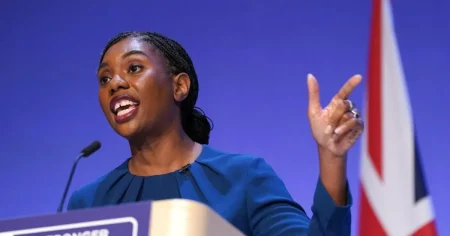
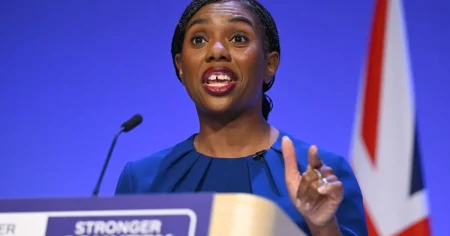
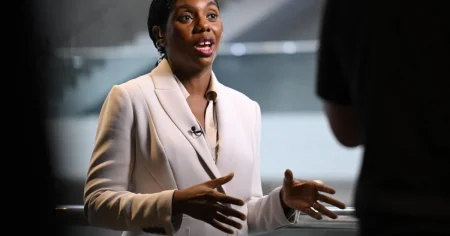
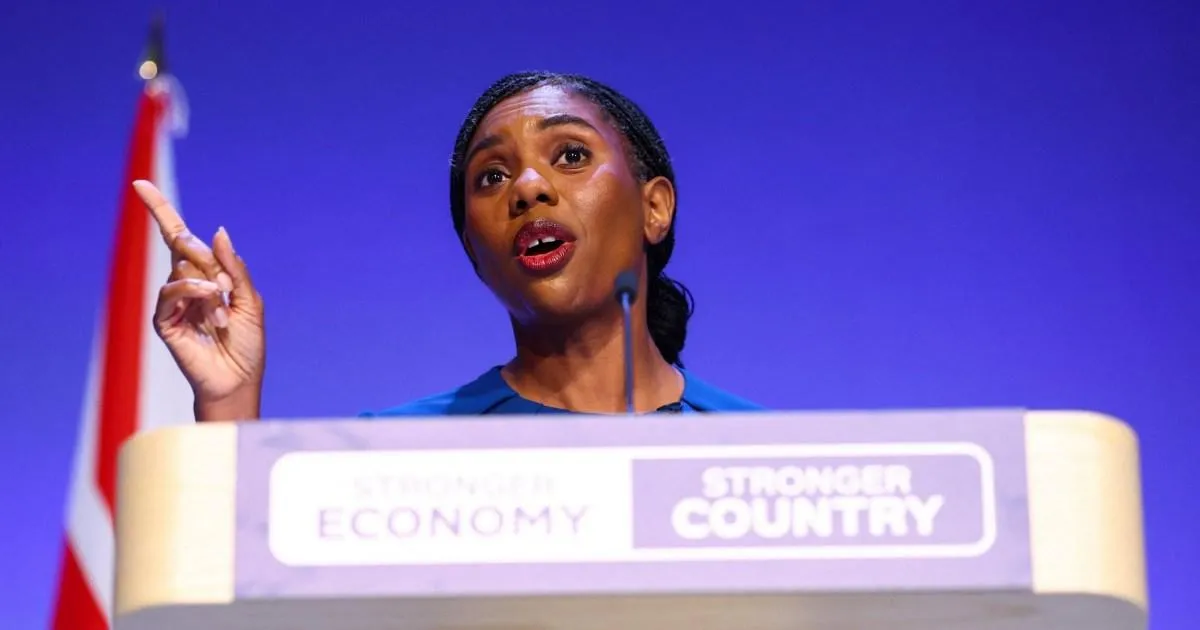
I watched Kemi Badenoch go studs-up in her closing speech, and it was quite a sight. There have been astonishingly few PMQs encounters between the Labour and Tory leaders considering Burnham has been in power since July, so this speech felt like a fun preview of what we can expect when things kick off again later this month. She clearly wanted to set the tone, to show her party, and the country, that she is not going to be intimidated by the Prime Minister’s popularity. A recurring theme was the idea that Burnham wants to ‘live in the past’, that he is using nostalgia as a strategy, and that his whole political project is an attempt to ‘turn back the clock to the 1970s’. This is a direct reference to his long-held belief that the country took a wrong turn under Margaret Thatcher in the eighties, that the social contract was broken, and that we need to rebuild something fairer and more collective. For Badenoch, this is an open goal. She can paint him as someone who is stuck in a previous era, who wants to reverse the changes that modernised Britain, and who is out of step with the aspirations of ordinary people. She also brought up his time working under Jeremy Corbyn, when he served as shadow home secretary. She described him as ‘nodding along’ to a man who wanted to take the UK out of Nato, give up our nuclear deterrent, and even disband our army. It was a brutal reminder of the company he kept, and it was delivered with the kind of crisp, sharp-edged precision that Badenoch is known for. The speech went down a treat in the room. You could feel the energy shift, the sense that the party had been waiting for someone to take the fight to Burnham in a way that felt both modern and ruthless.
But, as usual with Badenoch, it was the pettier jibes that stuck out. Something about her delivery, her timing, her willingness to go for the laugh even at the risk of seeming unserious, makes these moments linger longer than the policy arguments. She called Burnham a ‘Paddington Bear prime minister’, which is the kind of insult that gets under the skin precisely because it’s so vivid. It’s the fluttering eyelashes, the polite demeanour, the sense of a man who is always trying to be nice but never quite tough enough for the job. She said he was ‘hoping that the problems go away’ while Putin attacks our allies, which was a serious point wrapped in a mocking image. And then there was the line about his ‘fluttering eyelashes and his pork scratchings’. That’s the one people were quoting in the corridors afterwards, because it’s so specifically designed to be dismissive. Pork scratchings, for those who don’t know, are a kind of pub snack, crunchy, salty, a bit rough around the edges. It’s a working-class signifier, and Badenoch was using it to suggest that the Prime Minister is performing a kind of fake authenticity, trying to be a man of the people when he’s really just a career politician who has learned to say the right things. It’s a risky strategy, because it can easily backfire if people decide you’re just being nasty for the sake of it. But Badenoch’s supporters love it. They love that she is willing to be brash, to be cutting, to go after the Prime Minister in a way that doesn’t feel polite or stifled. And, if we’re being honest, the public also seemed to enjoy it when she did the same thing to Sir Keir Starmer. The question is whether the same approach will work against a man like Andy Burnham, who has managed to position himself as something different, something more genuine.
Is this going to work? It’s hard to imagine a bolder repudiation of the Prime Minister’s insistence that he wants Westminster to focus on ‘problem-solving, not point-scoring’. Whether there has ever been a realistic possibility of that happening is another matter entirely, because politics is always about point-scoring to some degree, but Burnham has clearly tried to position himself as above the fray. That puts Badenoch in an interesting position. On one hand, she is giving the people what they want: a bit of drama, a bit of conflict, a leader who isn’t afraid to mix it up. On the other hand, she is playing directly into the Prime Minister’s hands, because he can stand back, shake his head, and say, ‘Look, this is exactly the kind of politics we are trying to leave behind.’ The next few months are going to be fascinating to watch. We are going to see whether the British public really has changed, whether they genuinely want a softer, more consensual style of leadership, or whether, when push comes to shove, they still respond to the thrill of a good political fight. Badenoch is a politician who revels in winding up her opponents and having debates that are as brash and public as possible. She doesn’t do quiet diplomacy. She doesn’t do quiet anything. She is a fighter, and she has chosen Burnham as her target. Thanks to her, we will soon find out if the same approach that worked against Sir Keir Starmer will win out in this new era. The conference season is over, the exhausted activists have gone home, and the ordinary world has returned. But the battle lines are being drawn, and the next round of this fight is already heading our way.