

-
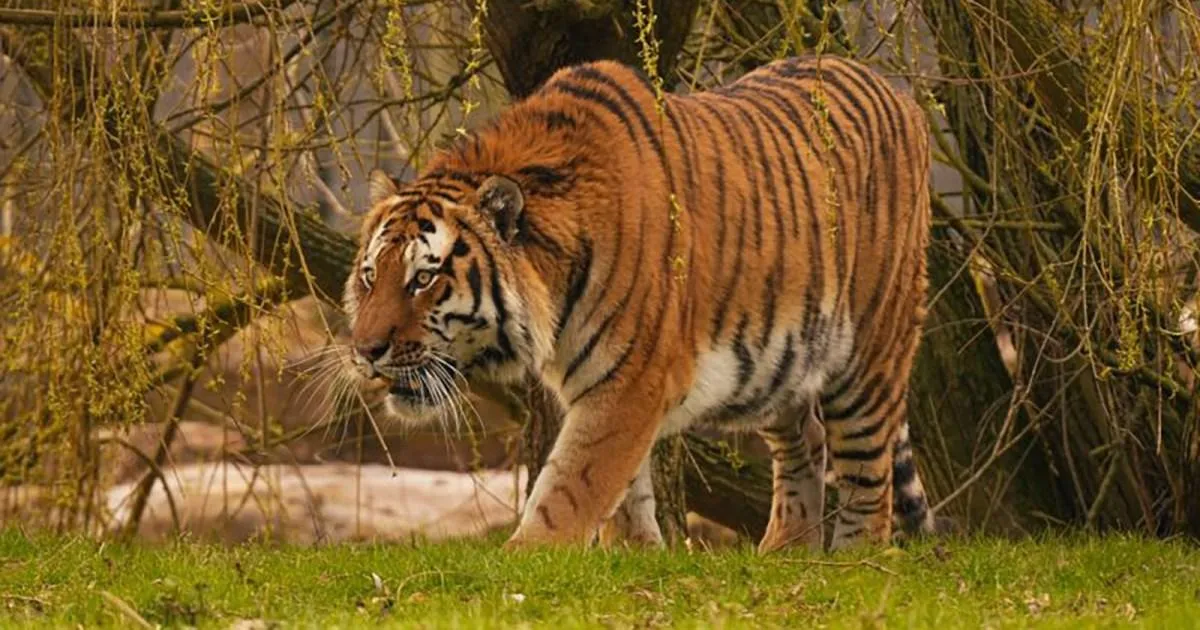
The quiet, sprawling expanse of Yorkshire Wildlife Park in Doncaster has become the setting for an unimaginable tragedy, one that has sent ripples of shock and sorrow through the local community and far beyond. The park remains closed, its gates locked, its pathways empty, after a man in his twenties lost his life in a manner so sudden and violent that it defies easy comprehension. He was attacked by a Siberian tiger named Altai, a magnificent and powerful animal who now finds himself at the center of a global conversation about wildlife, captivity, and responsibility. The young man’s identity has not been released, and in the absence of facts, there is only a heavy, collective grief for a life cut short. Emergency services were called to the scene shortly after half past one in the afternoon, following reports that a man had somehow entered the tiger enclosure. By the time help arrived, the outcome was already devastating. The man had been pinned to the ground by the tiger, suffering injuries that proved fatal, and he was pronounced dead at the scene. The park was swiftly evacuated, visitors ushered away from the horror, their day of innocent animal watching transformed into something no one could have anticipated. In the aftermath, the focus has shifted not only to the victim and his family, but also to the tiger himself, and to the staff who witnessed the event unfold and now carry the weight of it with them.
-
In the hours following the tragedy, Yorkshire Wildlife Park released a statement that attempted to address the chaos of emotions swirling around the incident. It was a message of gratitude, grief, and quiet reassurance. The park thanked everyone who had expressed concern, acknowledging the outpouring of sympathy from a public that was itself struggling to make sense of what had happened. Their thoughts and heartfelt sympathies, they said, remained with the family and loved ones of the man who had so tragically lost his life. The park would remain closed, not as a punishment, but as a necessary pause, a time for the staff team—who were deeply affected by the events—to receive specialist support. These are the people who work with these animals every day, who know their habits, their moods, their personalities. To witness such an event is not merely a professional shock; it is a personal trauma that will linger long after the headlines fade. But it was the final part of the statement that caught the world’s attention, a direct response to the thousands of messages flooding in about Altai. The park reassured everyone that the tiger was safe and well, and that he would not be euthanised as a result of this incident. It was a necessary clarification, a firm line drawn against the impulse to punish an animal for acting on instincts that are not malicious but deeply, fundamentally wild.
-
To understand Altai is to understand that he is not a villain in this story, but a creature of immense size, strength, and natural behavior. When Altai arrived at Yorkshire Wildlife Park in March of that same year, he was welcomed with genuine excitement and affection. Charlotte MacDonald, the Director of Animals, spoke warmly of him at the time, describing him as a beautiful, huge cat, calm and receptive. She credited his previous keepers at Dyreparken for doing a great job with him, raising a tiger who was not aggressive but composed, curious, and trainable. She noted that it would take him a while to settle into his new home, as such a big change is never easy for an animal, but there was hope that he would soon be out exploring the Land of the Tiger exhibit. Those who knew him described a tiger who loved his training, loved his food, and especially loved playing in the water outside. There is something almost gentle in that image: a massive predator splashing in a pool, enjoying the simple pleasures of a sunny afternoon. He was not a creature lying in wait for a human victim. He was a tiger living his life in an enclosure, doing what tigers do. The tragedy is not that Altai behaved like a tiger. The tragedy is that a young man found himself inside that enclosure, in a space where human fragility meets raw animal power, and the outcome was inevitable.
-
The sequence of events that led to the attack has been pieced together through witness accounts and footage shared on social media, and it paints a picture that is both confusing and heartbreaking. The man was seen asking another visitor to take a photograph of him with the tiger in the background. In the footage, he can be heard politely asking, “Excuse me, can you grab a shot of myself with the tiger?” The woman agreed, and the video went silent, presumably as she captured the image. He thanked her, then asked for “one more” picture, three times, before saying, “Thank you, lady.” What happened next is less clear, but a witness claimed to a newspaper that the victim was then seen dancing, apparently to psych himself up, holding a mobile phone and wearing earpods, before climbing over the fence and into the enclosure. Another visitor said the man appeared agitated, and that within seconds of accessing the enclosure, he was grabbed by the throat by the tiger. Witnesses claimed he could be heard crying out “no, no” during the attack, a desperate, futile sound in a situation that had already spiraled far beyond any hope of control. It is a sequence that raises more questions than it answers. Why did he climb the fence? Was it a reckless impulse, a moment of madness, a misguided attempt at a thrill, or something else entirely? We may never know. What remains is the stark, brutal reality that a young man made a choice, and that choice cost him his life.
-
The footage and witness accounts have sparked a wide range of reactions, from horror and sympathy to confusion and, in some corners, judgment. But to humanize this moment is to resist the urge to reduce it to a simple moral lesson. The victim was not a faceless figure; he was someone’s son, someone’s friend, someone with a life full of ordinary moments and private struggles. Perhaps he was seeking an adrenaline rush, perhaps he was not thinking clearly, perhaps he simply did not understand the danger. The presence of earpods and a phone suggests a man who was in his own world, disconnected from the reality of his surroundings. The dancing, as described by witnesses, might have been a strange attempt to build courage, or it might have been the behavior of someone in a state of distress or altered judgment. Whatever the explanation, the outcome was devastating. And yet, even in the midst of that devastation, there is a need to recognize that Altai was not acting out of cruelty. Tigers are ambush predators, hardwired to respond to a sudden intrusion in their territory with speed and force. A human climbing into an enclosure is, to a tiger, not a visitor but an anomaly, a threat, or perhaps simply prey. The tiger’s response was not evil; it was survival. That does not make the loss of the young man any less tragic, but it does complicate the narrative of a “killer tiger” that some have tried to construct. The park’s decision not to euthanise Altai is a recognition of this complexity, a refusal to scapegoat an animal for behaving according to its nature.
-
As the park remains closed and the staff receive the support they so desperately need, the wider world is left to reflect on what this tragedy means. It is a moment to think about the delicate, often dangerous relationship between humans and wild animals. We build sanctuaries and zoos to bring people closer to nature, to inspire wonder and conservation, but we can never fully erase the wildness that makes these creatures so magnificent. A tiger in an enclosure is still a tiger, with the same instincts and power as its cousins in the Siberian wilderness. The barriers that separate us from them are not just physical; they are reminders of the respect and caution that wild animals demand. For the staff at Yorkshire Wildlife Park, this is a loss that will be felt for years. They have lost a visitor, and they have also been forced to confront the reality of the animals they care for in the most brutal way possible. For the family of the young man, there are no words that can ease their pain, only the quiet hope that they find some solace in the outpouring of sympathy from strangers. And for Altai, life goes on. He is safe, he is well, and he will not be punished for the tragedy that unfolded around him. He remains a beautiful, huge cat, calm and receptive, who loves his training and his food and the water outside. The world may look at him differently now, but he does not know that. He is simply a tiger, living his life, innocent in the way that only a wild thing can be innocent. The rest of us are left to carry the weight of what happened, to mourn the dead, to support the grieving, and to ask ourselves hard questions about the spaces we create for wildlife and the boundaries we must never cross.