

A Quiet Village Shattered: The Thurnby Home Invasion
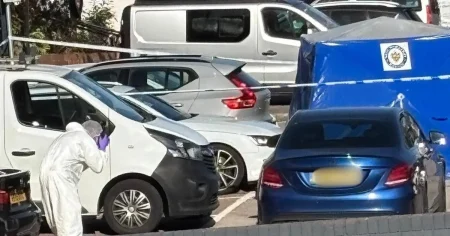
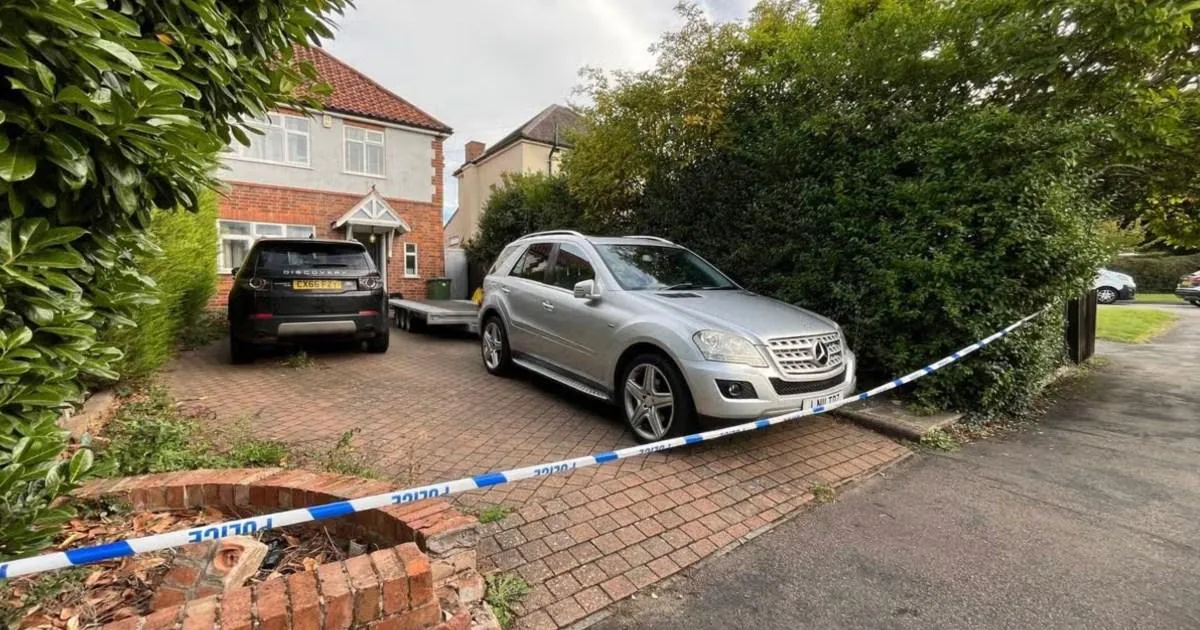
Nestled in the rolling countryside of Leicestershire, the village of Thurnby has long prided itself on being the kind of place where neighbors greet each other on morning walks, where children can play in front gardens without a watchful eye locked on every shadow, and where the most dramatic thing to happen in a typical week is a Facebook post about a stray cat. It is the kind of community that people move to precisely because they want to escape the anxieties of modern living—a pastoral enclave of family homes, quiet lanes, and familiar faces that feels a world apart from the grim headlines of urban violence. But in the dark hours of a recent night, that cherished sense of safety was violently ripped away. Shortly after midnight, a piercing chorus of shouts, screams, and banging noises erupted from a house on Station Road, waking neighbors from their sleep and thrusting them into the middle of a real-life horror story. Inside that house, a father in his 50s and his 15-year-old son were attacked by two masked men who had forced their way through the door, stabbing both of them repeatedly and leaving them in critical, life-threatening condition. The mother, a woman in her 40s, managed to flee the carnage and run out into the night, bearing minor wounds to her hand and shoulder—physical injuries that, while perhaps slight, only hint at the profound trauma she now carries. Three other children in the home miraculously escaped physical harm, but the memory of witnessing such violence against their own family will likely linger far longer than any wound on the flesh. When the sun finally rose, Thurnby—a place residents proudly call “so quiet”—had been transformed into a crime scene, with blue tape stretched across the driveway and forensic officers in white suits combing every inch of the property for answers. For the family, for the village, and for anyone who has ever believed that home is the last safe refuge, the echoes of that terrible night will not fade easily.
The full picture of the attack is still being pieced together by detectives, but the fragments that have emerged paint a chilling portrait of carnage and fear. Police say two masked men entered the address and attacked three people inside—the father, the son, and the mother, who appears to have been caught in the middle of the violence as she tried to protect her family. The man in his 50s suffered multiple stab wounds; his condition is so severe that doctors are currently fighting to save his life. The teenager, still just 15 years old, was also knifed and is now in critical care, his family keeping a desperate vigil at his bedside. The mother, though released from the hospital after treatment for her hand and shoulder injuries, has been left to grapple with a different kind of pain—the memory of her husband and son being attacked in the place where they should have been safest. The couple’s three other children, who were also in the house at the time, were not physically injured, but the emotional toll of such an ordeal on young minds is impossible to quantify. What makes the event even more distressing for the family and the wider community is the apparent meaninglessness of the violence. Detective Inspector Lorna Granville of the East Midlands Special Operations Unit has been unequivocal in her assessment, calling the attack “completely unprovoked.” The victims did nothing wrong; they were simply at home, perhaps relaxing after a long day or settling into bed, when terror walked through their front door. There was no warning, no apparent motive, no explanation—only the sudden, brutal eruption of violence that left two innocent people fighting for their lives and a family forever changed. The doctors, nurses, and trauma specialists laboring over their patients know that every second counts, and the days ahead will tell the story of their recovery.
The neighbors who witnessed the aftermath have been left shaken in ways that are difficult to put into words. Speaking to Sky News, one eyewitness described waking to what sounded like a nightmare unfolding on their own street. “It was like a horror scene,” they said. “We heard shouting, screaming, banging noises—it woke us up.” The darkness obscured the worst of the chaos, but the witness saw enough: two figures, masked, running out of the house and disappearing into the shadows. “It was so dark—they disappeared,” the neighbor recalled, the uncertainty in their voice underscoring how quickly the suspects vanished, leaving only chaos behind them. In the immediate aftermath, the witness did what any person would: they called their neighbor, desperate to make sense of the commotion. The answer they received was the kind of news that stops a heart cold. “We rang our neighbor and she said her husband was dying and her son was very badly hurt, then we rang 999.” The response was swift and overwhelming. Police, ambulances, and armed officers converged on the quiet village in a convoy that one neighbor estimated at 16 or 17 vehicles. Blue lights strobed across the houses, illuminating the panic-stricken faces of residents who had emerged in pajamas and dressing gowns to see what had happened. Children were pulled inside, doors were locked, and the quiet village suddenly felt like a war zone. The sheer scale of the emergency response—armed officers walking through a community that usually sees more tractors than patrol cars—served as a visceral reminder that something profoundly wrong had occurred. As the neighbors stood huddled on the cold pavement, watching the paramedics rush their neighbors away on stretchers, a collective prayer rose from the corners of Thurnby—a desperate hope that the father and son would survive the night. It was a sight no one in Thurnby had ever witnessed before—and one none of them will ever forget.
As the sun rose and the forensic teams began their meticulous work, the investigation swung into high gear. Detective Inspector Lorna Granville, leading the case for the East Midlands Special Operations Unit, addressed the public with a mixture of urgency and determination. “This was a violent attack against a family in their own home which appears to have been completely unprovoked,” she said, emphasizing the sheer random cruelty of the act. The phrase “completely unprovoked” has become a grim theme of the case—a reminder that this family was not targeted for any apparent reason, that they were simply in the wrong place at the wrong time, and that their home was violated without logic or warning. No arrests have been made, and the two suspects remain at large, their identities as shadowy as the masks they wore. Detective Inspector Granville made a direct appeal to the residents of Thurnby and the surrounding communities, asking anyone with information to come forward. “We owe it to the victims to locate the perpetrators and bring them to justice,” she said, her words carrying the weight of a community’s collective demand for answers. Specifically, investigators are seeking anyone who saw or heard anything suspicious in the area of Station Road and Somerby Road between 11pm and the early hours of the following morning. They are also appealing to drivers who may have been in the area during that time, particularly those with dashcam footage, as well as residents with CCTV or doorbell cameras. “Anything you’re able to provide, no matter how insignificant you think it might be, could help us,” she added, underscoring the desperate need for leads in a case that has so far yielded more questions than answers. Detectives spent the weekend interviewing residents, examining forensic evidence, and tracing the final movements of the suspects, hoping that a single overlooked detail will break the case open. Every phone call, every doorstep knock, every new lead is being pursued with a focus born of outrage and resolve.
The impact on the Thurnby community has been profound, and the neighbors’ voices echo with disbelief and fear. “You hear about things like this on the news, but you never expect it to happen near you. It was terrifying,” said one neighbor, who described the sounds of what they thought was a huge fight before seeing two people running down the driveway. The sense of security that once defined this village has been replaced by something far more fragile. “Of course, we don’t feel safe after this. How can anyone feel safe after hearing this happen next door?” the neighbor said, articulating a fear that countless residents are likely feeling as they lock their doors a little more carefully and glance at their windows with new unease. The victims have been described as a lovely family, making the randomness of the violence even harder to process. Another neighbor, still visibly rattled, reflected on the incongruity of the event. “It’s frightening to see. You really don’t expect something like this to happen outside your home,” they said. “You hear of burglaries and car thefts, but nothing as extreme as this. It couldn’t have happened to a nicer family, as well.” Even the most mundane details of village life—the weekly newsletter that keeps everyone informed of local events—have taken on an almost surreal quality in the wake of such violence. “I do still feel safe here; I mean, we even have a weekly newsletter that lets us know what’s happening, so it’s truly shocking,” the neighbor added, highlighting the bizarre contrast between the community’s tight-knit normalcy and the brutal event that has now entered its history. The news has spread through the village like wildfire—across fence lines, at the local shops, in hushed and trembling voices—a collective mourning for the loss of innocence that everyone knows cannot be recovered. Flowers have begun to appear at the edge of the crime scene, small offerings of love and solidarity from people who do not know the family but feel their pain intimately. Charity and kindness have emerged alongside the fear, but the questions remain: who did this, and why?
As the investigation continues and the two suspects remain at large, the broader significance of this attack reverberates far beyond the boundaries of Thurnby. There is something uniquely violating about a crime that occurs inside the sanctuary of one’s own home—the place where we take off our armor, where we let our guard down, where we believe we are untouchable. When that illusion is shattered by masked intruders with weapons, it attacks not only the body but the very foundation of one’s sense of identity and security. For the family at the center of this tragedy, the road ahead will be long and uncertain. The father and son remain in critical conditions, their lives hanging in the balance, their family trapped in a hospital vigil that no one should have to endure. The mother, though physically discharged, will carry the weight of that night for years to come. The three children who witnessed the horror will grapple with images that no child should ever see—the sounds of their loved ones crying out, the sight of strangers in masks, the chaotic stampede of emergency responders—and those memories will need time, and possibly professional help, to heal. And yet, amid the darkness, there glimmers a community’s determination to hold itself together. Residents who have expressed their fear have also expressed their hope, their prayers, their refusal to let terror define them. They have spoken of the victims as a lovely family—people who deserved none of this—and their collective wish is simple: that the father and son recover, that the family heals, and that justice is done. The masked men who fled into the night may have escaped the physical scene of their crime, but they cannot escape the weight of what they have done. They may be anonymous now, but the investigation grinds on, the evidence mounts, and a community’s memory refuses to fade. For Thurnby, the path to recovery will be gradual and difficult, but the village has already shown the first stirrings of resilience—a reminder that even in the face of inexplicable violence, humanity, compassion, and the determination to heal remain unstoppable. The answers may take time, but the resolve of a community will not waver.