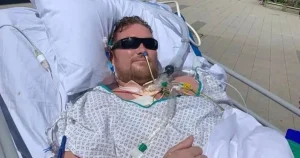

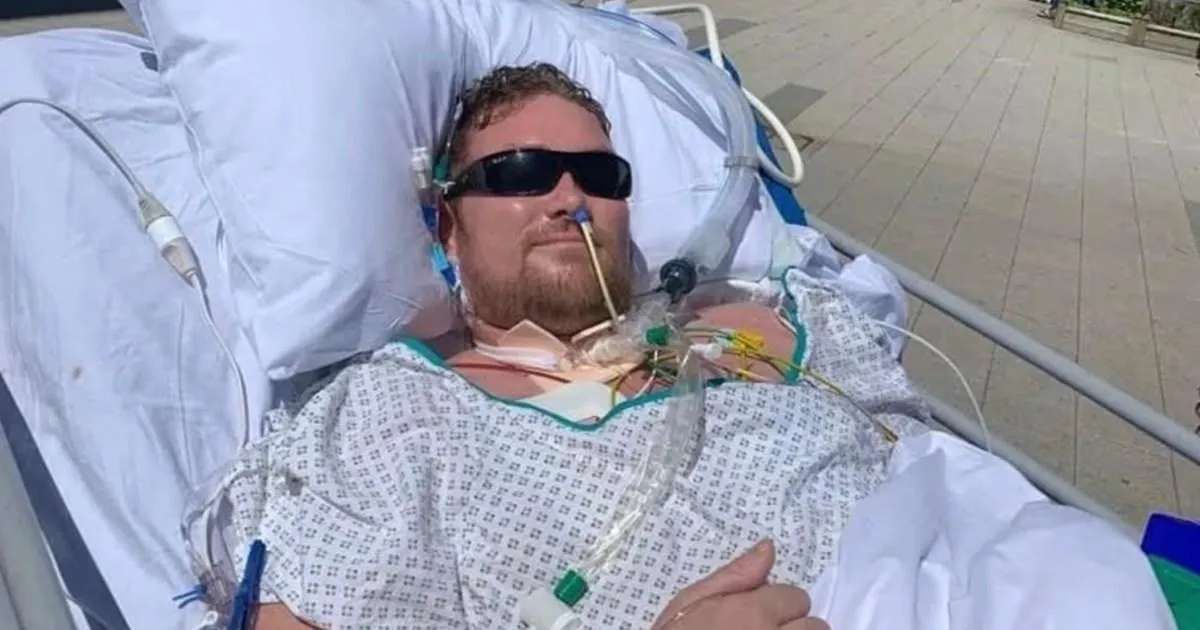
On an ordinary April morning in 2022, Gavin Pugh clocked in for what should have been just another day of skilled, physical work. A 33-year-old power lines maintenance man from Bangor, North Wales, he was part of a team tasked with dismantling an electricity pylon in East Staffordshire. It was the kind of job he had done many times before, one that required trust in equipment, training and the people working alongside him. But in a single, horrifying second, that trust was betrayed by a hidden danger. Gavin had unknowingly clipped his safety line onto a section of the pylon that had already been worked on by another crew. That section was no longer secure, although nothing about its appearance gave any warning. When he put his weight on it, the strut spun violently into a vertical position, his safety rope slipped loose, and he plunged more than 30 feet to the ground. The impact was catastrophic. Gavin survived, but his life was changed beyond recognition. He was left paraplegic, reliant on a wheelchair for the rest of his life, and had also suffered serious injuries to his brain, neck, shoulder, ribs and internal organs. What began as a routine maintenance task ended in a devastating fall that stripped away his independence, his career and his former identity.
The tragedy of Gavin’s accident is that it was entirely preventable. The pylon had already been partially dismantled by another team, but no one had properly communicated that crucial fact to Gavin and his colleagues. He had no way of knowing that the section he clipped his safety line onto was only secure at one end. When he trusted it with his weight, it moved under him, and the safety equipment meant to protect him became useless. His employer at the time, Cheshire-based Wood Transmission and Distribution Ltd, was later criticised by the Health and Safety Executive for failing to put adequate safety arrangements in place. The HSE found that there had been no proper assessment of the risks, no clear procedures for transferring towers between teams, and insufficient consideration of the work methods being used. The company was fined £240,000, a sum that seems staggeringly small when measured against the human cost of the accident. As HSE inspector Robert Gidman later said, the incident could have been prevented if the company had simply protected its workers from harm. Instead, because of those shortcomings, a young man in the prime of his life was left paralysed, and a series of ordinary workplace failures cascaded into a life-altering catastrophe.
Before the fall, Gavin Pugh was, in his lawyers’ words, an “active and sociable person” who loved his job and lived with a sense of freedom and purpose. He had his own fishing boat, a passion that connected him to the outdoors, to patience, to the rhythms of the water. He enjoyed being out with friends, working with his hands, and feeling useful in a demanding trade. But the accident tore all of that away. The physical injuries alone were devastating: a spinal injury that left him without the use of his legs, plus damage to his brain, neck, shoulder, ribs and internal organs. Yet the hidden injuries were just as cruel. Gavin was left with life-changing physical limitations that affected every single part of his daily existence. He could no longer walk, no longer dress himself without help, no longer move freely through the world. The psychological consequences were significant and enduring. He had to watch his old life from a distance, unable to return to the job he loved, unable to simply get up and go. The fall did not just break his body; it shattered the ordinary rhythms of his life, his sense of self, and his hopes for the future. The loneliness and frustration of being trapped in a body that no longer obeyed him were, in many ways, as painful as the physical wounds.
In the aftermath, Gavin sought justice through the courts. He sued his employer at London’s High Court, and after lengthy out-of-court negotiations, the parties reached an agreement that his lawyers, Stewarts, described as being worth “eight figures” — more than £10 million. This was not a windfall; it was a recognition of the enormous cost of the life he had lost and the immense challenges he would now face. The compensation package was carefully designed to cover the full scope of his needs: compensation for his injuries and his lost future earnings, funding for 24-hour live-in carers, and more than £1 million in rehabilitation costs associated with his disability. Crucially, his legal team also secured interim payments early in the process, which allowed Gavin to begin his rehabilitation without delay. Those payments helped him pay for the treatment and therapy he desperately needed, and they helped him secure a new bungalow, adapted to his needs, where he could live with some degree of comfort and independence. Without that early support, Gavin’s recovery would have been far slower and far harder. The final settlement ensures that he will be looked after for the rest of his life, and that the financial burden of his disability will not be an additional weight on his shoulders.
Gavin’s own words after the settlement reveal a man who has been through unimaginable darkness but has found a way to keep living. “The fall turned my life upside down,” he said. “I wasn’t able to work or go out with my friends. My life fell apart.” There is no false cheerfulness in his voice, only honest recognition of everything he lost. But there is also gratitude. “The interim payments helped massively. I wouldn’t have been able to do anything without them. They made sure I was able to pay for any treatment or rehabilitation that I needed. They also helped in securing my new bungalow.” He spoke of the settlement with a quiet sense of relief: “The settlement ensures I’m comfortable for the rest of my life and that I’ll be looked after. Without it, I would have been in a very difficult position, so I am so grateful for it.” Most strikingly, he has begun to reclaim small pieces of the person he used to be. “I’ve been able to get back into some of my past hobbies. I’m fishing, and I’m able to get out and about. I’m able to go out with my friends again and enjoy myself, albeit not to the same extent, but I’m still happy.” Those words carry a profound weight. Happiness, for Gavin, now means something different than it once did, but it is still real, still worth holding onto.
This story is ultimately about two things: accountability and resilience. The HSE’s inspector, Robert Gidman, made it clear that Gavin’s suffering was not fate or bad luck, but the direct result of organisational failures. “Proper assessment of the risks and consideration of work methods, adequate staffing and clear procedures for transferring towers between teams could have enabled this work to go ahead without incident,” he said. “Instead, because of the company’s shortcomings, a worker has sadly and unnecessarily been left paralysed.” That message matters. Every worker who climbs a tower, enters a trench, or works alongside heavy machinery deserves to come home safe. The systems that protect them must be robust, carefully planned, and never left to chance. But there is also something deeply human in Gavin’s response to his own tragedy. He did not let bitterness consume him. He accepted help, fought for what he was owed, and found a way to be happy again, even within the limits of his new reality. His fishing boat may be different now, and his outings with friends may require more effort, but the spirit that defined him before the fall has not been extinguished. His story is a reminder that even in the wake of devastating loss, life can still hold moments of joy, connection and peace. It is also a warning that safety at work is not a bureaucratic detail, but a matter of life and death.