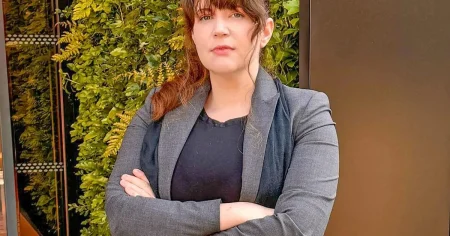




Bethany Sowerby had spent nine months dreaming of the moment she would finally hold her daughter Hattie in her arms. She had decorated a nursery, folded tiny clothes, and imagined the sound of a new baby’s cry filling the family home in Redcar, North Yorkshire. Hattie was already so loved. Her older sisters had talked to her through Bethany’s bump, her little brother had pressed his ear against it, and Bethany and her partner Matthew had allowed themselves to believe that their family was about to become complete. But on 16 May 2023, that dream was shattered in the most devastating way imaginable. Bethany, 32, became worried about her unborn baby’s movements and went to James Cook University Hospital in Middlesbrough for reassurance. What should have been a routine check turned into an unimaginable tragedy. An independent investigation by the Healthcare Safety Investigation Branch has since found that a paper jam in the hospital’s electronic fetal monitoring machine went unnoticed because its alarm had been set to silent. The machine was supposed to sound if it stopped recording properly, but that safeguard had been switched off. By the time anyone realised something was wrong, Hattie’s heart rate had dropped to a dangerous level. She was delivered stillborn by emergency caesarean section at 9.43pm that night. The investigation concluded that a pathological reading, which clearly showed the baby was in distress, was not recognised in time, and that this failure likely contributed to her death. For Bethany, the loss has left a wound that time has not healed. Now, as she continues to grieve, she is telling her story in the hope that no other mother will ever have to endure the same preventable heartbreak.
The details of what happened inside the hospital that day are deeply troubling. Bethany had already raised concerns during her pregnancy about Hattie’s movements, and plans had been made to induce labour at 39 weeks because of recurring issues. When she arrived at the hospital, staff carried out an initial assessment and found the baby’s heartbeat to be normal. She was then connected to a cardiotocography, or CTG, monitor, which is used to track a baby’s heart rate and the mother’s contractions. It is a routine piece of equipment, but on this occasion it failed in a way that went undetected. A paper jam occurred inside the machine, meaning the printout of Hattie’s heart rate could not be recorded properly. Staff on the ward were attending to other babies and did not notice the problem. The alarm that should have alerted them to the paper jam did not sound because the volume had been set to silent. It was Bethany who noticed something was wrong and alerted staff. When they finally examined the monitor, they found Hattie’s heart rate was below the normal range. An ultrasound scan was carried out, and it showed that her heart rate had dramatically slowed. Doctors made the urgent decision that the baby needed to be delivered immediately by emergency caesarean section. But it was too late. A re-print of Hattie’s heart rate later showed a pathological reading, a clear sign that the baby had been in serious distress, but this was not recognised before her death. The HSIB report identified a series of failures, and Bethany and her family have been left to live with the consequences of every single one of them.
For Bethany, the memory of those final moments with her daughter is seared into her mind. She held Hattie for the first time knowing it would also be the last time. In her own words, she recalls how cold her baby felt. That coldness has stayed with her, a physical sensation that she says broke her in a way she will never fully recover from. The trauma of losing a child is not something that fades quietly. Bethany has since been diagnosed with post-traumatic stress disorder and is undergoing therapy and taking medication to help her cope with the overwhelming weight of her grief. When she finally returned home from hospital, she could not bear to look at anything. The presents people had bought for Hattie were still wrapped and waiting. The tiny clothes she was meant to wear were folded in drawers. The room they had decorated with such love and hope stood ready for a baby who would never sleep in it. All of it became unbearable reminders of what should have been. She spoke about the milestones that will now never happen, the first birthday, first words, first steps, all stolen before they had a chance to begin. The reality she lives with is that she never got to take her daughter home from hospital. She carried Hattie for nine months, through all the excitement and anticipation, only to leave the maternity ward with empty arms and a broken heart. It was supposed to be one of the happiest days of her life, just as it had been with her other children. Instead, it became the most traumatic experience she has ever faced.
Bethany’s grief is made even more complicated by the fact that she still has to be a mother to her other children. She and Matthew have three children together, Ella, twelve, Olivia, nine, and Oakley, two. They are the reason she gets out of bed in the morning, but they also make the pain of losing Hattie harder to carry. Bethany says that Matthew and the children keep her going, and she wants to be the best mother she can be for them, but there are days when the weight of losing Hattie feels overwhelming. Living with that grief while trying to be present for her family is something she struggles with every single day. She talks about how not a day goes by when she doesn’t think about what might have been, and everything Hattie has missed. The children will never know their little sister. Oakley will never grow up with her alongside him. Ella and Olivia will never get to help dress her or push her in the pram. That loss is not just Bethany’s. It belongs to the whole family. It is why, despite her pain, she has chosen to speak out. She feels she has to tell this story so that no other mum or baby has to go through what they have been through. Her voice is her way of turning her grief into something meaningful, a desperate attempt to ensure that Hattie’s death was not completely in vain. She wants hospitals to learn from her daughter’s death, and she wants other parents to know that they are not alone if they carry the same pain.
The investigation has also raised serious concerns about maternity safety, and Bethany has instructed specialist medical negligence lawyers to make sure those concerns are properly examined. Katy Daws, a specialist medical negligence lawyer at Irwin Mitchell representing Bethany, said that Bethany’s maternity experience was extremely traumatic and that the loss of Hattie continues to have a profound impact on her life. She said both Bethany and Matthew are still struggling to come to terms with their heartbreaking loss at what should have been a time of celebration. The priority now is ensuring Bethany receives the support and specialist treatment she needs to cope with the aftermath. But Daws also made it clear that the findings of the investigation report are deeply concerning and identify a number of issues. She stressed that it is vital lessons are learned to improve maternity safety for other families. This is not just about seeking accountability for one terrible mistake. It is about asking why a simple issue like a paper jam in a monitoring machine could lead to the death of a healthy, wanted baby. It is about questioning how alarms can be set to silent in a hospital environment where every second matters. And it is about demanding that the same thing never happens again. No legal outcome can bring Hattie back, but Bethany hopes that by shining a light on these failures, she can protect other families from the same devastation. The investigation has already confirmed that the dangerous reading was not recognised, and for Bethany that knowledge is both painful and infuriating.
This week is Baby Loss Awareness Week, a time when families across the country come together to remember the babies they have lost and to support one another in their grief. For Bethany, this year’s awareness week carries a particular significance because it is another reminder of the daughter she should be raising. A spokesperson for South Tees Hospitals NHS Foundation Trust, which runs James Cook University Hospital, extended sincere condolences to Bethany and her family for the loss of Hattie. The trust said the matter is in the hands of the parties’ lawyers and therefore unable to comment further at this time. It is a response that offers little comfort to a mother who is still trying to make sense of the senseless. But Bethany has found strength in speaking out, in sharing her story, and in holding onto the love she feels for the daughter she lost. She has said that Matthew and her children keep her going, and that she wants to be the best mother she can be, even on the days when grief feels overwhelming. She carries Hattie with her always, in her heart, in her memories, and in the determination that her daughter’s life, however short, will mean something. She will never get to see Hattie grow up, but she will make sure the world knows what happened to her. She will make sure that Hattie is remembered. And she will keep fighting to ensure that the silence that allowed this tragedy to happen is never allowed to return.