

If you’ve ever wondered why the relationship between British politics and Manchester City feels so comfortable, the latest figures lay it bare. Politicians from every major party have been enjoying the club’s hospitality and the generosity of its Emirati owners for years—and the numbers are eye-watering. Manchester City alone handed out gifts worth around £25,000 to politicians between October 2014 and May 2025. That might sound like loose change compared to the sums flying around the Premier League, but it’s the kind of money that makes people sniff the air and ask: what’s really going on? And when you expand the lens to the club’s UAE backers, the scale grows dramatically. Over a longer stretch, the UAE has splashed out more than £467,000 on hospitality, free flights and other perks for MPs from all parties, with Labour taking the biggest slice. These revelations aren’t just a gossipy detail from the political wing—they land at a genuinely awkward moment, coming hot on the heels of a ruling that found Manchester City guilty of breaking financial rules using so-called “sham contracts” to hide over £830 million in secret funding. City has lodged an appeal, but the embarrassment lingers, and the cosy overlap between football royalty, Gulf money and Westminster power has never felt more uncomfortably in the spotlight.
To understand why this stings so much, you have to rewind to the verdict itself. For years, Manchester City have been one of the most dominant forces in English football—trophy machines with a style of play that has redefined the game. But the recent ruling pulled the curtain back on how some of that success was bankrolled. The club was found to have disguised more than £830 million in funding through contracts that were anything but legitimate. The phrase “sham contracts” does a lot of heavy lifting here—it’s the kind of language that makes fans of rival clubs feel vindicated and leaves City’s own supporters defensive. The club’s legal team moved quickly to lodge an appeal, pointing out that the fight is far from over. But the verdict itself has already done its damage in the court of public opinion. It has also put every interaction between City, the UAE and British politicians under a microscope. Suddenly, a free seat in the directors’ box doesn’t look like a harmless perk—it looks like a strand in a much bigger web of influence, one that carefully blends sport, diplomacy and money into something that is very hard to untangle.
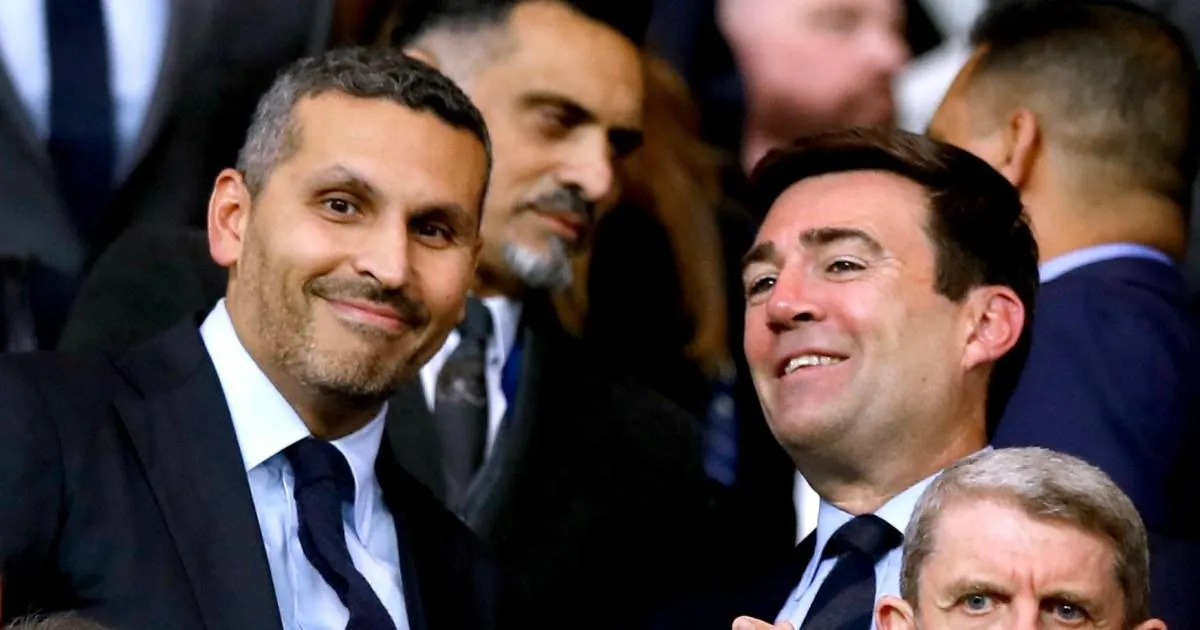
Prime Minister Andy Burnham, of course, walked straight into the middle of it. As a lifelong football fan and a politician with deep ties to Manchester, he was never going to stay quiet on such a momentous story. But his reaction made waves for all the wrong reasons. He said he was “really concerned” that City’s owners could pull their investments in Britain following the verdict—a comment that sent a shiver through rival clubs. The worry was obvious: if an Emirati-owned club that has poured billions into Manchester feels pushed against the wall, what does that say to other potential investors in British sport or wider infrastructure? The backlash was immediate and loud. Rival fans cried foul, accusing the Prime Minister of siding with those who broke the rules. Burnham later tried to row back slightly, insisting it was “important to separate the football issues from wider investment”—a form of words that tried to have it both ways. But the investigation into his links with the UAE only sharpened the optics. As mayor of Greater Manchester, Burnham was known for building unusually close ties with the Gulf state, and those relationships clearly extended into his time as PM. Days after taking office, he spoke directly to Sheikh Mohamed bin Zayed Al Nahyan, the UAE president and brother of Manchester City owner Sheikh Mansour. That is not the behaviour of a leader who wants to keep his distance. And to add a further layer of head-scratching, his Trade Secretary Jonathan Reynolds met City chairman Khaldoon al Mubarak at Number 10 shortly before the guilty verdict was announced—a timing that raised eyebrows even among those who normally keep their counsel.
The names attached to the freebies make for interesting reading all by themselves. Lucy Powell, the Deputy Labour leader who represents Manchester Central—a constituency that contains the Etihad Stadium—has accepted hospitality worth around £2,360 at City matches. That is exactly the kind of local connection that makes a gift feel natural: the stadium sits in her patch, the club is a pillar of the community, and surely a free seat here and there is just part of the job. But the investigation revealed that she was far from alone. Other Labour figures happily accepted similar perks, including Stretford and Urmston MP Andrew Western, Manchester Withington MP Jeff Smith and, perhaps most significantly, former Prime Minister Sir Keir Starmer. There is nothing illegal about taking a ticket to watch football, of course, and many politicians would argue that attending matches is part of understanding their constituents’ lives. But when the freebies come from a club that has just been found guilty of hiding massive sums of money, and when the broader UAE hospitality machine has poured half a million pounds into Westminster, the line between a perk and a problem becomes very blurred indeed. It is the kind of story that doesn’t require a moral panic to feel uncomfortable—it simply invites ordinary people to ask whether their elected representatives are really acting for them, or for the people who give them the best seats in the house.
**Zoom out further and the pattern becomes even harder to ignore. Since 2012, the UAE has been quietly (and sometimes not so quietly) investing in relationships with British politicians from every corner of the Commons. Some 78 separate entries in the MPs’ Register of Interests show a grand total of £467,000 laundered into hospitality, flights and events—if we can use the word “laundered” in its most transparent sense, since everything was officially declared. The Labour Party took the lion’s share at £275,000, while the Tories accepted £175,000, the SNP £15,000, the Lib Dems £3,500 and Reform UK a comparatively modest £1,000. The sources of these freebies were as varied as the recipients: the UAE’s Ministry of Foreign Affairs, the government of the UAE itself, and the Abu Dhabi Education Council all appeared on the registers. That range is telling. It suggests a coordinated, long-term effort to nurture goodwill across the British political spectrum, regardless of which party happened to be in power. And while the sums involved are not enormous in the grand scheme of state budgets, they are intentionally targeted.
**
For William Yarwood of the TaxPayers’ Alliance, that’s exactly the problem. He put it in plain language that cuts through the spin: “Taxpayers will be concerned to hear that politicians are receiving gifts that may lead to conflicts of interest. Against the backdrop of ongoing scrutiny of UAE-backed Manchester City, politicians dining at the club’s expense raises serious questions about foreign influence and transparency. Politicians who are elected to serve taxpayers must uphold the highest standards of integrity and avoid any conflicts of interest.” It is hard to argue with that. The Premier League clubs were reportedly “concerned” too, though their worries were more self-interested: they feared that Burnham’s comments might undermine the appeal process and disrupt the competitive balance that the verdict was meant to restore. Whatever the motives, the whole saga paints a picture of British politics where gifts are routine, foreign money is never far away, and questions of influence are brushed aside with a shrug. The truth is that this isn’t a story about a few free tickets or a nice dinner—it’s a story about how power works, who gets to sit next to it, and what it costs the rest of us when the lines become too blurred to see. And until politicians start drawing much clearer boundaries between gratitude and obligation, the public will keep asking the same weary question: whose side are you really on?