

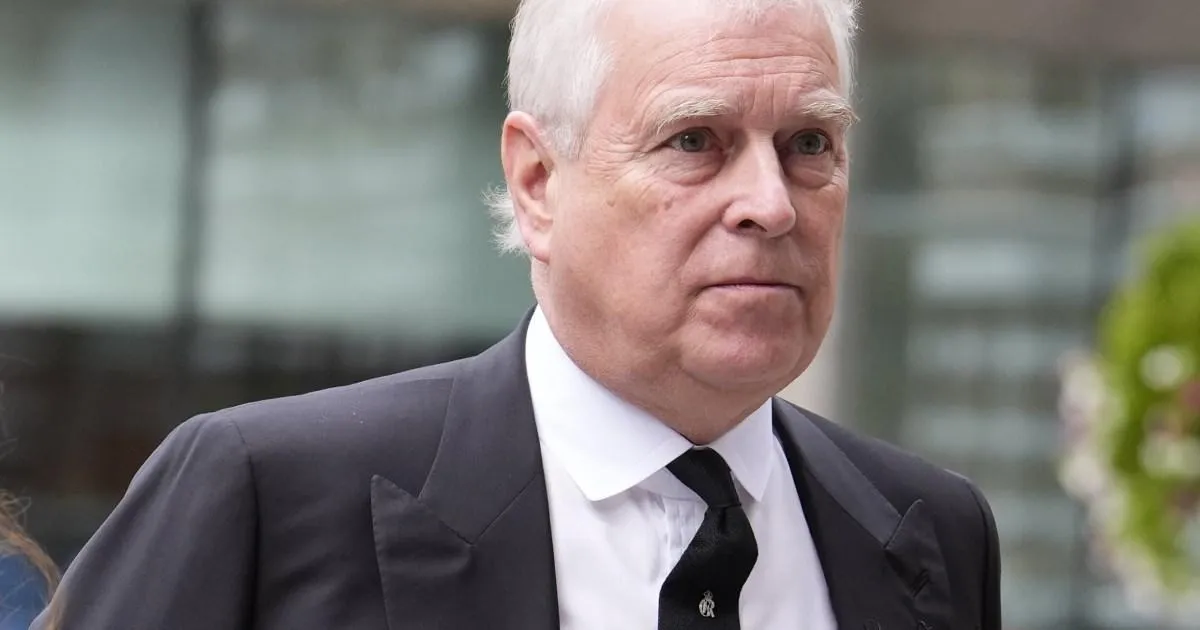
Andrew Mountbatten-Windsor is not a name that typically evokes sympathy, yet in recent weeks something has shifted. The disgraced former prince, stripped of his royal titles and military affiliations by the King, has emerged from a bruising period with a quiet but unmistakable resurgence of confidence. Following his legal victory against Thames Valley Police, royal insiders say he is walking with a spring in his step, refusing to disappear into the background of public disgrace. Behind closed doors, he still insists on being addressed as “Duke” or “Sir,” clinging to the identity that was taken from him in the public square but remains, in his own mind, his birthright. His legal challenge was historic: he became the first royal in nearly four hundred years to directly confront the legal system, a distinction not lost on those who compare his stubborn defiance to the doomed Charles I. Yet the comparison that matters more to Andrew is personal, not historical. A source close to him told the Daily Mail that he “believes he is an honourable man who has been unfairly treated” and is “determined” not to accept being a “punchbag or a scapegoat.” This is not the language of a man ready to fade away; it is the language of someone who sees himself as the protagonist of an injustice rather than the author of his own downfall. The legal victory was narrow, technical, and unrelated to the broader accusations of sexual misconduct and corruption that still hang over him. But for Andrew, it was enough. It gave him something he had not felt in years: the sensation of winning. And for a man whose entire adult life was built on deference, prestige, and access, that feeling is intoxicating. He is no longer just accepting his fate; he is fighting back, if only in the quiet corridors of his own mind and the guarded spaces of his new home.
The roots of his newfound optimism lie in the admission by Thames Valley Police that their searches of his former residence, Royal Lodge, were unlawful. This was not a small procedural footnote. For Andrew, it was a vindication of a narrative he has privately maintained since the investigation began: that he has been treated unfairly, that the machinery of justice has been weaponised against him, and that his rights were trampled in the rush to condemn him. Police conceded that the property should not have been searched without him or a representative present, and that items belonging to his ex-wife, Sarah Ferguson, should not have been seized. The force insists that this admission is not a “judgement” into the investigation itself, and legally, that may be true. But emotions do not follow legal distinctions. For Andrew, the unlawful search is proof that the establishment is not above reproach, and that he is not the only one who has acted improperly. The investigation, which centres on his decade as UK trade envoy until 2011, has since widened to encompass claims of corruption and alleged sexual misconduct. The bar for proving his misconduct in public office remains high, and his legal team is reportedly emboldened by the police’s fumble. This is not the triumphant clearing of his name that he might have dreamed of, but it is enough to fuel his defiance. He is no longer simply waiting for the other shoe to drop; he is actively challenging the system that he believes failed him. The unlawful search has given him a platform, a grievance, and a reason to keep fighting. And for a man who has lost so much of his public standing, any reason to keep fighting is precious.
Yet the deepest wounds are not legal; they are familial. Andrew is said to feel “badly let down” by the King, who pushed him to reach a financial settlement with Virginia Giuffre in order to avoid overshadowing Queen Elizabeth II’s Platinum Jubilee. That settlement, while not an admission of guilt legally, effectively ended any hope of a dignified public rehabilitation. Andrew complied, but he did not forget. He saw it as a sacrifice made for the family, not a genuine act of accountability. And in his mind, that sacrifice has never been acknowledged. He believes he remained loyal to the royal family in the way that truly mattered: he did not air his grievances publicly. Unlike his nephew, the Duke of Sussex, who has made a career out of shared confidences and televised accusations, Andrew kept his mouth shut. He did not sit down for tell-all interviews about his treatment by the palace, nor did he leak his frustrations to friendly journalists. He simply accepted the exile, moved to Marsh Farm in Norfolk, and waited. And now, according to royal insiders, that silence is being noticed. “The wider family feels he deserves credit for not rocking the royal boat,” one source said. That may sound like a small reward for a man who was once one of the most prominent figures on the world stage, but for Andrew it is a lifeline. He has always seen himself as the loyal son, the dutiful prince, the one who would never betray the institution even when the institution betrayed him. The contrast with Harry is only too clear in his mind. Harry exposed the family; Andrew protected it. Whether this will translate into real reconciliation remains to be seen, but for now it gives Andrew a moral foothold in the family narrative.
Life in Norfolk has become a strange, diminished spectacle for a man who once entertained heads of state and mingled with billionaires. He was turfed out of Royal Lodge in Windsor, the home he had fought to keep, and now lives at Marsh Farm, a property described as modest by royal standards. Yet even here, something unexpected has happened: the neighbours have warmed to him. He has been invited to dinners and suppers, casual affairs where he is no longer treated as a guest of honour but simply as one of the locals. These may seem like small gestures, but for Andrew they are significant. After years of being shunned, vilified, and frozen out, being welcomed to a neighbour’s table is a form of acceptance he has desperately craved. The events are reportedly low-key, without the pomp and ceremony that once surrounded him. He is no longer the Duke of York in any official capacity; he is simply Andrew, the man who lives down the road. But he is not being treated as a pariah. He is being treated as a neighbour. There is something almost touching about this: a man who once had the world at his feet now finding comfort in the ordinary, the unremarkable, the human. He has also reportedly received a steady flow of fan mail, which his part-time secretary manages. This may surprise those who assume that the public has completely turned against him. But there are always those who see a man as unfairly persecuted, who write letters of support to the fallen, who want the disgraced to know that someone out there still believes in them. For Andrew, these letters are more than paper; they are proof that he is not entirely alone.
With Christmas only a couple of months away, the festive season is shaping up to be a key test of how far his attempts at reconciliation have truly reached. The King and his family traditionally gather at Sandringham for the holidays, and Norfolk is, of course, where Andrew now lives. His proximity to the royal estate is both a blessing and a curse. On the one hand, it keeps him physically close to the family he still longs to rejoin. On the other hand, it makes his absence from the celebrations impossible to ignore. Some within the royal circle are said to have “jitters” about the optics of the family gathering with Andrew sidelined nearby, just a stone’s throw away. The image of the King and his immediate family celebrating Christmas while Andrew sits alone at Marsh Farm would be difficult to spin. It would also be deeply painful for Andrew, who has spent most of his life as part of those festive rituals. Christmas is a time for family, for forgiveness, for the kind of warmth that even the most dysfunctional families manage to muster. For Andrew, it represents an opportunity. If he is invited to any of the festivities, even briefly, it would be a signal that the door has not been completely closed. If he is not, it would confirm his worst fears: that he is no longer family in any meaningful sense, just an embarrassing relative to be kept at arm’s length. The jitters suggest that the palace knows this too. They cannot simply ignore him, but they cannot fully embrace him without reopening old wounds. The holidays will be a delicate dance, and Andrew, for all his perceived arrogance, is likely to be watching every move.
In the end, this is a story about identity and the desperate human need to be recognised. Andrew Mountbatten-Windsor refuses to give up on being who he once was. He may no longer be a working royal, but he still demands the title of Duke. He may have been publicly disgraced, but he still believes he is an honourable man. He may have been exiled from the inner circle, but he still hopes to be accepted back. These are not contradictions to be resolved logically; they are the contradictions of a human heart that cannot accept its own shrinking. The legal victory, however technical, has given him a sense of momentum. The warmth of his neighbours has given him a sense of belonging. The fan mail has given him a sense of purpose. And the approaching Christmas has given him a reason to hope. Whether any of this will lead to actual rehabilitation is another matter. The accusations against him are not going away, and the public memory is long. But Andrew is not thinking in decades; he is thinking in moments. Each small step, each dinner invitation, each letter of support, is a tiny brick in the wall of his own reconstruction. He has spent years being treated as a punchbag, a scapegoat, a problem to be managed. Now, at last, he is fighting back in the only ways left to him: through the courts, through his silence, and through stubborn, unyielding persistence. Whether he ever fully regains his place in the royal family or the public’s regard matters less than the fact that he no longer seems to care as much about the verdict. He has found a kind of peace in defiance. He has found a reason to wake up each morning. And for a man who has lost so much, that may be the greatest victory of all.