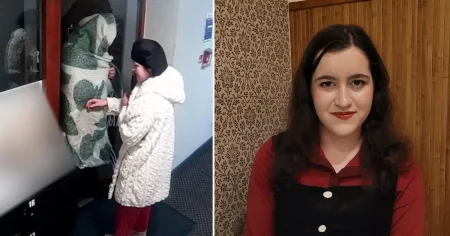



Joy Osundeko was a 13-year-old girl whose life had always been shaped by vulnerability and strength. Born with Down’s syndrome and a constellation of serious medical conditions, she required constant, round-the-clock care. A ventilator breathed for her, and her home in St Helens, Merseyside, was not just a childhood bedroom but a carefully managed medical space, where every moment was watched, timed, and documented. Yet for all her fragility, Joy was described by her family as a source of profound light. They named her Joy because she filled their lives with it, and her smile, they said, could illuminate the darkest room. She loved to throw her hands and legs in the air, a small but precious gesture that gave her parents a window into her happiness. That happiness was shattered on the morning of February 15, 2022. At around 8am, her father handed over care to a nurse employed by Optima Health and Social Care Ltd. An hour later, he reentered Joy’s bedroom and found her lifeless. What followed was a chain of events that no family should have to endure—a tragic accident, a desperate rescue, a slow decline, and ultimately the loss of a daughter who meant everything to her family. But before there could be grief, there was terror, and before there could be answers, there was silence.
The father’s memory of that morning remains painfully vivid. He had been resting when a sense of unease compelled him to check on Joy. In his own words, he was extremely concerned, and he jumped out of bed. It took him only about five seconds to run down the stairs and reach her bedside, but in that impossibly short span of time, his daughter had already become completely lifeless. She was blue, still, and unresponsive. The nurse, who had been responsible for Joy’s care, moved out of the way, seemingly frozen or perhaps uncertain of what she had done. The father grabbed the emergency bag, removed the ventilator tube from Joy’s trachea, and began manually providing oxygen with his own hands. He kept pumping air into her lungs, all while screaming her name, desperate for any sign of life. He would later describe the experience as holding a baby doll—limp, weightless, and terrifyingly still. It took almost a minute before Joy began to breathe again on her own, but by then, the damage may already have been done. The family later learned, through CCTV footage, that the nurse had pressed several buttons on the ventilator, inadvertently causing the machine to shut down. The nurse initially insisted the machine had been off for only a few seconds, but the video evidence suggested it had been dormant for up to six minutes. Six minutes without oxygen. Six minutes in which a child’s brain and body were starved of the air they needed. Those minutes would prove to be the beginning of the end.
Joy was rushed to Alder Hey Children’s Hospital in Liverpool, where she spent nine days under intensive care. Her family clung to hope, believing that their little girl might somehow recover. But the signs were not good. Joy never properly recovered from the incident. Her body, already fragile, began to fail in new and devastating ways. Her father noticed that she no longer moved her hands and legs with the same energy she once had, and her right leg, in particular, seemed stiff and difficult to move. There were changes in her body, a general deterioration in her health, and, perhaps most heartbreaking of all, she stopped smiling. The little girl who had filled her parents’ lives with joy no longer seemed present in the same way. The family watched helplessly as their daughter slipped away from them, not all at once but gradually, over months of hospital visits, therapies, and quiet, agonizing waiting. On June 13, 2022, four months after the ventilator was turned off, Joy suffered a stroke that caused brain stem death. She was just 14 years old. Her death was not sudden or peaceful—it was the result of a preventable mistake that had been denied, minimized, and contested. Her parents were left not only with grief but with the unbearable weight of knowing that someone’s carelessness had stolen their daughter’s future, and that no one was willing to take full responsibility.
The aftermath of Joy’s death was marked by a series of investigations, legal battles, and disappointments. The police launched an investigation, and charges were initially brought against the nurse. A criminal trial was listed, and the family braced themselves for the possibility of accountability. But in December 2025, the Crown Prosecution Service confirmed that it would no longer pursue a prosecution. No explanation was given that could satisfy the family, and no trial would take place. The nurse’s employer, Optima Health and Social Care Ltd, admitted to breaching its duty of care, but the company denied that the incident caused Joy any injury or contributed to her death. That denial stands in stark contrast to the family’s experience. They watched their daughter deteriorate in real time. They saw her stop smiling, lose movement, and eventually die. The family subsequently reached an out-of-court damages settlement, but no amount of money could bring Joy back or explain how such a serious mistake could have been made. The lack of criminal prosecution left many questions unanswered, and the family sought an inquest, hoping that a coroner might examine the full circumstances of Joy’s death. That request was rejected, with the coroner citing the time elapsed since her death and the lack of vital evidence following her cremation. For the family, it felt like the doors to justice were closing one by one.
The system that was supposed to protect Joy seemed to be failing her at every turn. The nurse, whose identity has not been made public, has not provided any explanation to the family. Joy’s mother expressed her devastation in raw and powerful terms, saying that what happened to her daughter and to her family was completely unacceptable. She spoke of feeling completely failed by the system and vowed to keep fighting for answers. Her pain was evident in every word. She described the agony of losing a daughter as unbearable and insisted that the matter could not be left there. The family has received no explanation from the nurse as to how she could have made such a serious mistake, and they believe that an explanation is the least they are owed. The case is now being investigated by the Nursing and Midwifery Council, but that investigation offers little comfort to a family that has already endured years of waiting and uncertainty. Their solicitor, Maria Repanos of Hudgell Solicitors, said that Joy’s parents have been left absolutely devastated and that, more than four years on, they still have no explanation as to how and why this happened. The family’s grief is compounded by the sense that their daughter’s life and death have been reduced to legal arguments, insurance settlements, and procedural decisions, rather than the tragic loss of a bright and beloved child.
In the end, Joy’s story is not just a clinical case study or a cautionary tale about medical negligence. It is the story of a girl whose name was a promise, a daughter whose smile brought warmth to everyone around her, and a family that has been left to live with an unbearable void. Joy’s mother remembers her daughter’s joy, the way she threw her hands and legs in the air, the light in her eyes, the love she gave so freely. She also remembers how that light faded after the ventilator was turned off, how Joy’s body became still and her smile disappeared before she died. The family has sought accountability, but what they truly want is the truth. They want to know how a trained nurse could accidentally shut off a life-support machine and then not fully acknowledge what happened. They want the people responsible to look them in the eye and explain themselves. They want to believe that lessons have been learned, and that no other family will have to experience the same heartbreak. But more than anything, they want Joy’s life and death to mean something. They want to remember her not just as a victim of negligence, but as the joyful girl she was, the girl who could light up a room, the girl whose name will forever be a reminder of what was taken from them. Until they get the answers they have so desperately sought, they will continue to mourn, continue to fight, and continue to hold on to the love that Joy brought into their lives.