

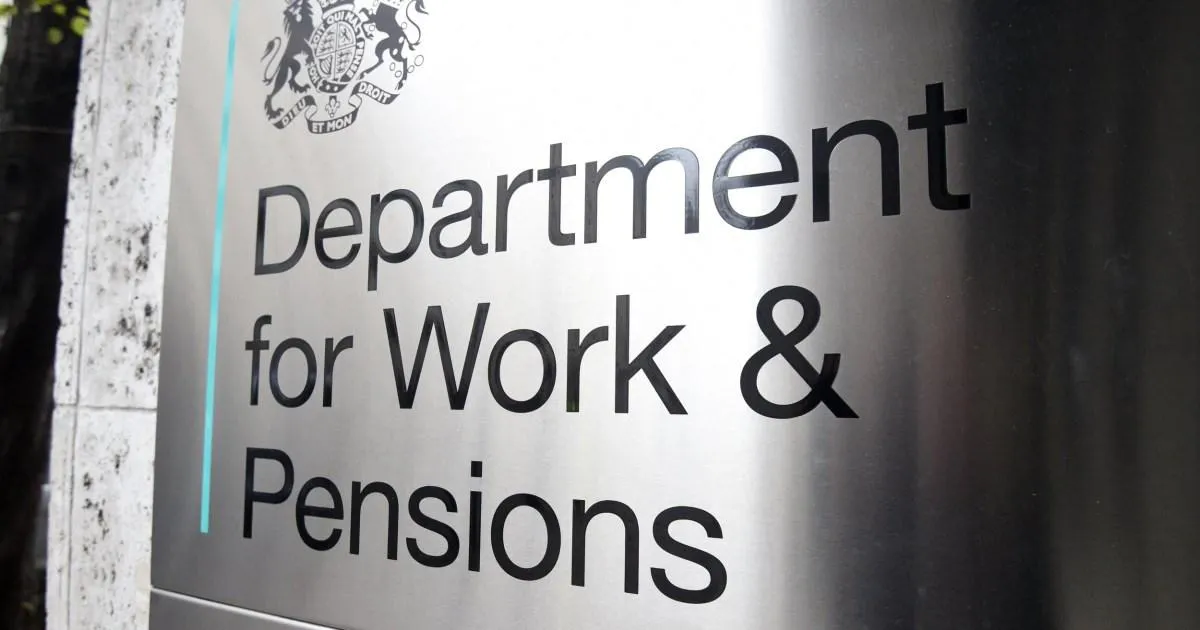
Imagine the moment: you have just lost a parent, a partner, or perhaps a sibling. You are still trying to choose flowers, write an obituary, and comfort the people around you. The world feels strange and heavy. Then another envelope arrives, marked with the official stamp of the Department for Work and Pensions. Inside, in careful bureaucratic language, you are told that a state pension payment was made after your loved one had already died, and that the government would like the money back. For many families, this is not a hypothetical scenario. It is a painful, confusing reality. In the last financial year alone, a record £170 million in pension payments was sent to people who had already passed away. Over the past five years, the total has reached a staggering £673 million. These are not just numbers on a spreadsheet. They represent countless households navigating grief while also dealing with an administrative system that often feels cold, unforgiving, and strangely disconnected from the reality of human life.
The root cause of these overpayments is rarely malice. It is usually a simple but tragic lag: the time between a person dying and their family thinking to notify the Department for Work and Pensions. Under current rules, relatives are expected to report a death within five days of it happening, or within five days of the body being discovered. But anyone who has been through bereavement knows that the first days are a blur of shock, practical tasks, and emotional exhaustion. You may not know that a pension is still being paid. You may not even know that you are responsible for telling a government department. It is perhaps unsurprising, then, that money continues to flow into bank accounts long after the account holder has gone. What is more difficult to accept is what happens next. The government classifies a failure to report a death as either a fraud or a claimant error. That label feels extraordinarily harsh when applied to someone who is simply too overwhelmed to remember every piece of paperwork. And yet, because the law is what it is, thousands of grieving families are suddenly cast in the role of debtors, asked to explain why they received money they did not ask for and never expected.
The financial scale of the problem is enormous, but the human cost is more subtle. Of the £673 million paid out to deceased pensioners over the last five years, only £348 million has been recovered by the exchequer. Around £240 million has been formally written off as unrecoverable debt. This means that large sums of public money have simply vanished, not because families refused to pay, but because there is no legal obligation for them to do so. The Department for Work and Pensions has no statutory power to reclaim payments made to people who are no longer alive. It can only write to the bereaved and politely ask for the money to be returned. Some families repay it immediately, often using whatever savings they have left. Others cannot. Many have spent the money on funeral costs, unpaid bills, or everyday expenses that mounted up while they were distracted by loss. Some believe, understandably, that the state made a mistake and should bear the cost. The result is a deeply uncomfortable situation: a government department trying to collect debts from people who are mourning, while those people try to defend themselves against a system that seems to blame them for its own error.
The debate over what to do about these overpayments is not simple. Sir Steve Webb, a former pensions minister who served in the Coalition Government under David Cameron, has pointed out that taking a heavy-handed approach towards the recently bereaved would be deeply unpopular with the public. He is right. No one wants to live in a country where the state hounds grieving widows for money that was accidentally paid into a dead spouse’s account. At the same time, as pension rates rise, the amount of money paid out after death is likely to increase too. The same generosity that helps keep older people out of poverty also makes the system more vulnerable to error. Shimeon Lee, a policy analyst at the TaxPayers’ Alliance, has described the losses as a serious weakness in the system, even though they represent only a small share of total pension spending. This is the crux of the problem. We want a welfare state that is compassionate and efficient, but we also expect it to be financially responsible. When those two goals collide, as they do here, the burden often falls on the most vulnerable people, the recently bereaved, and the logic becomes difficult to defend.
The Department for Work and Pensions, for its part, insists that it is doing what it can. A spokesperson has said that it is departmental policy to recover all debt where it is reasonable and cost effective to do so. The department also encourages anyone who has recently lost a loved one to use its “Tell Us Once” service, a system designed to make it easier to notify the government and other public bodies of a death in a single step. Once the department has been told, it says, it acts quickly to update its records and ensure that benefits only go to those who are entitled to them. All of this sounds reasonable in theory. But in practice, it places the burden of responsibility squarely on the shoulders of people who are already hurting. The “Tell Us Once” service is helpful, but it still requires the bereaved family to know about it, to understand how to use it, and to be emotionally and physically able to complete the process in the midst of their grief. There is also a broader question: why should the system rely on families at all? Death is legally registered with the state. In an age of digital government, it should not be so difficult to connect those records with pension payments automatically. The fact that it is not already happening suggests a lack of imagination, not a lack of resources.
Ultimately, the story of these overpayments is not just about money. It is about the way we treat each other during the hardest moments of life. Every one of those letters sent to a grieving family is a small act of institutional failure. It tells a widow that the state does not understand her situation. It tells a daughter that she has somehow done something wrong. It tells a son that his father’s final months have been reduced to an accounting error. The public understands that mistakes happen. What we struggle to accept is the lack of grace in the response. We could do better. We could build a system that automatically updates records when a death is registered. We could make the notification process simpler and more supportive, not just a checklist of obligations. We could train staff to speak with empathy and patience, not just to pursue debt. And we could recognise that behind every overpayment statistic is a story of love, loss, and ordinary human imperfection. The government has already taken some steps, such as the “Tell Us Once” service, but more is needed. The goal should be a system that protects public money without losing its humanity, one that treats the bereaved with dignity and understands that grief is not a reason to make someone’s life harder. Until that happens, millions of pounds will continue to be lost, and, far worse, thousands of people will continue to feel that their loss is being measured in debt. We should not accept that. We should demand better.