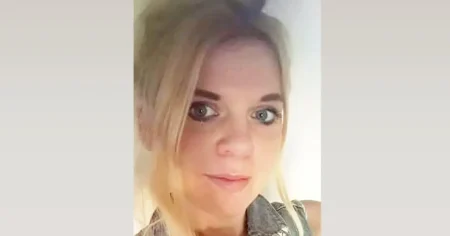


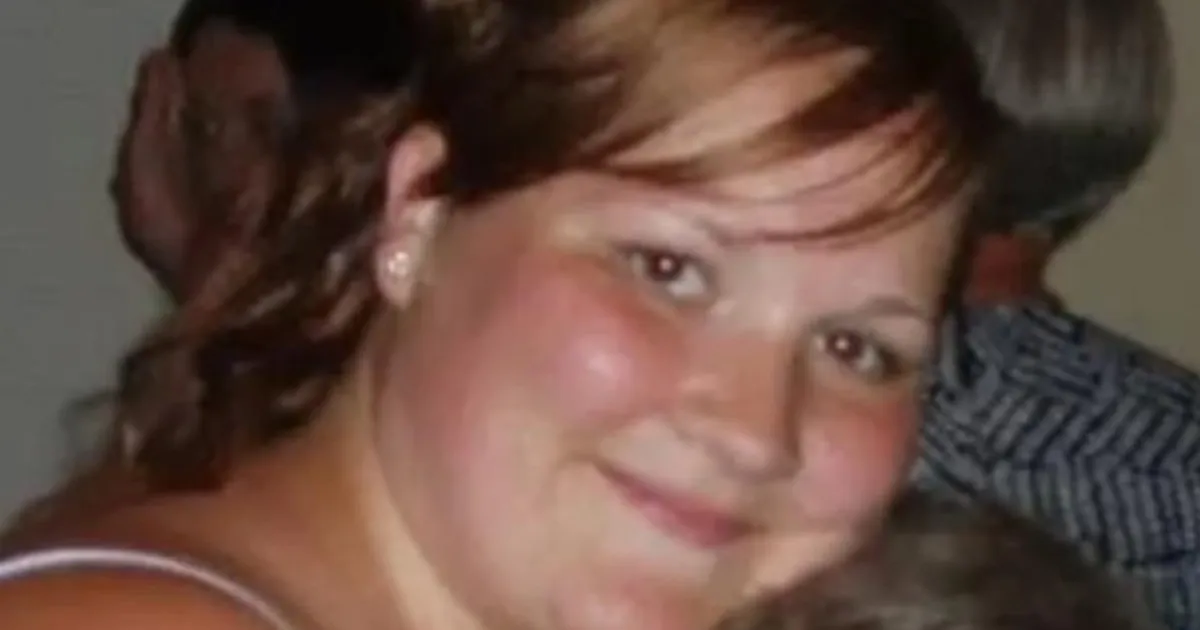
Carolann Barraclough was 37 years old, and to everyone who loved her she was never meant to be a statistic, a headline, or a case number. She was a mother whose children were the very center of her world. She was a sister, a friend, someone with a massive heart who was always smiling and whose joy was infectious. Her nickname was Caz, and she was described as the bright light of her family. But in the early hours of February 20 this year, that light was brutally extinguished in the place where she should have been safest: her own bed, in her own home, in Horbury, Wakefield. The man who killed her was her husband, David Barraclough, 46, the person who should have protected her. Using a claw hammer, he attacked her while she lay in bed, inflicting four lacerations with the head of the weapon and a further large injury with its claw. As a judge later described, she could only have survived a short time under the attack. The morning before she died, one of her children had noticed something deeply wrong. Carolann had said she was not feeling well and would be gone for a while, and she looked, in the words later shared in court, “miserable and terrified, petrified about what was going to happen.” That heartbreaking image of a woman bracing for the violence to come is one that should haunt anyone who reads her story. Mercifully, her children did not witness the attack and did not find her body, but they will carry the weight of her absence for the rest of their lives.
What David Barraclough did after killing his wife is almost impossible to comprehend in its coldness and cruelty. Instead of calling for help, instead of feeling grief or panic, he began a calculated performance designed to convince everyone around him that Carolann was still alive. He placed her body in a chest freezer in the utility room, wrapped in a duvet, her hands and ankles bound with tape and a bin liner over her head. Then he created a web of lies and deceit that went on for nearly two weeks. He used her phone to send messages to her family, including her eldest child, pretending to be Carolann recovering from an illness in hospital. On March 2, he sent a message saying: “I’m starting to feel a bit better I’ll be home soon,” followed on March 4 by: “love you have a good day.” The child, innocent and trusting, replied: “Hi mum, how are you doing today,” with two smiling emojis. That exchange is perhaps the most devastating detail of this entire case. A child was talking to a dead mother, and the killer was on the other side of the phone, continuing the performance without a flicker of remorse. Carolann’s family and friends spent those days believing she was somewhere safe, being cared for, slowly recovering and coming home to them. In reality, her body was hidden in the family home while her husband carried on with his own secret life.
While Carolann lay dead in that freezer, Barraclough did not behave like a grieving husband. He did not behave like a man wracked with guilt or fear. Instead, he joined dating apps, contacted escorts, exchanged explicit messages with other women, and used his wife’s bank card to withdraw large amounts of money from their joint account to support the lifestyle he was living. By the time he finally walked into Normanton Police Station and handed himself in on March 5, the couple’s account had just 16p left in it. When he turned himself in, he tried to control the narrative one last time, callously painting himself as a victim. He claimed Carolann had attacked him with the hammer after subjecting him to abusive behavior, and that he had killed her in self-defense. He said he was “heartbroken” by what had happened and that he had tried to kill himself. But the evidence told a very different story. The court heard that it was Barraclough who had been controlling and abusive toward his wife for years. He pleaded guilty to murder on what was supposed to be the first day of his trial, but then he refused to go back into court and face justice in front of Carolann’s family, who had packed the public gallery to see him. The judge, Andrew Stubbs KC, noted that he wanted to use new powers to bring defendants to court by force or impose an extra two years on their sentence for refusing, but said those powers are not yet in force. The empty dock was yet another insult to the family who had gathered to confront the man who took Carolann from them.
The human cost of this crime was laid bare in the victim impact statement read to the court by Carolann’s sister, Sarah Rowley, speaking on behalf of the whole family. She described how they were “completely shattered by the senseless and violent way Caz was taken from us.” She spoke of Carolann’s children, who were the center of her world, and said: “The void of her absence is agonisingly loud.” That phrase captures something essential about grief: it is not quiet, it is not passive, it is a deafening emptiness that follows every single day. Sarah Rowley described her sister as the “bright light of our family,” someone who was always smiling, whose joy was infectious, and who had a massive heart, always ready to help others. This was not a perfect or abstract person; she was a real woman with a real presence, someone who made the world warmer for the people around her. To have her stolen by the man she had married, in such a violent and brutal way, and then to be lied to for almost two weeks while her body was hidden in a freezer, is a betrayal so deep that it defies words. The family will never get those two weeks back, and they will never get Carolann back. The judge’s comments that it was merciful her children did not witness the attack or find her body brought some small consolation, but mercy can only go so far when a life has been stolen in such a savage way.
In the end, justice was done, as much as it ever can be after a murder. David Barraclough was jailed for life for the murder of his wife. The judge rejected the claims made by his lawyers that he was remorseful, describing the “scale and scope of your lies” and noting that there had been a “significant amount of planning” in what he did. Addressing Barraclough despite the empty dock, the judge said his behavior displayed a “callous disregard for his wife, her children, his children and her friends.” Jill May, Senior Crown Prosecutor for CPS Yorkshire & Humberside, said Barraclough tried to paint himself as a victim of domestic abuse who had no choice but to kill his wife and was heartbroken by what happened, but the evidence told a very different story. After brutally murdering Carolann, he hid her body in the home she shared with her children and lied repeatedly to her friends and family, spinning a calculated web of lies, pretending she was alive and recovering from illness in hospital. His actions in the weeks after her death, downloading dating apps and taking out large sums of money from their joint account, were blatantly not those of a man in mourning. Detective Inspector Tom Hilyer of West Yorkshire Police said Barraclough was a “very manipulative and calculating individual” who not only brutally killed his wife but then went to extreme lengths to fabricate a defence that suggested he wasn’t responsible. He expressed hope that disproving those self-serving claims would bring some comfort and closure to Carolann’s family, who have been left devastated by her murder.
Carolann’s story is not just one family’s tragedy, although for them it is everything. It is also part of a wider crisis that continues to claim women’s lives across the country. On November 25, 2024, Metro launched This Is Not Right, a campaign with Women’s Aid to address the relentless epidemic of violence against women. The campaign aims to shine a light on the sheer scale of this national emergency, and stories like Carolann’s are a stark reminder of why it matters. She was a woman killed in her own bedroom by a man who claimed to love her, and whose control and abuse had been escalating long before he picked up that hammer. Her death was not an unpredictable explosion of violence; it was the end point of a pattern of abuse, and the warning signs were there. What makes this case even more painful is that even after death, Barraclough tried to take away her voice, her truth, and her dignity. But the family, the police, and the court made sure the truth was heard. Carolann was not the problem; she was not the abuser; she was not to blame. She was a woman with a massive heart and a bright smile, a mother whose children were her world, a sister whose absence is agonisingly loud. Her life mattered, and her memory deserves to be honored not only in the justice that was done but in a society that finally takes violence against women seriously enough to stop it before it begins. In the end, the most human thing we can do is remember Carolann as she truly was: not a victim, not a headline, but a beloved woman whose light was stolen too soon.