


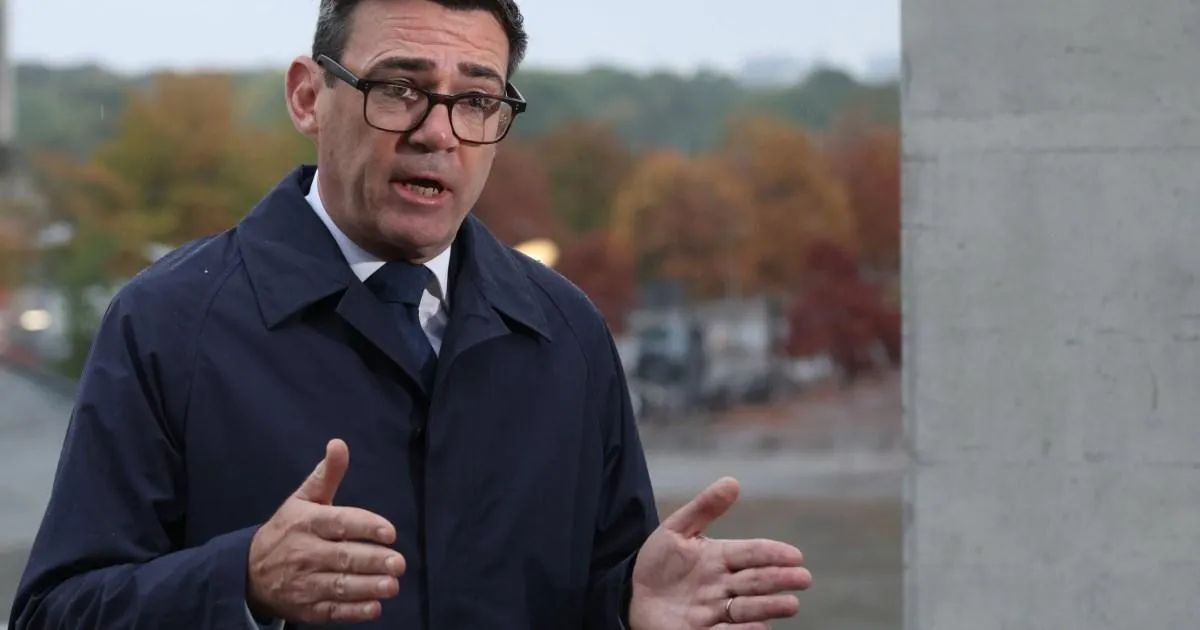
For years, the question of whether Russia interfered in the 2016 Brexit referendum has hovered around Westminster like a half-answered accusation. It has been raised by committees, campaigners and journalists, but it always seemed to stop short of a definitive prime ministerial statement. That, it seems, has now changed. Prime Minister Andy Burnham has placed the issue firmly on the record, saying that when he asked the question after arriving in Downing Street over the summer, he received a clear answer: yes, Moscow interfered in the vote. Speaking on the Rest Is Politics podcast, due to be released on Monday, Burnham said he had specifically asked whether Russia had sought to influence the referendum on leaving the European Union, and was told that it had. “I asked the question coming to Downing Street, well, was there interference in the 2016 referendum from Russia? I’ve had the clear answer that yes, there was,” he said. The admission matters because it is the first time in this context that a UK prime minister has so plainly acknowledged the central fact. It also gives fresh public legs to a long-running concern. Parliament’s Intelligence and Security Committee found in 2020 that the Government had failed to fully assess the impact that Russian state-run media and “troll” accounts might have had on the EU referendum. That failure, in the committee’s view, left a dangerous gap in the country’s understanding of what actually happened in 2016. Burnham’s comments don’t necessarily reveal new evidence, but they turn an official finding into a prime ministerial confirmation, and they shift the tone of the conversation from suspicion to certainty. For Burnham, the point is not just historical accuracy. It’s about defending the democratic process in a moment when far-right movements are gaining ground across Europe. He said it was important to put these things clearly on the record because it helps voters in Germany and France understand that some of the politics they are witnessing is not purely organic, but is being instigated by enemies of democracy, namely Russia.
The immediate political context for Burnham’s remarks is the troubled state of European politics, particularly in Germany. During a visit to Berlin this week, Burnham met Chancellor Friedrich Merz, who is grappling with the surge of the far-right Alternative for Germany, or AfD. The party has enjoyed significant successes in recent regional elections, and Merz is under pressure to respond to a movement that has refused to be contained by traditional political firewalls. Although mainstream parties have refused to work with the AfD, its support has continued to grow, winning over voters who feel left behind by globalisation and angry at the political establishment. That success has made it one of the most closely watched far-right parties in Europe, and a source of deep concern in Berlin and Brussels. Burnham said he sought to offer support. “One thing I did say to Chancellor Merz… is we need to support you in taking on the threat that you face and particularly the type of politics that you’re facing,” he explained. The conversation went beyond diplomatic sympathy. According to Burnham, Merz told him that the AfD is clearly linked to Russia and that the party is, in Burnham’s words, funded. Though Burnham didn’t go into detail about the evidence, the claim aligns with long-standing assessments from security services across Europe that Moscow has sought to cultivate ties with nationalist parties. The chancellor, he said, believes Russian misinformation and disinformation is flowing directly into German politics. This isn’t a fringe observation. European intelligence agencies have repeatedly warned about Kremlin-backed efforts to amplify far-right voices, to sow discord over migration, and to weaken public trust in mainstream institutions. Burnham’s decision to go public with this private diplomatic exchange is deliberate. He wants to make the point that the far-right phenomenon isn’t simply a domestic cultural backlash; it is being exploited and encouraged by an external adversary. By naming Russia, he is trying to draw a clear line between legitimate political disagreement and foreign interference. That distinction, he suggests, has been blurred by years of complacency. In his view, Western leaders have been too slow to alert their citizens to the ways in which their own politics are being manipulated.
Burnham hasn’t confined this message to podcast studios or bilateral meetings. Last month, he took the issue to the United Nations General Assembly, where he used his speech to aim a direct warning at Russian information warfare. During that address, he said there was evidence Moscow had tried to interfere in the 2019 UK general election as well. The point appears to be that 2016 wasn’t an isolated incident but part of a persistent pattern of hostile activity against British democracy. In his podcast interview, Burnham expanded on that theme with a striking degree of frustration. “I think we’ve been too much on the back foot on that actually and we haven’t informed people sufficiently about the extent to which people are seeking to disrupt the political process from overseas,” he said. The phrase “on the back foot” captures the larger problem he is trying to address. Governments, intelligence agencies and media organisations have often reacted to revelations of interference in a piecemeal way, awaiting the next exposé before responding. The result, Burnham suggests, is a public that is under-informed, or at least not fully equipped, to recognise foreign influence when it appears. This isn’t simply about elections. It’s about the wider information environment in which politics happens: social media platforms, online news outlets, comment sections and private messaging groups all serve as channels for hostile messaging. Burnham’s language is blunt—he describes the politics being “instigated via our enemies”—and that bluntness is itself a choice. He seems to believe that democracies have spent too long speaking in careful institutional terms about a threat that demands harder language. For the public, this may be a difficult message to hear. It implies that some of the anger and division visible in Western politics is not entirely authentic. But Burnham appears willing to risk that discomfort in order to force a reckoning. Whether that reckoning will actually happen remains unclear. He is asking citizens to accept an uncomfortable truth, and demanding that institutions do a better job of protecting democratic space. The alternative, he implies, is to continue sleepwalking through elections while hostile powers map the fault lines of Western society and exploit them for their own ends.
What does this mean for ordinary voters in the UK? Burnham’s confirmation is unlikely to settle the enormous argument over Brexit, but it adds a new and uncomfortable layer to it. For Leave voters, the suggestion that Russia sought to interfere in their campaign can feel like an attempt to delegitimise the result. For Remain voters, it can feel like proof that the outcome was never entirely clean. Burnham’s own framing tries to avoid this trap. He is not saying the referendum was won by Russia, nor that millions of people were duped. He is saying that hostile outside forces tried to influence the environment in which the vote took place, and that the country needs to be honest about that. That honesty, in his view, is a form of resilience. Democracies that understand their vulnerabilities are in a better position to defend themselves. The 2020 Intelligence and Security Committee report had already pointed in this direction, noting that the Government did not properly investigate how Russian state media and coordinated “troll” accounts may have shaped the online conversation around Brexit. At the time, the report’s findings were largely allowed to drift out of the news cycle. Burnham’s intervention brings them back into the foreground. By saying the words “there was interference” as prime minister, he changes the baseline for future debate. It is no longer something that can be dismissed as a conspiracy theory or a remainer fantasy. It is official. That is a significant shift. It means the burden of proof has moved. Those who want to dismiss concerns about foreign interference will now have to explain why a prime minister’s account should be ignored. Burnham is not, of course, the first politician to raise the issue, but the weight of his office gives the words an authority that previous statements lacked. But the deeper significance may be in the way Burnham connects the past to the present. The same techniques used in 2016, he suggests, are still being used today: in Britain, in Germany, in France and elsewhere. The far-right parties that have risen across the continent are not all puppets of Moscow, but some are receiving help from an adversary that benefits from a weakened, divided Europe. For voters, this is a call to pay attention not only to what politicians say, but to who is benefiting from the chaos.
Amid all this, Burnham’s broader European policy is also under the microscope. At his recent Labour Party conference speech, he set out plans to try to find political consensus on the UK’s future relationship with Brussels. He has pointedly left open the possibility that a future Labour manifesto could promise to rejoin the EU. Some supporters and campaigners have been urging him to go further and commit to a second referendum, but Burnham is moving carefully. These are not just technical questions about trade or regulation; they are intimately connected with the issue of trust. If the original referendum was subject to foreign interference, then the whole debate about the UK’s place in Europe is reopened in a more profound way. A vote distorted by outside interference cannot simply be treated as an unquestionable expression of national will, no matter how decisive the margin. On the other hand, millions of people voted Leave for reasons that have nothing to do with Russian propaganda, and any serious attempt to revisit the decision must respect their anger and their concerns. Burnham seems aware of this, but he is not calling for an immediate return to the EU, nor is he pretending that a second vote would be simple. Instead, he is trying to create the space for a new national conversation, one that acknowledges what happened in 2016 while looking forward rather than back. He is also trying to rebuild bridges with European partners who were alienated by years of Brexit brinkmanship. This matters because Britain cannot hope to stabilise its relationship with Brussels while simultaneously dismissing the threats they all face from Russia. His emphasis on consensus is significant. The Brexit years were defined by polarisation, with both sides often treating each other as enemies. Burnham’s approach is an attempt to lower the temperature, even as he raises the stakes on foreign interference. He is asking the British public to hold two ideas at once: that their democratic will should be respected, and that the expression of that will in 2016 may have been manipulated by outside forces. It is a hard sell, no doubt, but Burnham seems to believe that honesty, even when it is uncomfortable, is preferable to a false certainty that leaves the country vulnerable to the next wave of interference. After years of official caution, he wants the UK to approach the future with open eyes.
In the end, Burnham’s statement is less a revelation than an acknowledgement. The intelligence community, parliamentary committees and numerous journalists have been pointing to Russian interference for years. What has been missing is a political leader willing to say it plainly from the highest office. By doing so, Burnham is trying to do more than correct the historical record; he’s trying to change the way democracies talk about themselves. In his account, the rise of far-right politics in Germany, France and elsewhere cannot be fully understood without understanding the role of Russian information warfare. That is a controversial claim, and it will be contested. But it is also a reminder that elections are not just about winners and losers; they are about the integrity of the process itself. For voters, the human implication is sobering. It means that some of the anger they feel, and some of the division they see in their communities, may have been amplified by people who have no interest in their country’s wellbeing. It means that social media feeds are not always what they appear. It means that political movements, even large and popular ones, can be supported by outside interests for reasons that have nothing to do with the nation. This isn’t about blaming every bad political outcome on Moscow. It is about recognising that democracies have opened pathways for manipulation and have not yet closed them. That is not a comfortable thought, but comfort is not what Burnham is offering. He is offering clarity. In the months ahead, his words will be tested in Parliament, in the media and in the court of public opinion. Whether they lead to new investigations, new policies or simply a more honest conversation, they have already accomplished one thing: they have placed the fact of Russian interference in the Brexit referendum firmly at the centre of British political life, where it is likely to remain. The past cannot be rewritten, but the way a country remembers its past shapes everything about its future. Burnham seems determined that the remembering, this time, will be honest.