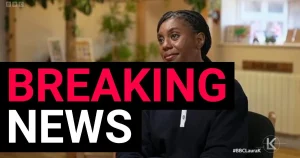


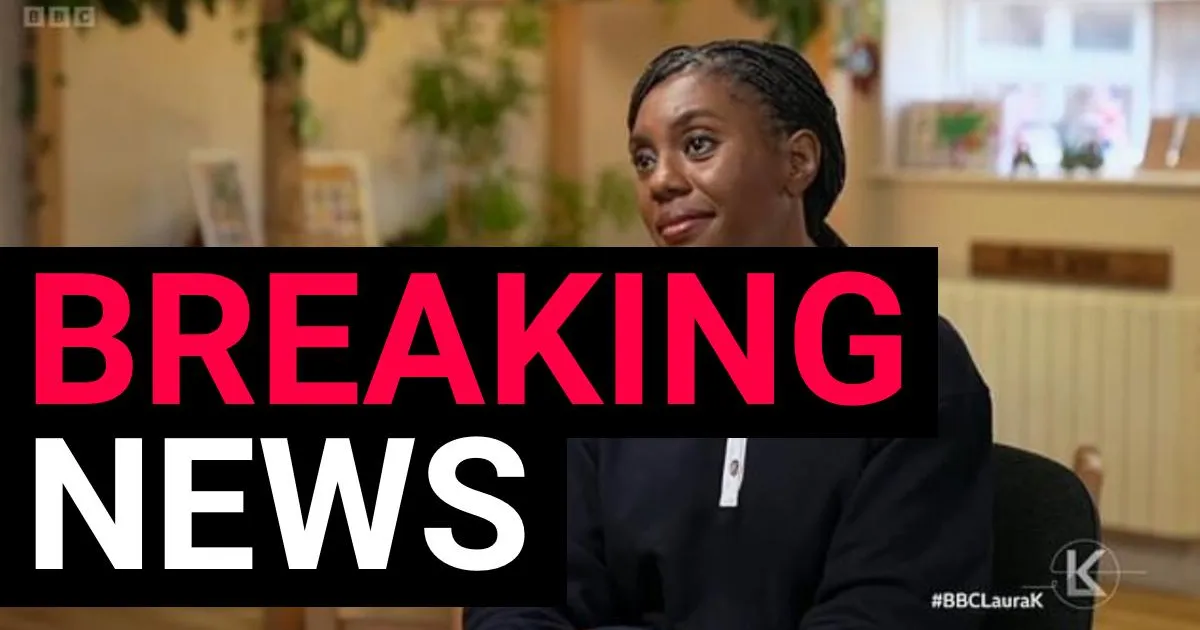
Imagine opening your inbox to a message from a stranger who claims that, in his days with the IRA, he would have shot you dead. That is not a scene from a thriller, but a real and frightening glimpse into the life of Kemi Badenoch. The Conservative leader has spoken out about a series of threatening messages she and her family received, messages that were violent, racial, and deliberately designed to intimidate. Kieran Kyle, a 43-year-old man who claimed to have been a member of the IRA, pleaded guilty in September to sending communications of an indecent or offensive nature to Badenoch and to her husband, Hamish. The messages did not attack simply her politics; they attacked her very presence in public life and sought to drag her family into a web of fear. In a world where public figures are often expected to absorb abuse as part of the job, Badenoch’s decision to speak openly about what happened is both a personal act of resilience and a political statement. She told the BBC that Kyle was not only writing to her but to members of her family, which made the threat feel far more intimate and unsettling. It is one thing to know that politicians face hostility, but quite another to wonder whether your spouse or loved ones are being targeted because of your work. Badenoch’s tone was calm, but her message was firm: this is not something anyone should simply accept. By bringing the story into the open, she is trying to remind the country that behind the job title, politicians are human beings who deserve safety, respect, and the right to do their work without fear of violence.
The details of the case are deeply troubling. The threatening emails were sent on a particularly fraught day for Badenoch, the day she apologised after footage from Bloody Sunday was mistakenly used in a social media clip to criticise a Bill on legacy issues in Northern Ireland. In the midst of that political firestorm, Kyle took the opportunity to send an email to her parliamentary address that read: “When I was in the IRA I would have shot you f***ing dead.” He also sent a separate communication to her husband Hamish that included racist references, deliberately weaponising his identity in an attempt to cause maximum hurt. These were not clumsy jokes or careless outbursts; they were calculated attempts to threaten a senior politician and her family. At Westminster Magistrates Court, Kyle pleaded guilty to two counts of sending communications of an indecent or offensive nature. Chief Magistrate Paul Goldspring made clear that a custodial sentence was “a real option,” indicating that the courts are beginning to treat such offences with the seriousness they deserve. Kyle was granted bail but will return to the same court for sentencing on October 29. For Badenoch, the case is part of a wider pattern. She has described how the messages landed at a moment when she was already dealing with intense scrutiny, and how the cumulative effect of such abuse is not merely personal but political. It deters people from entering public life, distorts the kind of people willing to stand for office, and creates an atmosphere in which hostility is seen as normal. By refusing to soften the details or look away from the ugliness, Badenoch is forcing a conversation that many would rather avoid.
Badenoch made her remarks against a disturbing backdrop of broader threats against British politicians. She was speaking after a separate case in which a man was charged with planning terrorist acts against Nigel Farage, a reminder that the danger facing public figures is not limited to one party or one side of the political spectrum. She also pointed to the firebombing of Keir Starmer’s home, an attack that could have had devastating consequences. Her point was simple: the threat to politicians is increasing, and it cannot be ignored. “I just think that whether it’s me or Nigel Farage or even Keir Starmer who had his home fire bombed,” she said, “there is a threat to politicians that is increasing. We just need to crack down on this.” This is not hyperbole. Over recent years, MPs have been murdered while going about their constituency work, assaulted in their surgeries, and abused relentlessly online. The line between online hatred and physical violence has become dangerously blurred. What begins as a nasty tweet or an abusive email can escalate into something far more sinister, and the institutions designed to protect candidates and elected officials are struggling to keep pace. The public may not always agree with politicians, but a functioning democracy depends on the ability of people from all backgrounds to represent their communities without fearing for their lives. Badenoch’s words serve as a warning that the social contract between politicians and the public is being eroded, and that the consequences will be felt by everyone if the trend continues unchecked.
At the heart of Badenoch’s response is a defiant commitment to public duty. “What I want the public to know is that my priority is their safety,” she said. It is a striking statement, particularly from a politician who has just received death threats. Rather than retreating into security or wrapping herself in self-pity, she is redirecting attention to the people she serves. “MPs have often been threatened in this way but we must not let that stop us from doing their jobs.” There is something almost old-fashioned in her resolve, a sense of duty that refuses to be cowed by the very real dangers of modern political life. She acknowledged how difficult it is, saying: “It’s really tough but you just have to get on with it.” That quiet stoicism is admirable, but it also raises uncomfortable questions. Why should politicians have to “get on with” death threats? Why should their families be caught in the crossfire? Why should the basic act of representing your community require this kind of endurance? Badenoch’s strength, however, is not just personal. She is determined to make the public understand that abusive messages are not harmless. “Every person who sends an abusive message – they think they’re just getting something off their chest,” she said. “But the cumulative impact puts a lot of people off politics. I’m not going to be put off.” That final sentence is a direct challenge to those who seek to silence through intimidation. She will not be frightened, and she will not be cowed.
The broader implications of this case extend far beyond one politician’s experience. When people send threatening messages, they often see them as isolated acts of venting, a way to express anger without consequence. But the cumulative impact is corrosive. It creates an environment in which public service becomes unbearable, and the people who might otherwise contribute to public life decide that the cost is too high. The threat of violence is not just a personal attack; it is an attack on the democratic process itself. If representatives are forced to live in fear, to think twice before taking on controversial issues, or to isolate themselves from constituents, then everyone loses. The fact that a magistrate has warned that a custodial sentence is a real possibility in Kyle’s case is a small but important signal. It suggests that courts are willing to draw a line, to say that threats against public figures are not acceptable. But the law alone cannot solve the problem. There is a cultural dimension too. Politicians across the political spectrum have been subjected to abuse, and the tone of public debate has become increasingly hostile. Social media platforms, with their anonymity and instant reach, have made it easier than ever to target someone with venom and cruelty. The challenge, as Badenoch suggests, is not only to punish offenders but to change the atmosphere that encourages them. It is a task that requires alertness from law enforcement, responsibility from media and political leaders, and a collective refusal to normalise hatred.
In the end, Badenoch’s story is a reminder that politics is not abstract. It is carried out by flawed, fallible human beings who have families, homes, and ordinary lives. The same woman who stands at the dispatch box and answers questions in the House of Commons is also a mother, a wife, and someone who, like anyone else, does not expect to read violent messages about herself and her loved ones. Her decision to speak out is not a sign of weakness, but of strength. It is a refusal to let the bullies win, a determination to keep serving despite the threats, and a plea to the public to understand the seriousness of what is happening. She has chosen to answer hatred with resilience, and intimidation with openness. That is exactly the kind of leadership that democracy needs in difficult times. But it is also important to remember that no one should have to be brave in the face of death threats just to do their job. As a society, we owe our politicians more than applause when they show courage; we owe them an environment in which courage is rarely necessary. In sharing her story, Badenoch has given the country a chance to reflect on the kind of politics we want. Her own answer is clear: she is not going to be put off. The rest of us should not be put off either — but we should be moved to act, to speak out, and to demand better protection for the people who step forward to represent us. Ultimately, the fight is not just about one woman or one case. It is about whether public life will remain possible, and whether democracy can survive the darkness that seeks to overwhelm it.