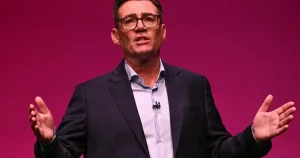

For many families, the energy bill is the one they dread most. It arrives like a verdict, not a utility statement. It is the cost of staying warm when the nights close in, of making sure children can sleep without shivering, of protecting grandparents from the cold that settles into bones. It is not simply a line in a budget; it is a measure of safety. Andy Burnham, the Prime Minister, understands this because he has listened. He has heard the stories of families sitting in one warm room, of pensioners unwilling to put the heating on until the very last moment, of parents skipping meals to make sure the top-up card is filled. That is why he is not asking for patience. He says families need help now, not in some distant future when the system has been rebuilt. This week, the Government removed VAT from electricity bills. It is a practical measure, and Burnham is careful not to exaggerate its size. It will give households a little breathing room this winter, saving about £45 over the year. But to a family that is already counting pennies, £45 is not trivia. It is a week of school meals. It is a pair of shoes. It is the difference between paying one bill and falling behind on another. More than the money, though, it is a signal. It tells people that the state sees them, that the government knows what it feels like to be trapped in a system where the costs keep rising and the wages do not. Burnham wants to bring costs down for good over time, but he also understands that the future cannot be the only place where help lives. The present matters. The winter matters. And a little bit of help, given with empathy, can stop a household from tipping over the edge. That is what this first step is really about: not solving everything, but proving that the people in power are paying attention.
The range of measures announced this week shows that Burnham is thinking about the texture of ordinary life. It is not just about the energy bill, because no family lives on one bill alone. Bus fares are being capped at £2. For a person who has to travel a long way for work, that is a bridge between unemployment and a job. For a student who needs to get to classes, it is the difference between showing up and falling behind. Rip-off discounts are being banned, the kind that shout “50% off” but were never sold at the original price. These are tricks aimed at people who cannot afford to be tricked, and ending them is a quiet act of dignity. Subscription traps are being eliminated, so that a free trial does not secretly turn into a monthly drain. Think of the people who have paid for years for something they forgot they signed up to, because they were too busy surviving to check their bank statements. The cost of school uniforms is being tackled, because no child should feel ashamed of not having the right blazer, and no parent should have to choose between a brand name and a full fridge. And business rates are being cut for the pubs, social clubs and music venues that keep our towns going, the places where a community comes together and life feels less lonely. Burnham calls these measures scaffolding rather than magic. They are not silver bullets. But they are the necessary small repairs that make a house habitable while the foundations are being rebuilt. He is saying that the little things are not little at all. A bus fare, a subscription, a school tie, a pub that stays open—these are the everyday rights of a citizen. For too long, the burden has been placed on individuals to avoid being caught out by companies designed to catch them. Burnham is turning the tables. He is asking the state to stand on the side of the consumer, the parent, the commuter, the worker. And this is just the start. The list is deliberately modest, but the direction is clear: life should not be a trap. It should be a series of doors, all open enough for a person to walk through.
Burnham is also doing something rare in politics: he is telling the truth about the past. He is admitting that Britain did not stumble into this crisis by accident. It was built. Over the last forty years, the country gave up control of its necessities. It outsourced its essentials and privatised the basics. Water, transport, housing and energy, the things that are not optional for a functioning society, were handed to the market. There was a theory that this would make everything more efficient, more dynamic, cheaper. The theory did not survive contact with reality. Private companies took the profits and left the risk. They invested in share buybacks instead of pipes, and dividends instead of a secure future. Now the public is paying the price, and it is a price that keeps climbing. Conflicts overseas have pushed up energy costs, and because Britain had allowed its own supplies and structures to decay, it was more exposed than it needed to be. Burnham is not trying to blame foreign events for everything; he is saying that the country made itself vulnerable by refusing to invest in its own strength. The result is that British billpayers are facing some of the highest energy costs in Europe. It is an outrage dressed up as an economic fact. But the outrage has a target, and the target is a set of choices made over decades. This is important, because if the problem were simply bad luck, there would be nothing to do except manage the pain. But if the problem is a lack of public control over essential systems, then there is an answer: take that control back. Burnham is careful not to promise instant relief. He knows that the infrastructure of a nation cannot be rebuilt overnight. But he is saying that the route out of this mess starts with an honest diagnosis. Without that, every measure is just a plaster over a wound. With it, the country can begin to heal.
The first and most urgent site of change is energy. This week, Burnham announced the Great British Grid, a programme designed to speed up connections and push down bills. It sounds technical, but it is deeply human. The grid is the reason a light turns on, a street is lit, a hospital runs. When it is slow and inefficient, it costs everyone. When it is modern and fair, it becomes a common asset that makes the whole society stronger. The plan is to remove the obstacles that have stopped clean energy from reaching homes, to make the system faster and cheaper, and to give mayors, local leaders and communities a stronger role in shaping their own energy. There will be funding for People’s Power projects, which is a beautiful phrase for a beautiful idea. Communities will be able to build solar panels on libraries and town halls. They will be able to install hydro schemes in rivers that once powered mills, and publicly owned windfarms on local land. Imagine a library that provides electricity as well as books. Imagine a town hall that is not just a meeting place but a power station, its roof lifting the weight of the community’s bills. Imagine a river, once treated as waste and forgotten, turning back into a source of life and money. This is not just about energy policy; it is about democracy. When people share ownership of the power that heats their homes, they become citizens in a deeper sense. They are not consumers waiting to be cheated; they are stewards of something common. The Great British Grid is the skeleton, and the People’s Power projects are the soul. Burnham’s vision is that a country which once led the world in industry can lead it again in clean, fairly owned energy. But this time, the wealth will not all leak away to a distant shareholder. It will stay in the community, circulating, building, and keeping families warmer for less.
But energy is only one part of a much bigger promise. Burnham is clear that the country needs stronger public control over water, housing, transport and care, because all of these are essential to a life with dignity. The ban on public ownership of water companies is being repealed. It is a stunning admission that something went badly wrong. Water is the most basic human right, and yet it has been treated as a commodity for private profit, with shareholders earning dividends while rivers are polluted and leaks drain the system. Repealing the ban is a symbolic and legal step towards saying that water belongs to everyone and no one. Housing is equally urgent. The Government is building more council homes than this country has seen since the end of the Second World War. After decades of watching the state retreat from housing, this is a promise to build a country that again believes in public housing. It is a promise to young families who have given up on ever owning a home, and to renters who are spending their whole lives enriching landlords. Burnham is also reforming the leasehold system, which has become a trap where families are squeezed every year by fees that they did not choose and cannot control. And he is opening up home ownership for first-time buyers who cannot rely on the bank of mum and dad, because the ability to own a home should not depend on a legacy. Then there is care. The Prime Minister has announced his determination to introduce a National Care Service, to put people above profit and to give pensioners peace of mind. Care is the most personal public service there is. It is the way we honour the people who raised us and protect the people who need us. It should not be a luxury or a postcode lottery. It should be a right. This entire agenda is about replacing a system that treats people as problems with a system that treats people as the point.
Taken together, these changes are not a list of isolated policies. They are a plan to rewire the country from top to bottom, so that it works for all people in all places. Burnham says this plainly: the only way to put Britain back on the right path is to put power back in the hands of people. It is the only way to bring hope again. That word, hope, is easy to mock in politics, but it is not a cheap word here. It is hope built on honesty, on admitting that the old way has failed, and on taking actual steps to build something better. It is hope for the family that opens an energy bill and does not feel fear, for the community that owns a windfarm and shares its rewards, for the first-time buyer who finally has a door to unlock, for the carer who is no longer alone and broke, for the pensioner who knows that care will be there in old age. No one believes that this will happen overnight. The country has been shaped by four decades of the wrong choices, and reshaping it will take time, money and struggle. But there is a difference between a government that tinkers and a government that builds. Burnham is choosing to build. He is choosing the hard road because he knows that there is no longer an easy one. The vision he sets out is of a Britain where essentials are not profit centres, where ordinary people have a say in the systems they rely on, and where the future is not something that happens to you but something you create. It is the kind of vision that can feel impossible in a tired nation. But it is also the kind of vision that is necessary if the country is to stop sliding. The tasks are clear. The direction is set. And in the hands of people who have been told for too long that nothing can change, it might just be enough to bring hope back.