
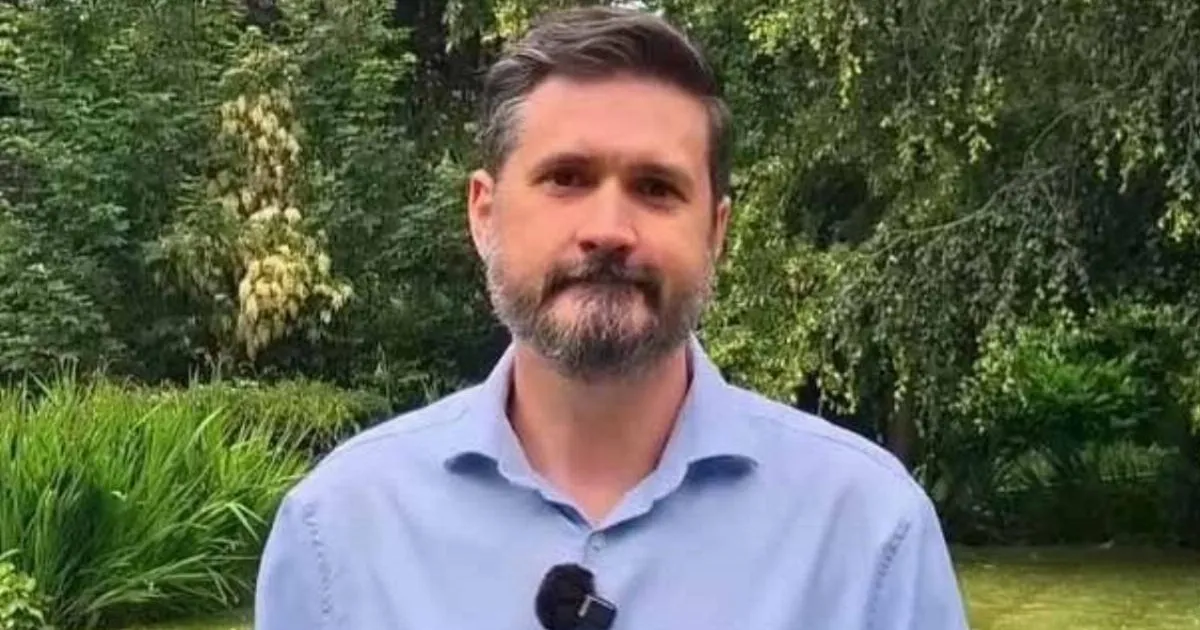
Picture this: an 81-year-old woman wants to use a gate in her own garden. It sounds like the most modest of civic problems, the kind of thing that should be solved with a bit of common sense and a friendly conversation. Instead, Derbyshire County Council turned it into a legal battlefield. The woman was forced to spend around £50,000 in legal fees fighting a decision that prevented her from using the gate, and when the case finally reached court, a judge ruled in her favour. The council was ordered to pay her costs. It should have been the end of the story, or at least a moment for reflection. But what actually happened next was stranger and more troubling. The council, which is now led by a Reform UK administration, decided to cut ties with the journalist who had been reporting on the case. Eddie Bisknell, a Local Democracy Reporter working for DerbyshireLive, was told that the council had ‘lost confidence’ in his work. Instead of defending its own conduct or explaining its decision about the gate, the council turned its fire on the person who had the audacity to tell the public what had happened. There is an old saying that a fish rots from the head, but in this case it might be more accurate to say that a council shrinks from the newsroom. When an institution would rather silence the reporter than answer the question, it reveals something uncomfortable about itself. For an elderly woman, the gate probably represented something deeper than convenience: independence, dignity, the simple right to move freely in your own home. To force her into court over that is hard to defend. To punish the journalist who told her story is even harder to understand. It turns a legal victory into a warning for anyone else who might dare to question the people in power.
For anyone who has ever watched a public body squirm under difficult questioning, the scent of retribution is hard to miss. The council’s deputy leader, Stephen Reed, went on BBC Radio Derby to explain the decision. He said the authority had ‘lost confidence’ in Bisknell’s reporting, citing a ‘prolonged period of concerns regarding reporting standards, accuracy, balance and professional conduct.’ Yet when he was pressed for an example, he pointed back to the story about the 81-year-old woman and her garden gate. That reporting had included the fact that the judge ruled in the woman’s favour and ordered the council to pay her £50,000 legal costs. In other words, the story was accurate; the council just didn’t like being on the losing side of it. Reed then made a specific complaint about the journalistic process. He claimed that Bisknell had contacted the council for a right of reply with less than four hours to respond. But a screenshot of the email, published by DerbyshireLive, showed a different picture. Bisknell had emailed the council’s press office at 10:34 in the morning, asking for a response by 10am the next day ‘at the latest.’ That is not four hours; it is almost a full day. Reed was later forced to admit, on the same BBC programme, that his initial claim about the timeline had been wrong. Yet he still insisted that the council had legitimate concerns about the reporter’s broader conduct. What those concerns are, and why they have never been made public, remains unclear. This matters because a council’s relationship with the press should be based on facts, not feelings. If a public authority is going to cut off contact with a journalist, it should be able to provide evidence. Instead, the first specific allegation fell apart within days. That should worry everyone who believes in open government, because if the council’s flagship accusation cannot survive contact with the truth, its other complaints are far less credible. And if the council cannot show its work, residents are left to wonder what it is afraid of.
To understand why this matters, it helps to know what a Local Democracy Reporter actually does. The Local Democracy Reporting Service is funded by the BBC, but the journalists are not BBC employees. They are placed in local newspapers and news websites across the country, with a simple but vital brief: to cover local councils and public services in detail. They sit through the long committee meetings, wade through the paperwork, and translate the jargon into stories that people can actually understand. Bisknell’s job is to hold Derbyshire County Council to account on behalf of its residents. That means asking awkward questions, scrutinising decisions, and reporting when things go wrong. The story of the garden gate is a textbook example of why that work matters. An elderly woman, acting entirely on her own, managed to defeat a council that had enormous legal resources at its disposal. Without Bisknell’s coverage, that victory would have remained invisible to everyone except the people directly involved. But instead of accepting the outcome with grace, the council appears to have punished the messenger. Stephen Reed spoke about ‘trust’ in journalists, and said that Bisknell had a ‘history’ with the council, with ‘multiple complaints’ about the way he wrote his stories. He even made a point of saying these complaints came from ‘the council, not the administration,’ though he did not offer any details. That distinction might mean complaints came from council officers rather than elected politicians. But it does not make them more valid. Vague, unsubstantiated complaints are not a good enough reason to cut off democratic scrutiny. Politicians often say they welcome robust journalism — until the journalism gets uncomfortable. Then suddenly the question of ‘balance’ and ‘professional conduct’ becomes a shield. Good journalism is not balanced in the sense of giving both sides equal weight when one side is factually wrong. It is balanced in the sense of telling the truth. That kind of balance can feel uncomfortable for those in authority, but it is exactly what the public needs.
It is worth pausing to think about what ‘end engagement’ actually means in practice. It is not just a piece of bureaucratic language. It means that press officers will no longer respond to Bisknell’s emails. It means the council will not give him official comments, clarifications, or advance notice of announcements. It means the institution that taxpayers pay for has effectively decided to go dark for one specific reporter — and, by extension, for the local newspaper that employs him. That is a serious escalation in the relationship between local government and the press. It is also a punishment. There is no other way to read it. DerbyshireLive’s editor-in-chief, Natalie Fahy, was predictably fierce in her response. She said: ‘We utterly reject this attack on our journalism, stand fully opposed to the false claims made about Eddie’s and our editorial practices and urge Councillor Reed to retract his press releases.’ The word ‘press releases’ is telling. It suggests that the council has been circulating statements to other outlets, or publicising its complaints, perhaps in an attempt to damage the reporter’s credibility. Fahy’s demand for a retraction is a signal that the council’s accusations are not just an internal disagreement. They are public accusations against a reporter’s integrity. If the council cannot back them up, it should withdraw them. In any other area of public life, making false accusations about someone’s professional conduct would have consequences. Here, the council seems to believe it can act as both the subject of the story and the judge of the journalist who wrote it. That is not how accountability is supposed to work. The public does not elect councils to decide which journalists are allowed to ask questions. It elects them to run public services, answer to residents, and spend money wisely. When they use their power to silence scrutiny, they betray that trust. Councils are meant to serve the public, not to control the public record. A healthy local democracy depends on reporters who are willing to ask the questions that no one else is asking. It is an abuse of power, and it should be called out. The public deserves better.
This is not the first time a Reform-led council has clashed with local journalists. Last year, Nottinghamshire County Council, another authority now run by a Reform-led administration, banned reporters from the Nottingham Post — including the Local Democracy Reporter — after a row over a story about local government reorganisation. The ban was eventually lifted, but it set a worrying precedent. Now Derbyshire appears to be following the same playbook. It is impossible to say whether this is a coordinated strategy or just a coincidence. But the pattern is clear: when local newspapers ask difficult questions, the response from some Reform-led councils is not to answer them, but to shut them out. That is deeply ironic for a party that has built its national reputation on challenging the establishment and demanding more transparency in Westminster. Local government may be less glamorous than national politics, but it is just as important. Councils spend billions of pounds of public money. They make decisions that affect the most vulnerable people in society: the elderly, the disabled, the poor, the people who rely on social care and housing and transport. If the only journalists covering those decisions are shut out and silenced, then the public is left with two choices: trust the council’s own press releases, or don’t. Neither is a proper substitute for independent scrutiny. Jonathan Heawood, the executive director of the Public Interest News Foundation, put it in terms that are hard to argue with: ‘If journalists can’t hold councils accountable, no one can. Some politicians might want to do democracy in the dark, but it is much better with the lights on.’ That is the real issue. Democracy is not just about voting every few years. It is about the daily conversation between the governed and the government. Shutting down one part of that conversation does not make the public safer or better informed. It only makes the institution less trustworthy. When a council decides to punish journalists, it is not protecting anyone. It is only protecting itself.
At the centre of all this is a simple, human story that risks being lost in the political noise. An 81-year-old woman just wanted to use a gate. She had to fight her own council to do so, spending £50,000 in legal fees along the way. A judge looked at the evidence and concluded that the council was wrong. That is a powerful validation of the individual against the state. It is also precisely the kind of story that local journalism exists to tell. If the council’s response to that story is to punish the journalist, then what message does that send to every other resident who is thinking about challenging an unfair decision? What message does it send to the next generation of reporters who might want to cover local politics? The irony is that Reform UK, the party now leading the council, likes to present itself as a champion of ordinary people against a remote and unaccountable establishment. Yet here it is, behaving exactly like the unaccountable establishment: closing ranks, attacking the press, and refusing to engage with the uncomfortable truth. The gate may have been the subject of the dispute, but the bigger battle is about transparency. And in that battle, cutting off contact with a journalist does not make the problem go away. It just means the lights go out a little more. That is no way to run a democracy, and it is certainly no way to treat an 81-year-old woman who only wanted to walk through her own gate. Councils come and go, politicians rise and fall, but the right of ordinary people to know what is being done in their name is permanent. The local reporters who defend that right deserve our support, not a threat. If the council wants to mend the damage, it can do something simple: rescind the ban, retract the accusations, and start answering the questions. That would be a far more fitting tribute to the rule of law than turning a garden gate into a constitutional crisis.