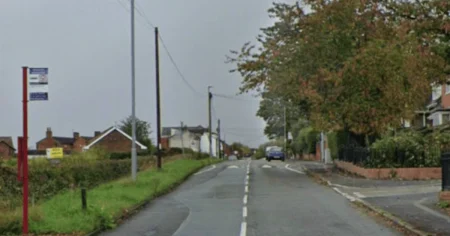



What began as an ordinary walk through a Newcastle underpass quickly turned into something far stranger and funnier than anyone could have expected. In the West Denton neighbourhood, residents and passers-by were met with a peculiar sight: a collection of graffiti that made absurd, oddly specific, and surprisingly confident claims about some of the UK’s most recognisable celebrities. There was no grand political statement, no artistic masterpiece in the traditional sense, and no obvious reason for any of it to exist. Instead, the walls had become a canvas for what looked like a very British, very deadpan comedy routine. The names included EastEnders star Danny Dyer, presenter Lorraine Kelly, singer Rita Ora, Little Mix’s Jade Thirlwall, and many more. Some of the messages were scrawled with a light-hearted spirit, others were simply baffling, and a few contained slurs — though most seemed to be aiming for a kind of absurdist joke rather than genuine malice. What made it all the more intriguing was the style of the writing: it was legible, steady, and almost deliberately neat, as if the author wanted to make sure every ridiculous punchline was perfectly understood. White paint had been splattered over some of the phrases, as if someone had tried to clean it up, and then the mystery vandal appeared to have returned to continue their work. It was graffiti, yes — but it was also unintentionally one of the most talked-about pieces of public art the area had seen in a long time.
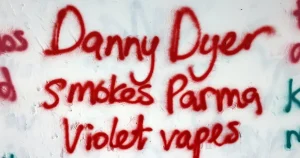
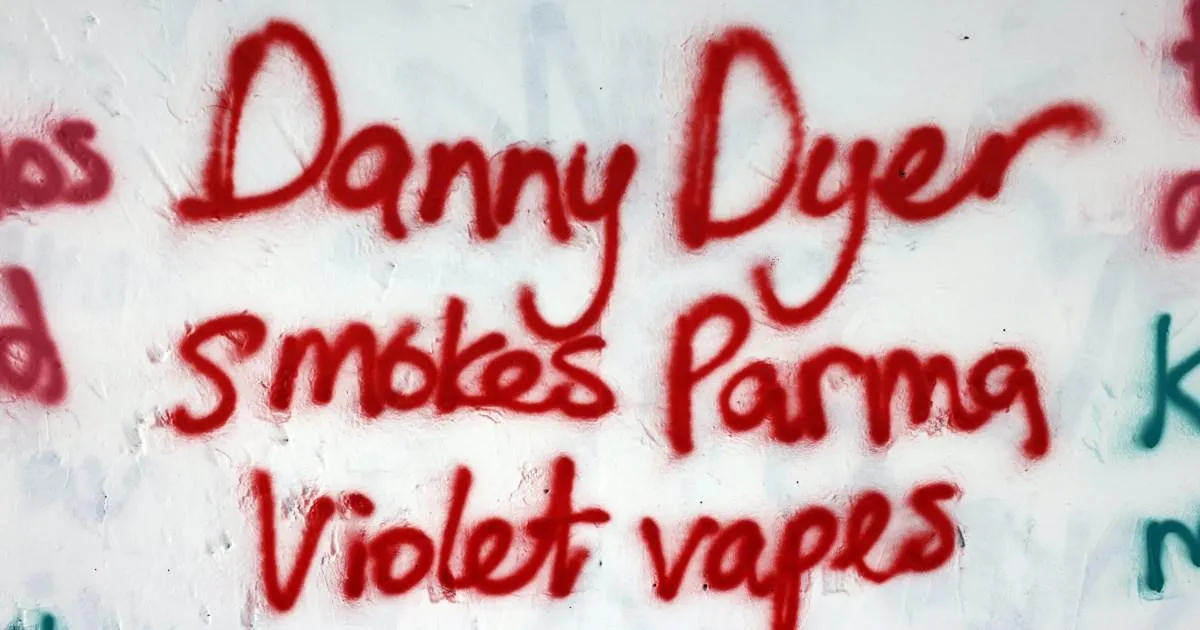
The slogans themselves were the real stars of the show. One of the most memorable declared, with complete confidence, that “Danny Dyer smokes Parma Violet vapes.” There is something beautifully ridiculous about the image: Danny Dyer, known for his tough-guy roles and deadpan delivery, quietly puffing on a vape that tastes like an old-fashioned violet sweet. Then there was the claim that “Lorraine Kelly is barred from Wetherspoons for stealing cutlery,” which somehow manages to turn the beloved daytime TV presenter into the protagonist of a sitcom subplot. Another read, “Jessie J doesn’t donate 10p to charity at the checkout,” a joke so specific and so oddly plausible that it makes you laugh despite yourself. The list went on: “Rita Ora has the Lidl Plus App,” “Stacey Solomon gives Joe a sticker for helping with the dishes,” “Jade Thirlwall buys makeup from Poundland,” and perhaps the most gloriously surreal of them all, “Dermot O’Leary makes a jigsaw with his hamwiches.” Each one felt like a tiny piece of alternate-universe celebrity gossip, the kind of thing you might overhear on a bus and not be entirely sure if you’d misheard. There was no obvious connection between the celebrities, no hidden theme, and no political message. It was just a string of strange, oddly charming, and completely unprovable allegations, painted by someone with a steady hand and a very particular sense of humour.
As word of the graffiti spread online, the public reaction was largely one of delight and confusion in equal measure. Social media users began sharing photographs of the writings, and it did not take long for the speculation to begin. Who was behind this bizarre project? Was it one person or several? And why those particular celebrities? One eagle-eyed social media user pointed out that the jokes seemed to be aimed at a very specific audience. “These are gems for people around 35 to 40,” they said, suggesting that the culprit was likely an adult, or at least someone with a nostalgic fondness for early 2000s pop culture and British television. The references felt too niche, too knowing, and too oddly affectionate to be the work of a random kid with a marker. After all, a child might spray-paint a rude word or a crude drawing, but it takes a certain kind of grown-up humour to invent a joke about Lorraine Kelly being banned from a Wetherspoons for stealing cutlery. The fact that the writing was so legible only added to the theory. This was not hurried, angry tagging. It was deliberate, careful, and almost considerate in its own strange way. The mystery vandal had taken the time to craft their jokes, choose their words, and present them in a way that was readable to anyone passing by. It was as if they wanted to create a free, outdoor comedy show for the people of Newcastle — one that would make strangers smile, roll their eyes, and wonder what on earth they had just stumbled upon.
Not everyone was amused, however. Newcastle City Council made it clear that they did not share the public’s fondness for the graffiti, no matter how funny it might be. Councillor Peter Lovatt, the cabinet member for neighbourhoods and local services, issued a statement confirming that the council was aware of the situation and had taken immediate action to remove the “unacceptable” paintings. “This type of graffiti is unacceptable,” he said. “It damages public spaces, blights our communities and creates an unnecessary cost to taxpayers through the resources required to remove it. It is a form of criminal damage and a recordable offence. Anyone responsible for vandalising property could face police action, including arrest and prosecution. We would urge anyone with information about those responsible to report it to Northumbria Police.” He went on to stress the council’s zero-tolerance approach and encouraged residents to report any similar incidents through the council’s Envirocall service or website. It was a perfectly reasonable response, and one that any local authority would be expected to make. Graffiti is, after all, still graffiti. It costs money to clean up, and even the most light-hearted slogan is still technically criminal damage. But there was something a little sad about the thought of those jokes being scrubbed away, washed off the walls before they had a chance to become a beloved local legend. In a city that loves its art, its humour, and its sense of identity, the West Denton graffiti felt less like vandalism and more like an accidental gift — a piece of absurdist comedy left behind for strangers to discover.
Perhaps that is why the story has resonated with so many people. In an age of carefully curated social media and polished celebrity PR, there is something refreshingly human about a random message claiming that Rita Ora uses the Lidl Plus app. It is not cruel, not really. It is just silly. It imagines celebrities not as untouchable icons, but as ordinary people doing ordinary, slightly embarrassing things. Danny Dyer smoking a Parma Violet vape. Dermot O’Leary making a jigsaw with his hamwiches. Stacey Solomon giving her husband Joe a sticker for doing the dishes. These are jokes that could have come from a panel show, or a sketch show, or simply from the mind of someone who saw the world a little bit differently. The choice of details is what makes it work. Why Parma Violets? Why hamwiches? Why would Lorraine Kelly even want to steal cutlery from Wetherspoons? The jokes do not need to make sense, and that is exactly why they are funny. They tap into a very British tradition of absurdist humour, the same tradition that gave us The League of Gentlemen, The Mighty Boosh, and countless other comedy shows built on the simple joy of saying something completely unexpected with a straight face. The graffiti was not threatening or aggressive. It did not target anyone in a deeply hurtful way. It was just strange, and sometimes strange is exactly what we need.
As the mystery continues to grow, and as the council moves in to erase the evidence, the people of West Denton are left with a story to tell. Maybe the culprit will never be caught. Maybe the identity of the phantom graffiti artist will remain unknown, a source of local folklore for years to come. Part of the magic, after all, is not knowing. If the person behind the messages ever steps forward, they might find that they are celebrated rather than punished — at least by the people who saw the humour in it. Others, of course, will agree with the council that the whole thing is simply a costly nuisance. Both perspectives are understandable. But for now, it is worth pausing to appreciate the sheer oddity of it all. In a world filled with bad news and endless stress, a random piece of graffiti claiming that Jessie J doesn’t donate 10p to charity at the checkout is a strangely welcome distraction. It is a reminder that humour can appear in the most unexpected places, and that even the most ordinary underpass can become a stage for a little bit of silly, human connection. So if anyone in Newcastle knows anything about the mysterious writer who covered those walls with jokes about Parma Violet vapes and stolen Wetherspoons cutlery, the council would like to hear from them. But if you are just someone who happened to walk past and smile, that is probably fine too. Sometimes the best punchline is the one you never fully understand.