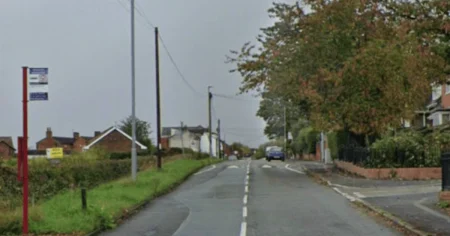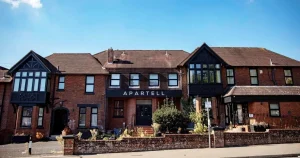


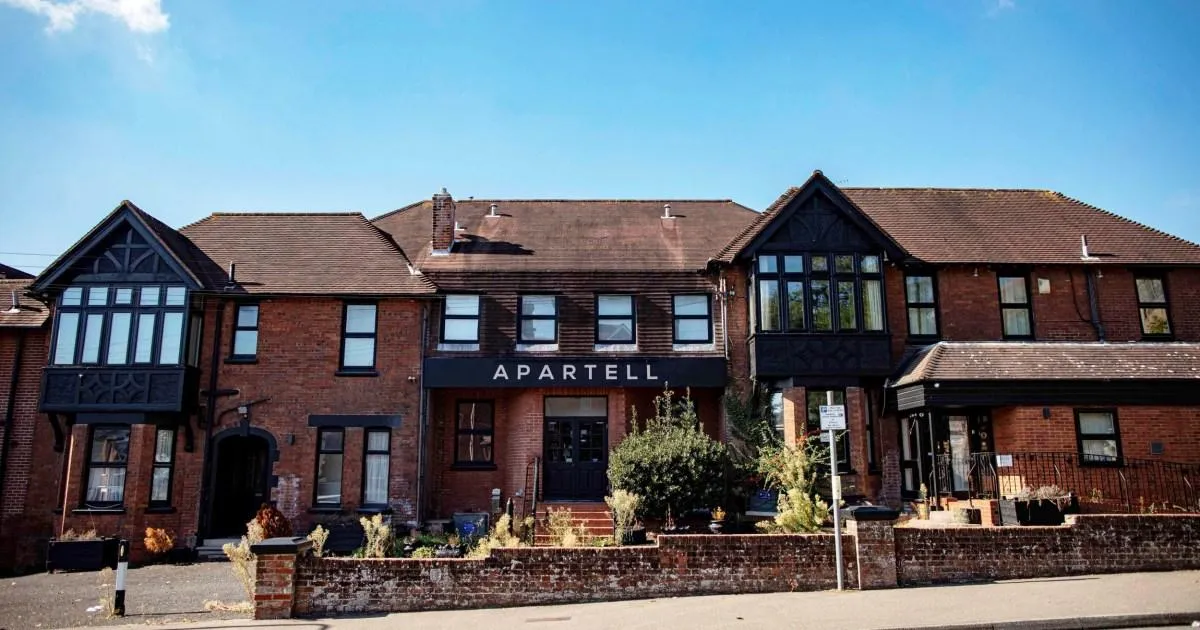
For the residents of the streets surrounding the Grange Moor Hotel in Maidstone, Kent, the building was never just another hotel. For decades, it stood as a quiet landmark in a residential neighbourhood—a three-star venue where local families celebrated weddings, children came for Sunday dinners, and business travellers rested before heading on to London. Even after it was refurbished and rebranded as Apartell, it remained a familiar and reassuring presence in the area. That reassurance has now evaporated. The hotel closed in December, with planning documents citing “major financial viability issues,” and an application has been submitted to convert the building into a large HMO. In the language of planning, an HMO—a house in multiple occupation—describes shared housing where residents live under one roof and share facilities. Co-living is the marketing-friendly version, often aimed at professionals seeking flexible rentals, but for local people it simply means dozens of strangers moving into a building that was once a place for celebration. Under the plan, the old hotel would be transformed into 42 co-living studio apartments, housing up to 65 people. The news has landed like a wrecking ball on the neighbourhood. More than 300 objections were lodged before the September 22 deadline, and a final decision still hangs in the air. The objections are not the work of a handful of disgruntled neighbours; they reflect a wave of fear and disappointment that has swept through the community. People say they are devastated. They worry about parking, infrastructure, house prices, and the very character of their streets. Some recent buyers say they would never have purchased their homes if they had known what was coming. The hotel was not just a building; it was the heart of a community, and watching it be replaced by a high-density shared-living scheme feels, to many, like the final nail in the coffin of a street they once loved.
One of the most affected residents is Kate Broom, 51, who bought her house in May with her partner after a long and careful search. They had not expected to find such a quiet spot in Maidstone, close enough to town yet tucked away from the noise of the main roads. Their first summer in the house was everything they had imagined: long evenings in the garden, morning walks, the sounds of birds rather than traffic. The news of the hotel conversion shattered that picture. “We are absolutely devastated. This was our dream home,” she said. “It is already stressful parking; the roads are really busy. We haven’t been able to get a place at a GP surgery yet. This street can’t cope. We definitely wouldn’t have bought this if we knew.” Her words capture the practical fears that many residents share. With the hotel still standing but closed, the road has been less busy than before, and she and her partner thought they had found a stable home. But the proposal to bring up to 65 people into 42 studio flats would mean more cars, more noise, and more demand for public services that are already stretched to their limits. She points to the difficulty of registering with a local doctor, a problem that would only worsen if dozens of new residents arrived. Her frustration is not aimed at the future residents themselves—everyone deserves a home—but at a planning system that appears to make decisions far removed from the reality of daily life. Kate and her partner worked hard to buy their home, and they chose it for peace and security. Now, months after moving in, they are left wondering whether the quiet life they imagined will ever be possible. Their dream home has become a source of anxiety, and every car that pulls up outside the closed hotel makes them wonder whether the hard-won stability they found is about to disappear.
Despite its commercial failure, the Grange Moor Hotel was, for many, a cornerstone of the community. It was not a grand luxury hotel, yet it had a dignity of its own. The dining room hosted anniversary celebrations; the function room welcomed school reunions and charity fundraisers; the staff knew regular guests by name. For decades, local people did not have to travel far for a special occasion—they booked the Grange Moor. That history makes the new proposals all the harder to accept. Jake King, 38, grew up in Maidstone and now lives on the same road with his partner and their two young children. “Grange Moor has been there since I was a kid, so it has always been around. To see it repurposed is sad,” he said. For Jake, the hotel is woven into childhood memory, and the thought that his children will grow up instead beside a busy shared-living complex is painful. The developers’ plans include a list of amenities that might sound appealing on paper: communal kitchens, workspaces, a gym, a community living area, a laundry room, communal gardens, and private parking with electric vehicle charging points. But residents remain unimpressed. They note that private parking with EV chargers will not ease existing street parking if residents own multiple cars or have visitors. They also question whether the communal spaces will encourage a genuine community or simply provide a managed environment for short-term tenants. The hotel’s old rooms, they say, at least offered privacy and independence; a co-living development with shared kitchens feels like an experiment at their expense. Moreover, the fact that the hotel closed because of “major financial viability issues” raises questions about why a co-living scheme is considered viable when a working hotel was not. Whatever the answer, residents believe the character of the neighbourhood is being traded for a formulaic solution to housing pressure.
Jackie Farrington, 84, has lived in the area for 45 years and has seen the street change in ways that worry her deeply. A former foster carer, she spent much of her life opening her home to children in need, and she is not motivated by indifference to people seeking housing. Her worries are grounded in observation. “I am worried about parking and crime. We don’t know who is going to be in there. I think it will make the house value go down as well,” she said. “Every house that goes up for sale, they seem to make into an HMO around here. It was a lovely road, but it has really changed.” Her words point to a trend that many residents have noticed: the steady conversion of family homes into shared accommodation across Maidstone. Jackie has watched once-familiar houses change hands, hedges replaced by bins, families replaced by short-term tenants. The hotel conversion, she fears, would be the largest and most damaging of all. At her age, she should be enjoying a peaceful retirement. Instead, she finds herself lying awake at night, thinking about the strangers who might soon be moving in next to her. She is not naive—she knows old hotels cannot stay open for sentimental reasons—but she believes there must be a better way. A smaller housing scheme, a hotel reopening, or a community use could have preserved the building’s spirit. What is proposed, in her view, is simply overcrowding dressed up in modern language. House prices matter to her because her home is not just a possession; it is her security. And crime matters because she no longer feels as able to protect herself as she once did. To hear an elderly woman who spent her life caring for others say she fears for her own safety is a powerful reminder of what is at stake in this dispute.
Yvonne Whitehead, 78, has lived on the same road for 35 years and is equally vocal in her opposition. “I am absolutely horrified,” she said. “It used to be a lovely hotel. I used to go there for nice dinners. My children got married there.” Her family history is tied to the building; she remembers the excitement of her children’s weddings, the photographs on the staircase, the toasts in the function room. For her, those memories are not just nostalgic—they are proof of what the hotel gave to the community. She is also convinced that the issue reaches far beyond her own street. Maidstone, she points out, already has a significant number of HMOs. “We know the infrastructure is not good enough for the people in Kent as it is,” she added. The road network struggles at rush hour, GP appointments are hard to come by, and public services have been squeezed for years. Adding another 65 people to a small corner of the town, she argues, without improving roads or health services, would be irresponsible. She also worries about the kind of life the future residents would have. Co-living can be marketed as sociable and convenient, but she wonders whether people living in compact studio apartments with shared facilities will feel truly at home or simply pass through. She insists she is not opposed to housing—she knows that young people need affordable places to live—but she wants to protect the place she has called home for more than three decades. She and her neighbours have collected objections, attended meetings, signed petitions, and tried to make their voices heard. At 78, she never expected to become an activist again, but she feels she has no choice. The hotel gave her some of the happiest moments of her life. The thought of what might replace it fills her with dread.
Now, the decision lies with Maidstone Borough Council. The consultation period has ended; the more than 300 objections have been recorded; the council has been contacted for comment. Yet residents remain in a state of limbo, unable to plan for the future until the planning committee decides whether to approve, refuse, or amend the application. For many, this is not simply a matter of local politics. It is about the kind of place England’s towns are becoming. When family homes turn into HMOs and old hotels are converted into dense co-living blocks, neighbourhoods shift. Parking spaces become scarcer, bins pile up, and communities lose their mix of ages and backgrounds. That is not to say that co-living is without merit—some people do want flexible, affordable, shared accommodation. But the residents of these Maidstone streets argue that a 42-unit co-living scheme does not belong in a residential area built around ordinary homes. They are not asking for no change; they know the Grange Moor Hotel cannot simply be wished back into operation. They are asking for development that respects the scale and character of the area, for infrastructure to be considered before planning permission is granted, and for a genuine conversation rather than a box-ticking exercise. In the meantime, families like Kate’s, elderly residents like Jackie and Yvonne, and young parents like Jake are left waiting. The hotel sits empty. The streets remain quiet—for now. But the threat of change hangs over every conversation, every glance at the shuttered building. For these residents, a home is not just bricks and mortar; it is where they feel safe. The planning committee’s final decision will not just determine the fate of a building. It will tell them whether their memories, their concerns, and their wellbeing count for anything in the future of their own community.