
It was meant to be an ordinary journey home. A family of five, two adults and three children, packed into a 4×4 after what must have felt like a day of simple pleasures and small adventures. Perhaps there were tired children in the back seats, the kind of contented quiet that comes after sea air and sand and the slow, golden light of an afternoon by the coast. They were crossing the Holy Island Causeway, a stretch of road that connects the tidal island of Lindisfarne to the Northumberland mainland. At low tide, it appears like a perfectly ordinary route, a ribbon of tarmac laid across the flats, framed by the vast and ancient landscape. But the sea does not wait for anyone. The tide turns with a quiet, relentless certainty, and what was solid ground can quickly become a trap. On Wednesday, that family discovered just how quickly that could happen. By the time the Royal National Lifeboat Institution was called by Humber Coastguard, the vehicle was already in trouble. Water was rising around them. All five people were still inside, but the 4×4 had drifted off the carriageway, leaving them stranded in the advancing sea. What had started as a family trip had turned, in a matter of moments, into a precarious and terrifying situation.
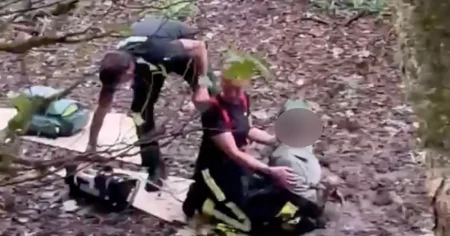
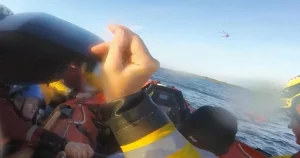
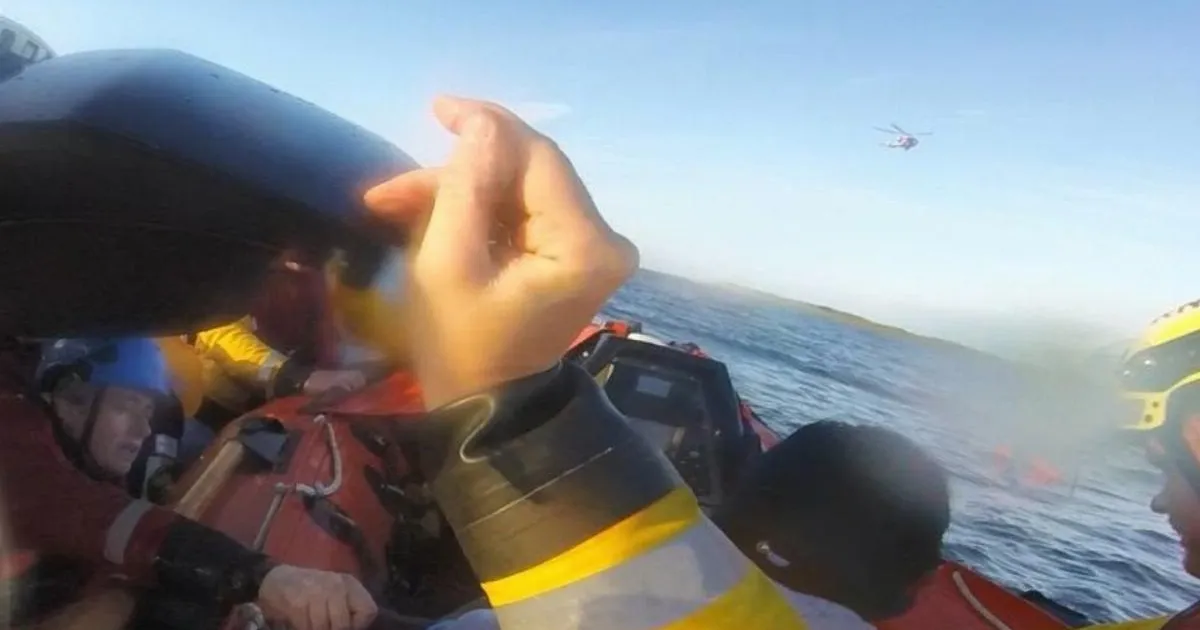
The rescue that followed was a coordinated, urgent effort involving not just the lifeboat volunteers, but also a rescue helicopter and coastguard rescue teams from Seahouses, Berwick and Holy Island. The scene must have been extraordinary and deeply unsettling: the roar of the helicopter overhead, the wail of sirens, the cold wind sweeping across the water, and the sight of a family trapped in a vehicle that was no longer on the road. The RNLI later confirmed that as further information came through, they were advised that all five people remained inside the vehicle. That detail matters because it speaks to how frightened they must have been, huddled together in the cabin, watching the water creep higher, not knowing how long they would have to wait. But the rescue teams worked quickly and methodically. Somehow, in the chaos and the cold, they reached the family. All five were safely pulled from the vehicle and returned to shore. The relief must have been overwhelming. There was no tragedy, no loss, no empty seat at the dinner table. But the RNLI’s message afterwards carried a weight that comes from years of witnessing the sea’s dangers. “Thankfully, all five people were safely rescued and returned to shore. But this incident is another stark reminder of just how quickly the tide can turn on the Holy Island Causeway.” The words are calm and professional, but underneath them is an urgent plea: please don’t let this happen again.
The RNLI has seen this scenario too many times before. The Holy Island Causeway is notorious for catching out drivers who misjudge the tides, sometimes ending with vehicles swallowed by the water and people needing to be rescued. That is why the charity has repeatedly urged people to check the safe crossing times before setting out and to be wary of how rapidly the tide can rise. It seems like such a simple instruction, but in the rush to get home, or in the excitement of a day out, it can be easy to forget. The RNLI’s reminder on Wednesday was not about blame. It was about prevention, about making sure that no family ever has to experience the terror of watching the sea swallow the road ahead of them. “This was a vehicle carrying three children. What could have been a family journey home could have had a very different outcome,” they added. Those words are not just a report. They are a quiet, heartfelt reflection on everything that could have gone wrong. Behind every rescue is a family, and behind every family is a story that could have ended in grief. The volunteers who respond to these calls know that better than almost anyone. They are not distant professionals looking down from a commanding height; they are ordinary people who have chosen to give their time and courage to save strangers. They leave their homes in the middle of the night, in terrible weather, in moments when they would rather be safe and warm, because someone out there needs them. And they do it without expecting anything in return.
Yet even an organisation built on such selfless compassion has not been sheltered from the ugliness of the world. In recent months, the RNLI has faced harassment online, with dangerous and unfounded accusations being levelled against its volunteers. Nigel Farage, the former politician, accused the charity of becoming a “taxi service for illegal trafficking gangs”, suggesting that criminals were “pushing migrants across into the English Channel” with the knowledge that lifeboats would pick them up if anything went wrong. It is a deeply cynical accusation, one that transforms acts of rescue into mere logistics and turns desperate human beings into political symbols. It also does something far more damaging: it undermines the character of the volunteers, people who have never asked for thanks, people who have dedicated themselves to a simple mission of saving lives. The RNLI’s response has been dignified and resolute, but the pain of the accusations inevitably lingers. Perhaps that is why the words of Paula Lain, a volunteer who spoke to the BBC last year, carry so much power. “When our pager goes, we’re not thinking anything political,” she said. “We’re all thinking about people. We’re actively compassionate. That’s what drives us beyond any moral or civic responsibility.” Her testimony cuts through the noise and the venom and the commentary. It reminds us that when the alarm sounds, the only thing that matters is the life at risk. There is no debate about nationality, no weighing of worth, no calculation of political advantage. There is only the human being in the water, the person who has run out of time, the family waiting on the shore. The volunteers do not ask why someone is there. They ask how to reach them. That is the heart of the RNLI, and it cannot be twisted into something lesser by those who refuse to see it.
The day’s news brought another reminder of the human cost carried by those who serve. Hastings RNLI Lifeboat Station announced that one of its crew members had died following an incident on September 30. In a social media post, the station said: “We are devastated that one of our much-loved crew members died following a medical incident at Hastings RNLI lifeboat station last night. Please respect our privacy, and that of our family and friends, at this awful time.” The statement is short, but it is filled with a grief that cannot be measured. A much-loved crew member, someone who had given themselves to the cause of saving others, was suddenly gone. In the tightly knit world of a lifeboat station, this loss is more than a headline. It is a hole in the fabric of the community, a familiar face missing from the shore, a voice that will no longer answer the pager. It is a painful reminder that the people who rush to rescue others are not invincible. They are human beings with families and friends and their own fragile lives. They make sacrifices not for glory or praise, but out of a deep, stubborn belief that no one should be left alone in the water. And sometimes, that service costs them everything.
In the end, this is the story of the RNLI in a single, heartbreaking and hopeful day. A family was saved from the rising tide, and the volunteers who saved them went home with the quiet satisfaction of having made a difference. Another family was mourning the loss of a loved one, someone who had worn the same lifeboat crew kit, who had answered the same call, who had stood ready to face the sea’s fury. These two realities exist side by side, joined by the same thread of courage and compassion. The RNLI is not a faceless institution. It is made up of people like the crew members who raced to the Holy Island Causeway on Wednesday, and like the beloved colleague who passed away in Hastings. They are shopkeepers and mechanics and nurses and students. They are neighbours and friends and parents and children. They give up their time, their comfort, and sometimes their lives, so that others can live. And the least we can do is honour them by listening to their warnings, respecting their work, and remembering that beneath every rescue is a human story. The family rescued on that causeway will carry the memory of their ordeal forever. But they will also carry the memory of strangers who came to their rescue, who refused to let the sea claim them, who brought them home safe to their own lives. That is the magnificent, ordinary, extraordinary truth of the lifeboat volunteers. They are not looking for recognition. They are not looking for politics. They are looking for people, and they will not stop.