


Paragraph 1
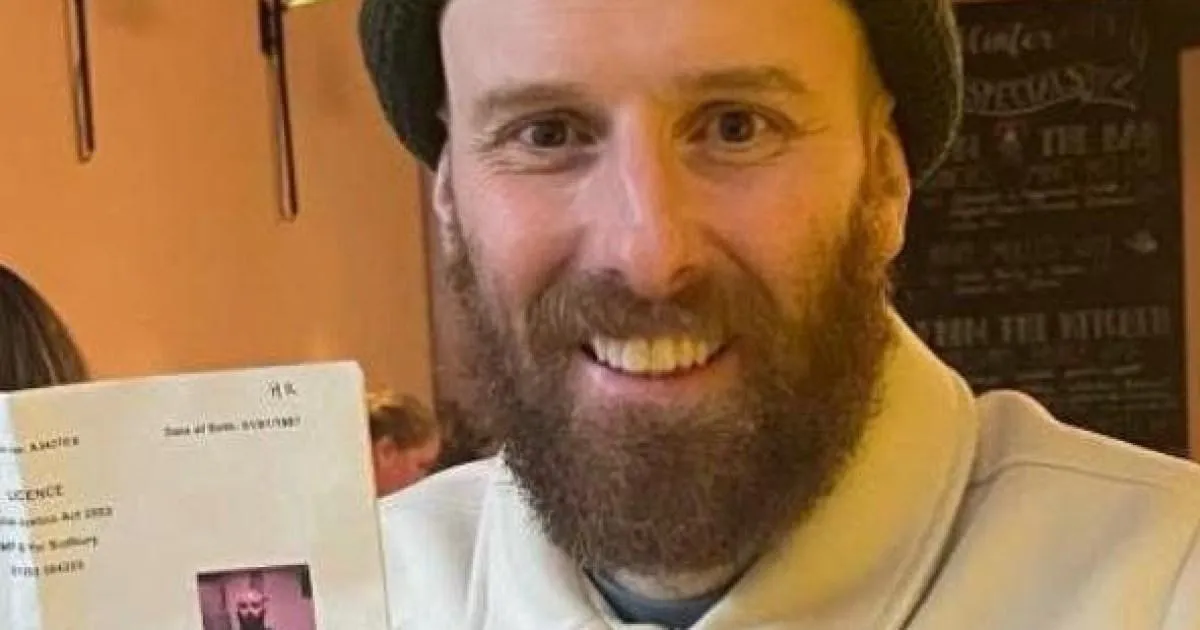
There is a moment that Richard Nicholls will never forget: the moment the prison gates closed behind him, not for the final time after a long and punishing sentence, but just twelve months into a three-year term, thanks to an early release scheme that many people see as controversial. He walked out into the cold December air, a free man, and within half an hour he was already thinking about his daughter. She was only three years old, and in his mind, she was still the tiny girl he had held before everything fell apart. Richard had been sentenced in December 2022 for fraud by misrepresentation, a crime he describes with painful honesty as “making some mistakes” while working in property development, a period of his life tangled up with a serious gambling addiction. He does not make excuses. He accepts that what he did was wrong, that he broke the law, and that he deserved to face consequences. But he also believes, with every fibre of his being, that being released early did not rob society of justice; it gave him the chance to become a better man. If he had served the full three years, he says, he would have lost contact with his family entirely and walked out of prison with nothing: no job, no home, no hope, no relationship with the little girl who needed her father. Instead, he was given the gift of time, and he used it to rebuild the broken pieces of his life.
Paragraph 2
Inside prison, Richard felt like an alien. He was not himself, he says, and the environment threatened to swallow him whole. He met men who had spent their entire adult lives cycling in and out of the system, men for whom prison was not a shock but a routine, a revolving door that had become a way of life. Richard looked at them and saw a terrifying possibility: that he could become one of them, that he could fall into the same trap, that his identity as a father, a worker, a contributing member of society, would be erased and replaced with a number, a uniform, a label. He was close to that edge, and he knows it. But the early release scheme pulled him back from the brink. He left prison with a tag on his ankle, but also with a determination in his heart. He found work at Timpsons, the high street key-cutting and shoe repair chain, a company known for giving people with criminal records a second chance. He threw himself into the job, proving to himself and to others that he could be reliable, trustworthy, and productive. He also began making business plans, carefully mapping out a route back into the property industry he had once worked in, the same industry where his mistakes had been made. He wanted to return not as the man who had fallen, but as a man who had learned. Every day he spent outside those prison walls was a day he could spend with his daughter, watching her grow, being present, rebuilding the bond that prison would have destroyed. For Richard, the early release scheme was not a loophole or a soft option; it was a lifeline.
Paragraph 3
Richard’s story is one of many unfolding across the country as the government’s early release scheme continues to empty prison cells in an attempt to ease overcrowding. Around seven hundred prisoners were released on a single morning, with groups of convicts walking out of prisons across England and Wales into the cold morning air. Some of them were jubilant, unable to contain their relief, with one man shouting “I’m free, freebie!” as he stepped onto the pavement. It was a scene that divided the nation. For some, it was a sign of a broken justice system, a system that lets criminals off early and leaves victims feeling betrayed. For others, it was a pragmatic and humane response to a prison system that is bursting at the seams, a recognition that locking people up for years on end does not always make society safer, and that many prisoners, like Richard, need to be reintegrated into the community rather than further alienated from it. The scheme applies to offenders serving sentences for a range of crimes, including fraud, domestic abuse, and coercive control, and they become eligible for release after serving just a third of their term. The stated purpose is simple: to free up prison space, to reduce overcrowding, to allow prison staff to focus on the most dangerous offenders, and to save money. But behind the policy and the statistics are real human beings, each with their own story, their own victims, their own potential for change or for further harm. The men and women walking out of those gates are not just numbers on a spreadsheet; they are fathers, mothers, sons, daughters, neighbours, and sometimes, they are abusers whose release causes fresh pain to the people they once terrorised.
Paragraph 4
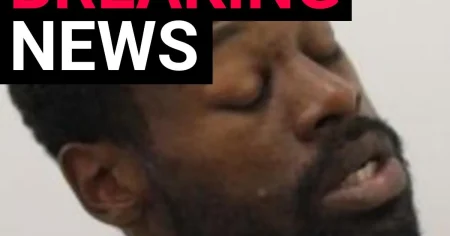
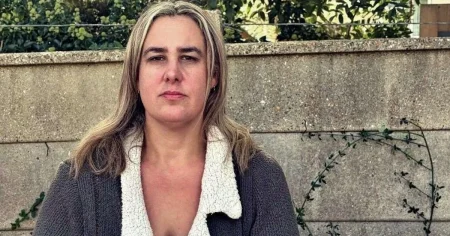
Leah Morton is one of those victims, and for her, the early release scheme is not a story of redemption; it is a story of fear and disgust. The twenty-one-year-old from Bridlington was trapped in a relationship with Joseph Hartley, a man who subjected her to a campaign of violence that left her repeatedly concussed and covered in bruises. The abuse did not stop when she became pregnant. Hartley would kick her stomach, cover her mouth, and try to strangle her. He attacked her so brutally that she would be physically on the floor, unable to get up, while he continued to hurt her. When she finally found the courage to escape and report him, he was arrested and later jailed for eighteen months in April after pleading guilty to controlling and coercive behaviour, intentional strangulation, assault occasioning actual grievous bodily harm, and assault by beating. For Leah, that sentence felt like justice, a recognition of the terror she had endured, a promise that she and her child would be safe. But just five months later, Hartley was released early as part of the government’s scheme. Leah’s family were furious, branding the decision “disgusting.” Leah herself was left feeling sick, vulnerable, and betrayed by a system that she felt had prioritised prison capacity over her safety. She had to live with the knowledge that the man who had beaten her while she was pregnant was walking free, breathing the same air, living in the same world, perhaps even near her. The emotional scars of abuse are deep enough; the fear of encountering the abuser again is a torment that no victim should have to endure. For Leah, the early release scheme is not a second chance for a reformed man; it is a nightmare returning to life.
Paragraph 5
The contrast between Richard’s experience and Leah’s experience reveals the uncomfortable complexity at the heart of early release. There is no single truth, no simple answer. Richard is proof that some prisoners can use the opportunity to turn their lives around, to find work, to reconnect with family, to become productive members of society again. His story is a testament to the power of second chances, and to the idea that rehabilitation is possible when people are given the right support and the right environment. But Leah’s story is a stark reminder that not all prisoners are the same, and that some crimes leave wounds that do not heal easily. Domestic abuse is not a victimless crime; it is a pattern of control, violence, and terror that can leave lasting psychological damage. Releasing an abuser early can feel like the state is taking the side of the perpetrator, telling the victim that her pain matters less than the need for a free prison bed. The challenge for any justice system is to balance these competing interests: the need to punish, the need to protect, the need to rehabilitate, and the need to manage limited resources. It is not enough to simply release prisoners early and hope for the best. There must be robust risk assessments, careful monitoring, support for victims, and consequences for those who reoffend. Richard himself acknowledged this complexity, saying that from his experience, the people being released early were the “good guys,” but that there were many prisoners he had met who should have had their sentences doubled. He knows that he was one of the lucky ones, one of the people who could be trusted with freedom. But he also knows that the system is not perfect, and that for every success story, there may be a victim like Leah, left behind to pick up the pieces.
Paragraph 6
Ultimately, the debate over early release is a debate about what we believe prison is for. Is it a place of punishment, where offenders are locked away to pay their debt to society? Or is it a place of rehabilitation, where people are given the tools to change and return to the community as better citizens? The truth is that it must be both, and the balance between the two is never easy. Richard Nicholls’ story shows us the human face of rehabilitation: a man who made mistakes, who struggled with addiction, who lost his way, but who used the gift of time to rebuild his life and his relationships. His daughter will grow up knowing that her father chose to change, that he fought to be present in her life, and that he did not let prison define him. Leah Morton’s story shows us the human face of victimisation: a young woman who survived unimaginable abuse, who found the courage to speak out, and who now lives in fear because the man who hurt her is free. Her pain is real, and her anger is justified. A humane justice system must hold space for both stories. It must offer second chances to those who genuinely seek them, while also protecting the vulnerable and ensuring that victims are not forgotten. It must be tough on crime, but also smart about it, recognising that locking people up for years is not always the answer, and that releasing them without support is equally dangerous. As the gates continue to open and prisoners walk back into society, we must ask ourselves not just whether they deserve freedom, but whether we, as a society, are willing to do the hard work of helping them become the people they are capable of being, while never forgetting the people they have hurt. The story of early release is still being written, one life at a time, and it is up to all of us to decide what kind of ending we want it to have.