

-
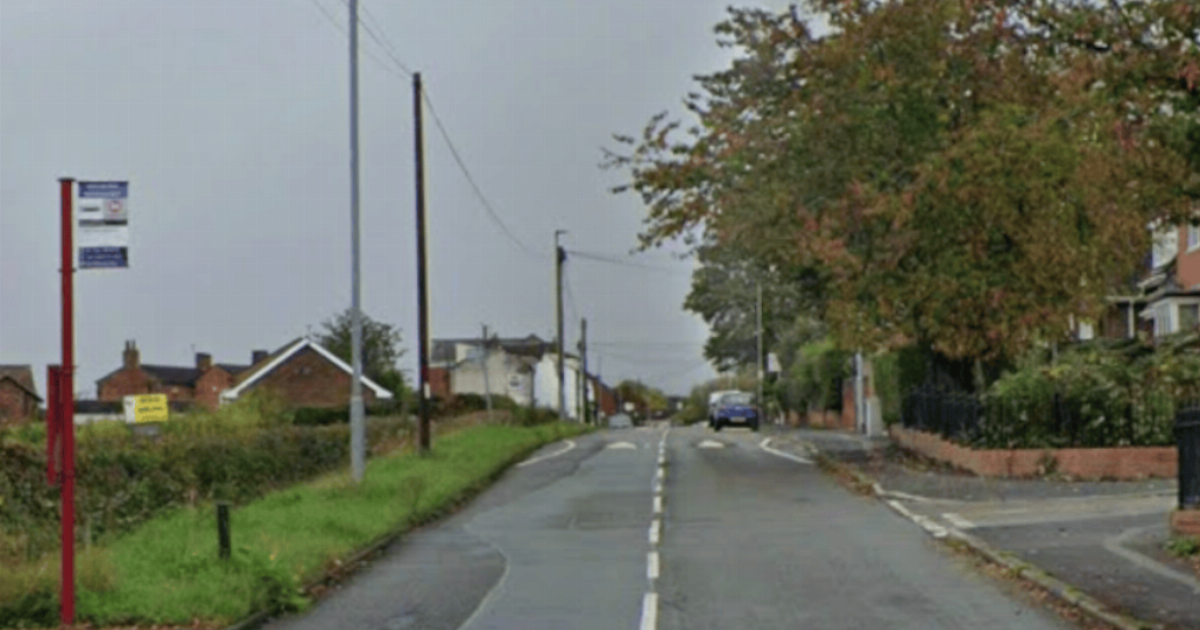
It happened on a night that seemed, at first, to hold nothing unusual. The early autumn darkness had already fallen over Wakefield, softening the familiar outlines of Rooks Nest Road. There was nothing in the air to suggest that before the evening was over, the lives of an entire community would be rearranged by the sight of a teenage girl lying in the road. At 8.30pm on 29 September, that is exactly what happened. A 16-year-old girl was found, close to the bus stop, with injuries so severe that they would later be described as life-threatening. The person who spotted her must have experienced a shock unlike anything they had ever known. One moment the street was quiet, maybe with the sound of traffic and distant television sets leaking from nearby houses. The next moment, there was a young person on the tarmac, barely moving, and the world seemed to stop. Paramedics arrived quickly, but the urgency of their response spoke of a race against time. Sirens filled the air, blue lights swept across the houses, and neighbours who stepped outside were met with a scene that would be hard to process. The girl was taken to hospital, where she remains in a condition that still threatens her life. Behind that clinical phrase is the truth that nobody wants to say out loud: a 16-year-old is clinging to life, and the people who love her are living through the worst hours of their days. She should have been thinking about ordinary things tonight: school, friends, plans for the weekend, the long and confusing journey from childhood to adulthood. Instead, she is in a hospital bed, surrounded by machinery and monitoring and the quiet prayers of a family who cannot bear to leave her side.
-
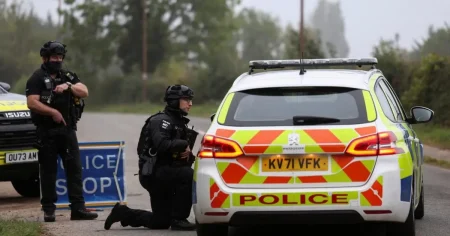
By the following day, it was clear that this was not an incident that could be handled by routine measures. The investigation had been handed over to the Homicide and Major Enquiry Team, and that phrase alone carries a chilling weight. Murder detectives do not simply appear at a scene unless there is a real possibility that a crime has taken place. Their presence does not mean that anyone has yet been charged, and the police have been careful to say that they are keeping an open mind. But for anyone who knows how these things work, the involvement of such a team is a signal that the circumstances surrounding the girl’s injuries are deeply concerning. Temporary Detective Chief Inspector Elly Buchanan made it clear that the full circumstances of what happened have not yet been established. That is a formal way of saying that no one knows, yet, whether this was a deliberate act, an awful accident, something witnessed, something hidden, or something that only a handful of people can explain. The investigation will now be painstaking. Detectives will look at every piece of evidence, every trace of the girl’s movement, every possible connection to the street where she was found. They will speak to her family, her friends, her school, and anyone who might have seen her in the hours before she was discovered. They will try to build a timeline out of fragments, to turn the silence around her condition into a story that can be understood. And all the while, the teenager herself remains unable to answer the most basic questions. The weight of that silence falls heavily on the investigators, but it falls most heavily on the people who love her. For them, the arrival of murder detectives is a new layer of horror, a confirmation that this thing is bigger than a simple injury, and that the road to justice may be long and painful.
-
In the middle of this uncertainty, Detective Chief Inspector Buchanan made a direct and deeply human appeal. She asked anyone who was driving or walking in the Rooks Nest Road area between 8pm and 8.30pm on Tuesday evening to come forward. It is a short window of time, just thirty minutes, and yet within that window, the truth may be hiding. She said that the smallest bit of information could help the investigation, and those words matter. So often, people imagine that they have nothing useful to offer. They assume that what they saw was too small, too ordinary, too unimportant to make a difference. But the experience of detectives is that the smallest details are the ones that crack cases open. A car that seemed out of place. A figure walking quickly. A noise that did not fit. A split second of confusion at a bus stop. These are the moments that people carry without knowing that they are carrying evidence. The appeal was also a reminder that tragedy happens in the middle of ordinary life. The people who were out at that time were not expecting to be witnesses to anything. They were going home, making a quick trip to the shop, walking a dog, checking their phone, listening to music. They had no reason to pay attention to the world around them in any special way. And yet, because they were there, they may hold a piece of the puzzle. The detective’s voice was measured, but the urgency underneath it was unmistakable. She was not simply reading a prepared statement; she was reaching out to the public as the only source of information that could make sense of this nightmare. Every hour that passes without an answer is an hour of additional suffering for the girl and her family, and that knowledge gives the appeal a desperate edge.
-
The investigation has also turned its attention to the technology that now surrounds everyday life. Detective Chief Inspector Buchanan made a request that has become familiar in modern criminal cases: if drivers have dash-cam footage from the area, the police want to see it. If residents have doorbell cameras, the police want to review that too. There is something strangely moving about this request. It asks ordinary people to become investigators in their own homes, to revisit recordings they might otherwise ignore, to search for a face or a vehicle that could change everything. In a way, it is a reminder that our lives are filmed without us ever noticing. A camera mounted on a car dashboard might capture a street corner at exactly the right moment. A doorbell camera might record the sound of a passing car, the silhouette of a person walking through the shadows, the light from a phone screen. None of this footage was created with the intention of solving a crime, and yet it may hold the answer. For the people who live on or near Rooks Nest Road, the request means spending the evening in front of screens, scrolling through recordings, trying to spot something out of the ordinary. It is a strange and uncomfortable task. It means looking at their own neighbourhood as a place where terrible things might happen. It means acknowledging that the safe and familiar world they know may have been broken. But it also offers a way to help, a way to contribute, a way to say that they care. In a situation that leaves people feeling helpless, checking the footage is an act of hope. It is a way of saying that the girl matters, that the truth matters, and that no detail is too small to be shared. The police are not asking for conclusions. They are asking for data, for images, for pieces of a puzzle that they can assemble themselves. And those images, whether they come from a car or a doorbell, might be the difference between answers and an unbearable mystery.
-
Beneath the official language, the police statements, and the appeal for evidence, there is a human story that cannot be forgotten. A 16-year-old girl is in hospital, and her condition is still described as life-threatening. That means her family is living in a state of suspension, caught between hope and dread, unable to plan for anything beyond the next visit, the next update, the next hour. The girl is not a statistic or a case number. She is somebody’s child. She has a family who raised her, who watched her take her first steps, who worried over her first day of school, who imagined the adult she would one day become. All of those dreams are now balanced on the edge of a hospital bed. The people around her are doing what human beings do in a crisis: they are holding on, they are waiting, they are hoping. The hospital staff who care for her carry their own burden. They see cases like this too often, and they know that every life they fight for is connected to a world of people who are watching and waiting. The police officers who look through evidence are not blind to the human cost. They know that the investigation is not just about facts, but about a young life that may be forever changed. And the community itself is also part of the story. Wakefield is not a city of strangers; it is a place where people recognise each other, where news travels quickly, and where the shock of this event will echo for months. Parents will remember this when they walk their own children past that bus stop. Young people will remember it when they stand waiting for a bus after dark. The scene of the incident will never look quite the same to those who know what happened there. And that is the real weight of such events: they remind us that the world can change in an instant, and that the people around us can be taken from us in ways we never expected.
-
The police have asked anyone with information to contact them via 101. It is a simple request, but it carries within it the hope for justice. There is still time for someone to come forward. There is still time for a memory to surface, for a piece of footage to be found, for a person to make a decision to speak about what they know. Perhaps the most important truth about this investigation is that it depends on human beings. It depends on the willingness of strangers to involve themselves in something difficult. It depends on the courage of someone who may be afraid, or uncertain, or reluctant to believe that what they saw could matter. The appeal is not just to those who witnessed the incident directly. It is to anyone who knows anything at all. It is to the person who heard a local rumour and dismissed it. It is to the friend who noticed something strange in someone’s behaviour. It is to the driver who saw a car speeding away and thought nothing of it until now. The smallest act of thoughtfulness could shift everything. And beyond the investigation, there is a broader human lesson in this story. We live in a world where it is easy to look away, to assume that someone else will report something, to tell ourselves that our small pieces of knowledge cannot possibly matter. But this case is a reminder that they can. A community is not only defined by the way it celebrates its good days; it is defined by the way it responds to the terrible ones. In the coming days, the girl’s condition will remain the focus. Her recovery, if it comes, will be the victory that everyone hopes for. But even in the midst of this pain, there is an opportunity for people to be better, to be braver, to be more connected. The girl found on Rooks Nest Road deserves that. Her family deserves that. And in a way, the whole of Wakefield deserves that too, because it is the refusal to look away that turns a place into a home. That is the quiet hope carried by every police appeal, every neighbour’s search through their footage, and every stranger’s decision to pick up the phone and speak the truth.