

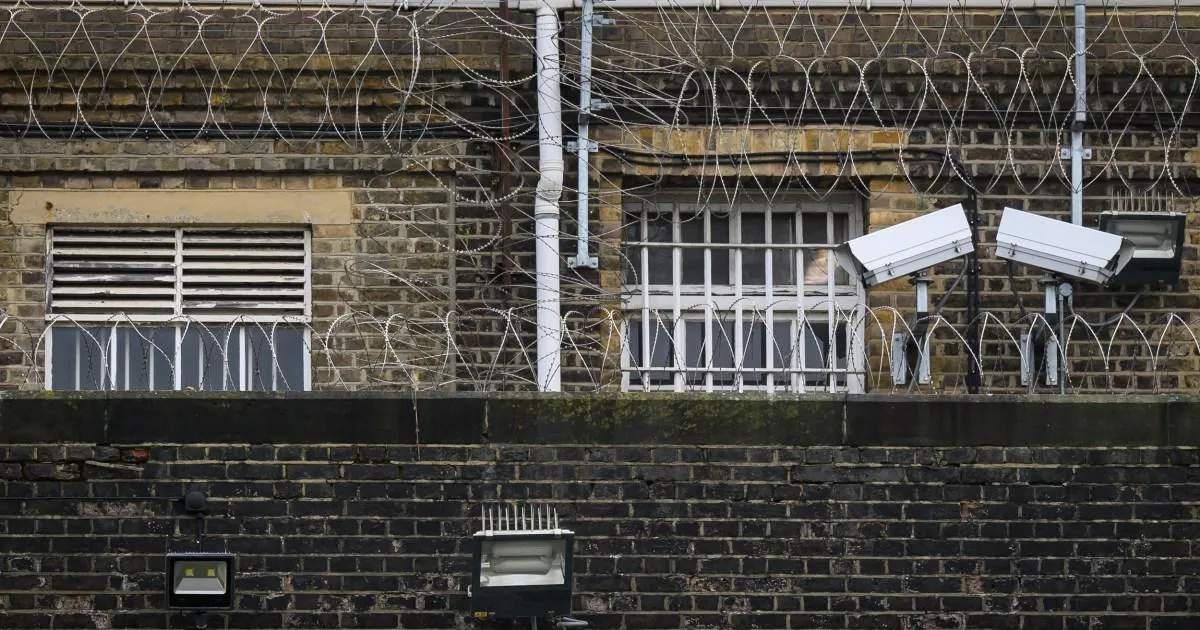
On a grey October morning, the heavy gates of prisons across England and Wales will swing open for a group of men who were not supposed to leave yet. They will step out with bin bags and borrowed jackets, blinking into the daylight, some met by waiting families, others by nobody at all. Hundreds are due to be released in the first wave of the Government’s expanded early release scheme, and the atmosphere around them is thick with contradiction. There is relief, because any prisoner leaving early has a chance to start again. There is fear, because the public does not know who is coming home and what they might do next. And there is anger, because for many victims of crime, the sight of an offender walking free before their sentence is complete feels like a betrayal of everything the justice system is meant to protect. The Government insists this is not a celebration. There is no fanfare, no ceremony, no promise that everything will be all right. There is only a quiet, desperate attempt to stop a prison system that is dangerously full from collapsing under its own weight. But behind every statistic, every government announcement and every angry headline, there is a human story. The men walking out of prison gates are not just numbers on a spreadsheet. They are fathers, sons, partners and friends, returning to a world that has moved on without them, carrying the weight of what they did and the uncertainty of what they will do next. And as they take their first steps into freedom, the whole country is watching, torn between sympathy and suspicion.
The scale of the release is striking. By the time Thursday ends, several hundred prisoners will have been freed as part of the first phase of the scheme, but that is only the beginning. Some 5,000 prisoners are scheduled to be released in stages over the next year, down from an original 6,000 after ministers intervened to exclude rapists and the most serious child sex offenders. The Government has also confirmed that prisoners jailed for manslaughter will not be eligible, meaning the killers of PC Andrew Harper, the Thames Valley officer who died in the line of duty in 2019, will remain behind bars. The exclusion of those offenders was not an easy concession. It came after a summer of intense public pressure, protest and repeated changes to the policy, and it left victims and their families in a painful state of limbo. At the same time, the Ministry of Justice has published figures that make the scale of the problem unmistakable. The prison population of England and Wales stood at 87,499 on Monday, up from 85,761 on June 29. That is an increase of 1,738 people, or 2%, in just three months. The system is not simply full; it is filling faster than the Government can manage. The men being released are mostly those serving fixed-term sentences, not life sentences, and none of them are supposed to be walking free yet. But the numbers have left officials with very few options. They are trying to make space where no space exists, and every decision is a compromise between public safety and institutional survival.
Ministers argue that the expanded early release scheme is not an act of leniency but an act of necessity. Without it, they say, the justice system risks collapsing entirely, and the consequences of that would be far worse than the consequences of freeing certain prisoners early. The male prison estate, in particular, is so overcrowded that cells are doubling up, wings are becoming unusable, and basic services such as education, mental health support and drug rehabilitation are being stretched to breaking point. Over the summer, the issue dominated news headlines, with judges, prison governors, police leaders and union officials issuing increasingly desperate warnings about a system on the edge. The expansion of the scheme is happening as a result of the 2026 Sentencing Act, which allows ministers to reduce the point at which certain prisoners can be freed from 40% of a fixed-term sentence to a third. That may sound like a technical change, but for the men on the inside it means months of waiting being cut short. For a woman waiting at home, it means the difference between another Christmas alone and a chance to hold her partner again. For a victim of crime, it means the terrifying possibility of seeing the person who harmed them on the street. The Government has tried to frame the policy as a pressure valve, a way of easing an emergency before it explodes. But the very need for it is a reminder of decades of underinvestment, rising sentence lengths and a failure to build enough prison places to keep up with demand. The policy may be presented as a practical solution, but it is also an admission that the system has been allowed to get so bad that releasing prisoners early is seen as the only way to keep it standing.
The political road to this point has been brutal. Prime Minister Andy Burnham faced significant backlash for his initial plans to overhaul the scheme, which would have seen Albert Bowers and Jessie Cole, the men convicted of PC Andrew Harper’s manslaughter in 2020, become eligible for early release from next year. The idea that those killers could walk free while still years into their sentences felt, to many people, like a profound betrayal of a fallen officer and a sign that some lives matter less than the need for space in a cell. Under the final version of the scheme, they are excluded, as are members of child grooming gangs convicted of indecent assault. But the damage to public trust has already been done. Justice Secretary Alex Norris has apologised to victims who faced a summer of uncertainty as the Government made change after change to the plans, and his apology was genuine. But for anyone who has been the victim of a serious crime, policy churn is not an abstract inconvenience. It is a series of sleepless nights, phone calls from police, and the sickening thought that the person who changed your life forever might soon be walking down the same streets as you. It is the anxiety of explaining to children why the man who hurt them is no longer where he is supposed to be. It is the feeling that the system, which was built to protect you, is now so desperate that it cannot afford to think about your safety. The apologies help, but they cannot erase the pain. They cannot restore the trust that has been broken by weeks of mixed messages, and they cannot promise that the next change will not be the one that lets the wrong person out.
The public is also unlikely to forget the images that defined the earlier phase of early release. In October 2024, inmate Daniel Dowling-Brooks was filmed shouting “big up Keir Starmer” as he was picked up in a convoy of a white Bentley and a black Mercedes G-Wagon outside HMP Swaleside in Kent. Another prisoner at the same jail was welcomed with an embrace as he climbed into a black Rolls-Royce surrounded by men in matching hoodies. Those pictures turned a policy about reducing overcrowding into a symbol of injustice. For many people, it looked less like rehabilitation and more like a reward for criminality, a celebration of the very people the public had been told to fear. It was impossible not to notice the contrast between the luxury cars waiting for some inmates and the ordinary victims who received nothing but grief. And yet this is not the first time the country has tried to ease the pressure by releasing prisoners early. Under a separate process introduced by the previous Conservative government, 13,325 prisoners in England and Wales were freed early between October 17 2023 and September 9 2024. The Ministry of Justice says that a total of 70,066 prisoners have been released under the current scheme up to the end of March 2026. Those numbers are vast, and they leave a simple question hanging over every single decision: is the safety of the public being sacrificed to make the numbers work? The Government would say no, of course. It would point to the exclusions, the risk assessments and the emergency nature of the policy. But for many people, the sight of prisoners celebrating their release in expensive cars was impossible to forget, and it made all the official explanations sound hollow.
The truth is that there are no easy answers. Prison numbers fell sharply in the weeks after the scheme was launched, but they began climbing again in early 2025 and have since fluctuated mostly between 86,000 and 88,000. The total prison population is now only 1,022 below the record high of 88,521, reached on September 6 2024 in the wake of the public disorder that followed the Southport killings. That means the pressure is still there, hidden behind a thin margin of safety, waiting to return. The Government says the expanded scheme is needed to prevent the justice system from collapsing, and it is not entirely wrong. But the release of 5,000 prisoners is a gamble with real lives on both sides. For every prisoner walking free, there is a victim who will feel less safe, and a neighbourhood that will have to absorb a returning offender. There are also families praying that this time, the person coming out will not reoffend, and prisoners themselves who will have to prove that they deserve the second chance they have been given. This is not a simple story of good versus evil. It is a story of a system that has been allowed to break, and of a government trying to hold it together with decisions that no one should be forced to make. The gates are opening now, and the men walking through them are carrying more than their belongings. They are carrying the hopes of their families, the fears of their victims, and the weight of a country that cannot decide whether to hate them or help them. The hardest part is not the release itself. The hardest part is what happens next, to them, to the people they meet, and to a society that is still trying to work out what justice really means.