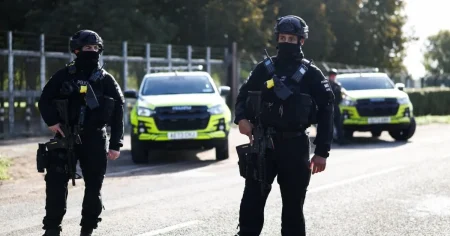


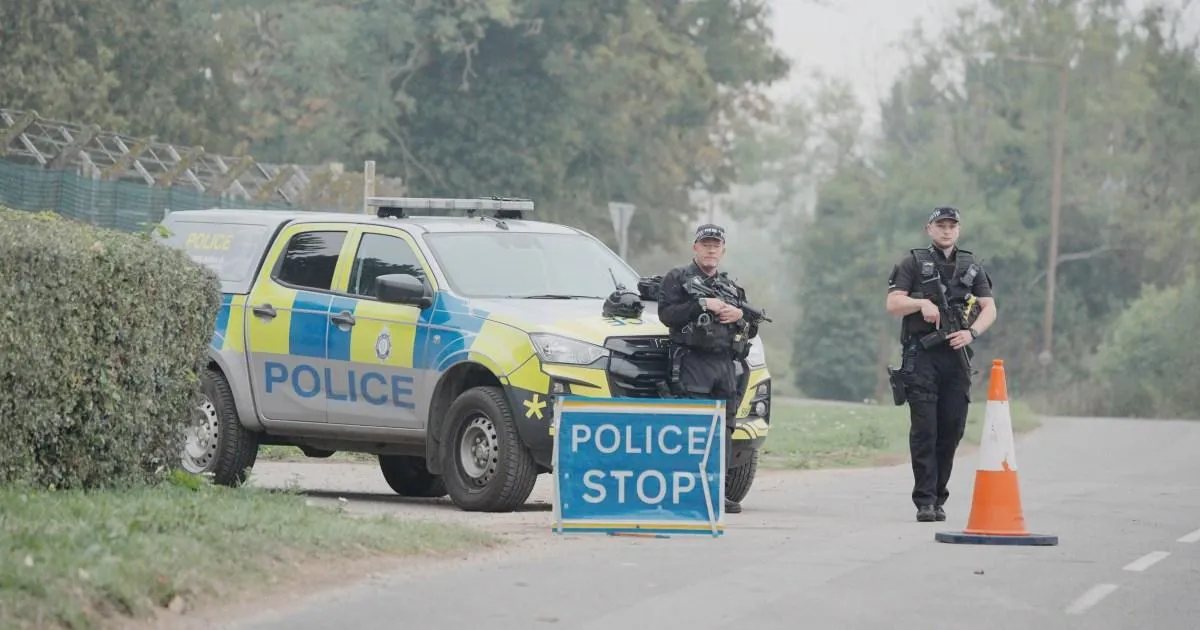
One quiet late-summer evening, a group of families gathered near the perimeter of RAF Fairford for what should have been an ordinary cricket match. Children ran across the grass, bats swung, and conversation drifted in the warm air. It was the kind of scene that defines English village life, unhurried and communal. Then, without warning, two armed guards sprinted toward the fence, rifles clutched in their hands, and shouted at the group to leave. “You can’t be here. There is a live incident going on. It’s not safe,” they yelled. The cricketers, confused and frightened, stepped back. They had played there the evening before with no trouble at all. But on this Saturday afternoon, something was very different. The military base behind the fence, used by American bombers and reportedly involved in operations against Iran, was already on high alert. Intelligence had suggested that an attack might be possible. The families playing cricket had no idea that they were brushing against the edge of a suspected terror plot. They did not know that within hours, armed police would swarm the area, that bomb disposal robots would be sent to inspect vans, and that five Londoners would be arrested in connection with a plan that could have turned the base into a scene of catastrophe. For the cricketers, there was only the sudden, chilling realization that a place built for leisure had become a place of danger. The guards did not offer explanations. They simply ordered everyone away, and the players gathered their belongings with trembling hands, glancing back at the fence that now seemed less like a boundary and more like a shield. That moment, brief and bizarre, was the first public sign of a crisis that had been building in secret for hours. It was also a reminder that terrorism does not always announce itself with explosions or sirens; sometimes it first appears as a shouted command across a field, breaking the peace of an ordinary game.
As Saturday wore on, the unease spread beyond the cricket pitch. Residents in the nearby village of Dunfield reported hearing a public speaker announcement coming from inside the base that evening. The voice echoed across the quiet countryside, carrying instructions that local people could not fully understand. Soon after, the staff seemed to vanish. The base, normally active and visible, fell into an unnerving silence. Families who lived on RAF Fairford left their homes during the emergency and only returned later to collect essential items. No one was telling the public exactly what was happening, and that lack of communication bred fear. One local resident put it plainly: “It’s obvious the Americans knew something way before us. But if it affects them, it affects us. We are right next door. We’re frustrated and scared at the lack of correspondence from the base and UK authorities.” Those words captured the mood of a community caught in the middle of a secret security operation. They were close enough to hear the warnings, but far enough from the truth to feel helpless. Meanwhile, in the early hours of Sunday morning, a female farmer driving home spotted suspicious activity near the base. Masked men, a van, something wrong. She did what anyone would do: she called the police. Her 999 call, made at around 12.45am, seemed like the spark that would ignite the investigation. But by then, police were reportedly already on the scene. The suspects, it appears, had been under surveillance before the farmer even saw them. Still, her vigilance was real and important. In the cold dark hours, she had noticed what others might have missed, and her decision to report it showed the kind of instinctive civic duty that often proves invaluable in times of crisis. Yet even as she made that call, officers were moving into position. The drama was already underway. The vans, three white vehicles left on the driveway of a farmer, would later be examined by a bomb disposal robot, a strange machine creeping toward them like something from a science fiction film, while the countryside held its breath.
The details that emerged over the following days painted a picture of a plot that had been brewing dangerously close to the surface. Five Londoners were arrested in connection with the incident and later released on bail. The discovery of three vans and petrol outside RAF Fairford suggested a plan that could have involved fire, explosives, or something even worse. Then came news of a sixth individual, a 25-year-old dual UK/Iranian national, who was also arrested and bailed in connection with the suspected plot. The investigation extended beyond the Gloucestershire countryside, with searches taking place at addresses in Westminster, pulling the national capital into the story. The vans had been left in a rural driveway, but the connections reached into cities, homes, and communities far away. One of the most puzzling revelations was that one of the suspects is believed to have called 999 himself from the scene, before the farmer spotted them. Why would someone involved in a suspected terror plot call the police? The question hung in the air. Did he get cold feet? Was it a panic decision brought on by fear and doubt? Or was the call part of a deliberate plan, designed to confuse responders or create a different narrative? Nobody could say for sure. The authorities remained tight-lipped, and the suspects, freed on bail, returned to their lives while the investigation continued. The strange phone call added a human layer to an otherwise grim story. It suggested that the people behind the alleged plot were not machine-like operatives but individuals capable of hesitation, confusion, or perhaps manipulation. It also raised troubling questions about how such plots are formed, how they unravel, and how close the country came to a major attack without anyone knowing until the final moments. For the public, the story was a mix of relief and dread. The plot had been foiled, but the uncertainty remained. Who were these men? What were they planning? And what had changed in their minds, if anything, on that dark morning when one of them reached for his phone and dialed the emergency number?
For the cricketing family whose Saturday afternoon was so abruptly interrupted, the memory lingered. They had come to the field to enjoy a simple game, to spend time with loved ones, to feel the grass under their feet. Instead, they encountered armed guards and a warning that sent them packing. The cricketer who spoke about the incident described the shock vividly. They had played the evening before without issue, he said, but on Saturday the atmosphere changed completely. The guards’ eyes were serious behind their weapons, their voices urgent. It was clear that this was not a drill. The families did not argue. They simply left, carrying their bats and balls in silence, wondering what they had just witnessed. The emotional weight of that moment is hard to exaggerate. To be so casually expelled from a place of safety, to look into the barrel of a soldier’s rifle and hear that you are in danger, is the kind of experience that stays with a person forever. For the local community, the pain was collective. The base had always been there, a looming presence with its runways and aircraft, but it had never felt threatening. Now, suddenly, it felt like a target. The residents of Dunfield and the surrounding areas realized that they were living in the shadow of an international conflict. The American bombers stationed at RAF Fairford were part of military operations, and that made the base, and by extension their homes, potential sites of violence. The lack of communication from authorities made it worse. They wanted answers, or at least reassurance, but none came. Instead, they were left to piece together fragments of information from news reports and neighborly gossip. The cricketers, the farmers, the village residents, all of them were caught in a story that was only beginning to unfold. They were not heroes or villains, just ordinary people trying to understand why their quiet corner of England had suddenly become a place where armed police patrolled the fields and bomb disposal robots moved across driveways.
The broader implications of the incident reached far beyond the village and the base. Andy Burnham, a prominent political figure, said there were “strong indications that Iran played a part” in the suspected terror plot. That single statement shifted the story from a local security scare to a matter of international tension. RAF Fairford was not just a British military site; it was a symbol of Western military power, a base from which American bombers had flown missions that targeted Iran. The idea that Tehran might have been behind a plot on British soil was a reminder that global conflicts rarely stay contained. They spill over borders, and sometimes they land in the fields of Gloucestershire. The alleged plot also raised questions about the nature of modern terrorism. The suspects were reportedly under surveillance before the incident, which suggested that intelligence agencies were aware of something months or weeks in advance. Why, then, was the cricket match not stopped earlier? Why were the residents not told more? The answers were likely buried in operational secrecy, but the public could not help but wonder. There is also the unsettling detail that one suspect called 999. If that call was a genuine change of heart, then the human capacity for second thoughts may have played a role in saving lives. If it was a tactical move, then the plot was even more sophisticated than it first appeared. Either way, the incident illustrated how complicated counter-terrorism has become. It is no longer simply a matter of bombs and guns; it is a puzzle of human psychology, surveillance, military diplomacy, and split-second decision-making. The police, the military, and the intelligence services all had roles to play, and somehow, the plot was stopped before it could cause harm. But the relief was tempered by anxiety. There are likely other cells, other plans, other men in vans waiting in quiet lanes. The country, and especially the communities near military bases, would have to learn to live with that reality.
In the end, what stands out about this story is not just the danger of the plot itself, but the fragility of ordinary life in the face of extraordinary threats. A family cricket match stopped by armed guards. A farmer’s late-night drive turning into a moment of vigilance. A village hearing a loudspeaker announcement and then watching as an entire base went silent. These are the small human details that give scale to a large event. The people involved were not experts in geopolitics or counter-terrorism. They were just living their lives, and suddenly they found themselves on the edge of something terrifying. Their frustration with the lack of communication is understandable. In a democracy, people expect to know when they are in danger, especially when the danger is in their own backyard. But security requires secrecy, and secrecy breeds fear. The authorities likely acted correctly in keeping details hidden while the operation was ongoing. Yet afterward, once the suspects were arrested and the immediate threat was neutralized, the questions remained. Why had the base been on high alert? How much did anyone know? What would have happened if the cricketers had not been ordered away? The incident at RAF Fairford serves as a sobering reminder that modern terrorism can strike anywhere, even in places that seemed immune to the conflicts of the wider world. It also shows the importance of human vigilance: the farmer who called 999, the guards who rushed to the fence, the suspect who may or may not have had second thoughts. All of them played a part in a drama that could have ended very differently. As the community tries to return to normal, the cricket match remains a symbol of interrupted peace. The families probably think about it every time they drive past the base. The residents of Dunfield listen more carefully to loudspeaker announcements. And the rest of us, watching from a distance, are left with an uncomfortable truth: safety is never guaranteed, and sometimes the first warning of danger comes not from alarms or intelligence briefs, but from a shout across a field, telling us to run.