


Paragraph 1
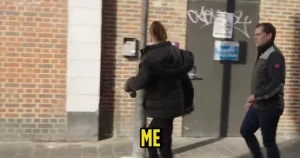
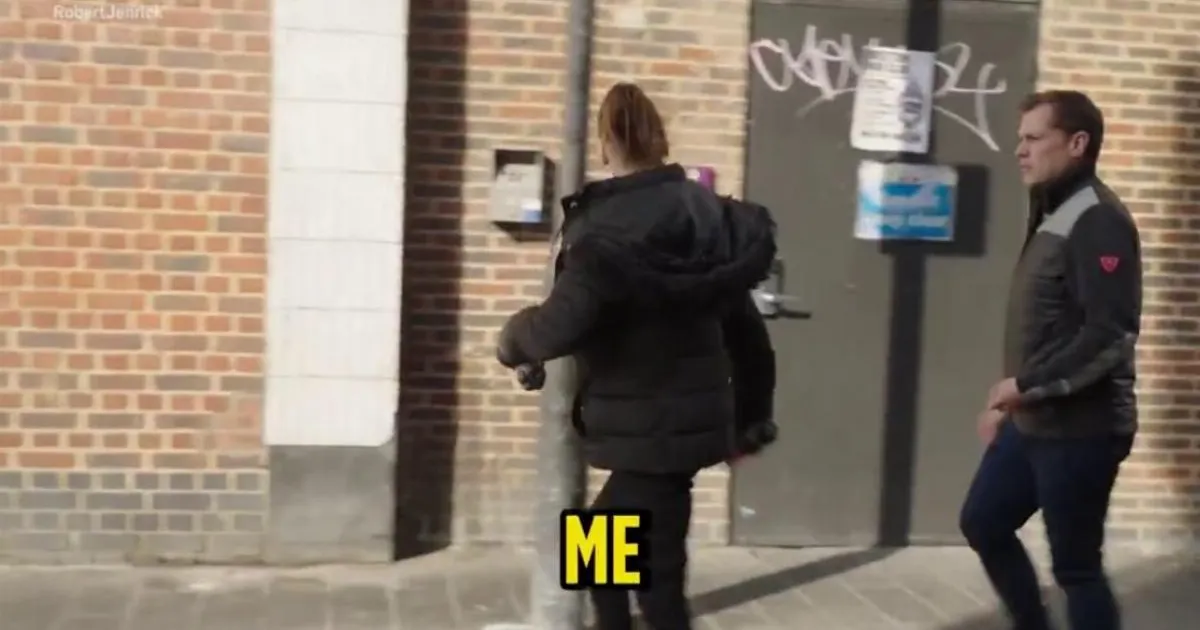
It was the kind of scene that might have been written for a political satire, except it was all too real and filmed for the public to judge. Robert Jenrick, the Reform UK MP and former Conservative cabinet minister, found himself in an awkward, street-level confrontation in Brixton, south London, after spotting a woman walking out of a shop with several bottles of Coca-Cola she had not paid for. The video, which Jenrick himself shared, captures the politician in full pursuit through an outdoor market, wearing the slightly self-righteous expression of a man on a moral crusade. “You’ve taken like ten of those bottles,” he can be heard shouting after the woman, his voice cutting through the ambient sounds of stallholders and shoppers. She, however, did not appear to be in the mood for a lecture. She kept walking, clearly unimpressed by her unexpected accuser. When he pressed on, asking if she wanted to take the bottles back, she turned and delivered a withering retort that quickly became the centerpiece of the internet’s reaction: “Allow me bruv! What the f*** has it got to do with you?” The words were blunt, but the message was clear: this was none of his business, and she was not about to be shamed by a politician with a camera phone. Jenrick, perhaps sensing he was losing the exchange, tried to stand his ground. “You can swear at me as much as you like, you’ve just nicked a load of stuff,” he insisted, before escalating to a threat that seemed to belong more to a campaign rally than a market street: “Honestly, people like you should be in jail, and you would be under a Reform government.” The entire episode was awkward, theatrical, and oddly emblematic of modern political performance.
Paragraph 2
To understand why Jenrick was quite so determined to film himself chasing a shoplifter, it helps to look at his recent political journey. Once a rising star in the Conservative Party, Jenrick served as immigration minister and housing minister before dramatically defecting to Reform UK in early 2025. Since making that leap, he has reinvented himself as a street-level crusader for law and order, sharing a growing library of videos in which he confronts people he believes are breaking the rules. Tube fare dodgers have been a particular target, with Jenrick capturing himself challenging commuters who slip through barriers without paying. Each video is clearly designed to feed a particular political narrative: that the country is sliding into disorder, that ordinary rule-breakers are getting away with everything, and that a tough, no-nonsense government—presumably led by people like him—would restore some semblance of discipline. The Brixton shoplifting video fits neatly into that template. It is direct, confrontational, and designed to show a politician willing to get his hands dirty rather than merely making speeches. But politics is rarely as simple as it looks on camera, and the scene in Brixton quickly began to unravel in ways that Jenrick may not have anticipated. For one thing, the woman he chose to confront did not look like a hardened criminal. In the footage, she appears thin, visibly malnourished, and utterly exhausted—hardly the image of a daring, organized shoplifting ring. For another, her reaction, raw and unfiltered, made Jenrick’s intervention seem less like brave policing and more like a privileged politician picking on someone who was already down. The confrontation, which he presumably expected to generate applause, instead generated a tidal wave of criticism, memes, and uncomfortable questions about what kind of justice is actually being demanded.
Paragraph 3
The online reaction to the clip was immediate, and it was anything but unified. Supporters of Jenrick praised him for taking an interest in petty crime and accused his critics of making excuses for thievery. But the louder, more viral response came from the other direction. Many people pointed out, with a mix of anger and sarcasm, that Jenrick had chosen a visibly impoverished and unwell woman as the target of his moral outrage. One X user wrote: “Well done to Robert Jenrick for finding 1 poor malnourished white woman and policing her over a bottle of cola while hundreds of thousands of foreign rapefugees float around stealing welfare.” The language is deliberately inflammatory and uses a crude slur, but it captures the underlying criticism that many people felt: that Jenrick’s brand of law-and-order politics is deeply selective, Performative, and all too often aimed at the vulnerable rather than the powerful. It is easy to chase someone who has stolen a bottle of Coke. It is much harder to investigate the systemic failures, the broken social safety nets, or the corrupt networks of influence that allow far larger sums of money to disappear without consequence. Critics also noted the visual irony of a man who has lived a life of considerable privilege—public school, Oxbridge, cabinet office—shouting at a woman who looked as though she could not afford a proper meal, never mind a ten-bottle supply of Coca-Cola. The scene was not just embarrassing; it was, to many observers, a perfect illustration of how the political right often talks about crime: loudly, punitively, and with a remarkable lack of empathy or context. It turned a woman’s desperate act into a moral lesson, without ever once asking why she was in that position in the first place.
Paragraph 4
But the most devastating responses to Jenrick’s Brixton adventure did not focus on the woman at all. They focused on him. In particular, they focused on his record as a government minister, which turned out to be rather less spotless than his campaign videos suggest. Jenrick served as housing secretary under Boris Johnson, and during that time he was involved in a decision that even he later admitted may have been unlawful. The case concerned a massive development on the Isle of Dogs in Tower Hamlets, a plan for 1,500 homes in east London. The developer was Richard Desmond, a Conservative donor and former publisher of the Daily Express. Jenrick approved the project despite the advice of his own planning officials, who had recommended against it. The approval happened after Jenrick sat next to Desmond at a fundraising dinner, a coincidence that critics found impossible to swallow. The contract was worth around £1 billion, and the timing of the approval reportedly helped Desmond avoid approximately £40 million in community infrastructure levies—money that should have gone to fund local services, schools, transport, and affordable housing. When the scandal broke, Jenrick accepted that his decision may have been unlawful but insisted he had shown no bias toward Desmond. Still, the contrast was glaring. Here was a politician happy to pursue a woman over bottles of Coke worth a few pounds, yet who had personally intervened to hand a wealthy donor a deal worth tens of millions. The arithmetic alone was damning: a £40 million helping hand versus a supermarket shoplifting. One person put it bluntly in response to the Brixton video: “Robert Jenrick going after people who nicked a 2 quid bottle of coke while his government handed out contracts equaling billions of pounds to their mates during covid.” This single tweet summed up the feeling of many: that Jenrick’s outrage was not about justice, but about optics.
Paragraph 5
The wider backlash went beyond Jenrick’s personal record. It tapped into a deep and growing public fatigue with politicians who use crime as a stage prop while ignoring the actual mechanisms that allow wrongdoing to flourish. During the COVID-19 pandemic, the British government handed out public contracts with astonishing speed and secrecy, and many of those contracts went to individuals and companies with close links to the Conservative Party. Billions of pounds were spent on personal protective equipment that turned out to be unusable, on contracts that were later ruled to have been unlawful, and on schemes that benefited the well-connected rather than the public. Jenrick’s own involvement in the Desmond affair was just one example of a broader pattern. Yet when it came time to present a tough-on-crime image, he chose to film himself chasing a woman over soft drinks in one of London’s poorer neighborhoods. The hypocrisy was so glaring that it almost did not need commentary. Almost, but not quite, because the commentary arrived in waves. Commentators noted that the same politician who wanted to lock up shoplifters had shown no such enthusiasm for investigating the wealthy donors and privileged insiders who extracted far greater sums from the public purse. They noted that the criminal justice system he wants to harden already disproportionately punishes the poor, while white-collar criminals and political insiders often walk away with their reputations intact. And they noted that the woman in Brixton, whoever she was, was not the real problem—she was a symptom of something much bigger. In fact, one of the most persistent criticisms from the left was that Jenrick had not only behaved cruelly but had also chosen the wrong enemy. If he genuinely cared about stolen money, there were bank accounts, offshore trusts, and procurement contracts far more deserving of his attention.
Paragraph 6
In the end, the Brixton video is not really about a woman walking out of a shop with a few bottles of Coca-Cola. It is about the stories politicians tell, the villains they choose, and the uncomfortable truths they would rather avoid. Robert Jenrick wanted to show himself as a man of action, unafraid to confront disorder on the streets. Instead, he showed himself to be a man of selective outrage, perfectly comfortable lecturing the poor while standing up for the powerful. The woman he chased may have been guilty of shoplifting; she may have even deserved a telling-off or a caution from an actual police officer. But she did not deserve to be turned into a prop in a political performance, especially not by someone whose own record in government has been mired in accusations of favoritism and unlawfulness. The more the video was watched, the more it became a mirror for modern British politics: a politics of spectacle, where the camera is always rolling, where nuance is abandoned in favor of outrage, and where the most vulnerable people are treated as props in an endless culture war. For Jenrick, the clip may yet prove useful to his political base, which thrives on confrontations with perceived enemies. But for the broader public, it was a reminder of something uncomfortable: that the people who claim to stand for law and order are often the very same people who have bent the law when it suited them, and that the order they imagine is not one of fairness, but one where the poor are punished sharply and the rich are patted on the back. The woman in Brixton, meanwhile, walked away with her bottles. Jenrick walked away with another viral video, another helping of criticism, and the lingering question many politicians prefer not to answer: what actually gives you the right to judge, and what have you done with the power you already had?