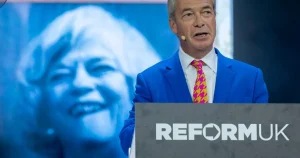


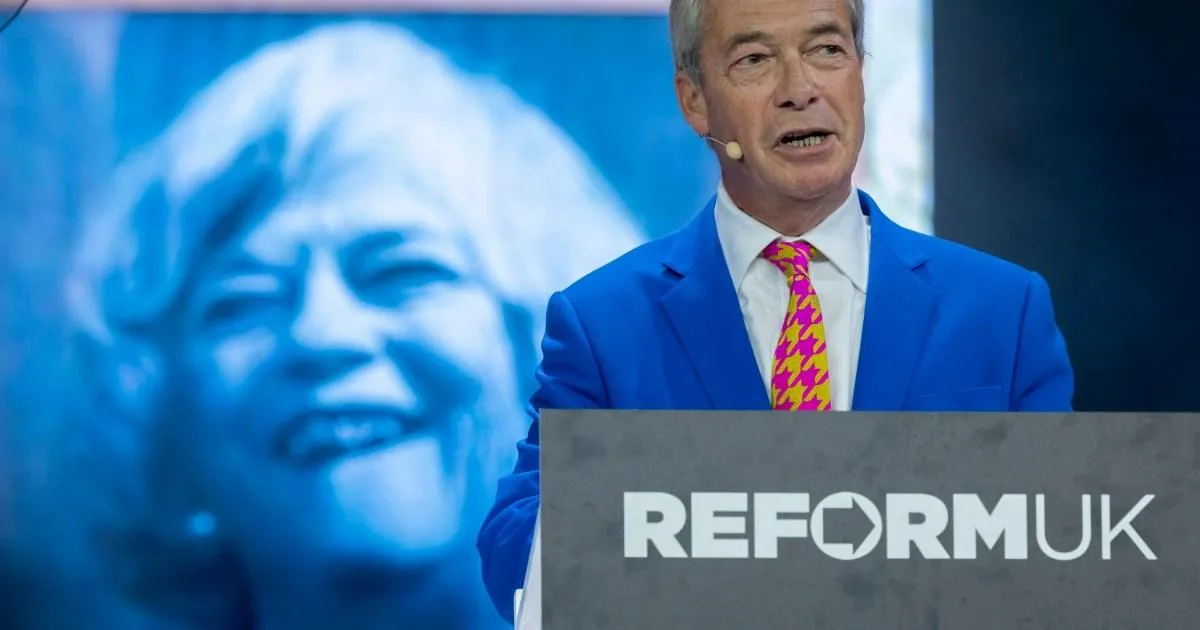
At the NEC in Birmingham, with Reform UK’s 2026 national conference opening around him, Nigel Farage stepped onto the main stage to pay tribute to Ann Widdecombe. The setting was familiar—a big hall, bright lights, banners, applause—but the moment was heavy. Widdecombe had been not just a colleague but a political character, a woman who had spent decades in Parliament and in public debate, and her violent death had already sent shockwaves through the country. For anyone who had followed her career, from the Conservative frontbench to the Brexit battles and then to Reform UK, her loss felt personal in a way that transcended party. Then came another development that made the gathering feel even more somber. Joshua Kerry, the 28-year-old already charged with her murder, was charged today with a separate offense: engaging in conduct in preparation of terrorist acts, with the alleged target being Farage himself. The new charge, announced by the Crown Prosecution Service after what police described as “a hugely intensive and complicated investigation,” spans a period from May 31, 2024, to July 8 of this year. That is a long window, and it suggests that investigators have been examining a course of conduct, not a single moment. It also means that the person accused of taking one life may have been planning something else, against another public figure, for more than a year. For everyone in that hall, the news must have felt like a punch, turning a memorial into a moment of fear.
To understand why the new charge has struck such a nerve, you have to think about what Farage has already said he went through. He revealed earlier this year that a lit incendiary device had been posted through his letterbox in April 2025. A lit incendiary device. Through his letterbox. That is not a protest or a hostile tweet; it is an object designed to burn and destroy, arriving at the place where a person expects to feel safest. The Metropolitan Police and Counter Terrorism Policing London looked into the incident at the time, but they treated it as an attempted burglary. No arrests were made, and the case was closed pending any new lines of inquiry. It would have been easy for the public to file that episode away as an unsolved mystery, or for Farage himself to wonder if it was just a disturbing anomaly. But now the context has changed. The charge against Kerry covers a period that includes the spring of 2025, and the allegation that he was preparing terrorist acts aimed at Farage makes the letterbox attack look less like a random burglary and more like part of a larger, darker pattern. This is the reality of political life in modern Britain: a person can spend years in the public eye, accept the abuse and the threats as part of the job, and still find that the danger has crossed a line, from words to fire. It is also a reminder that “attempted burglary” can be a misleading phrase. A device designed to ignite at someone’s door is not a burglary; it is an assault on the most basic sense of security. The police and the courts will now have to explain what was known, when, and why the earlier investigation closed.
The investigation that led to the new charge was not quick and it was not easy. Deputy Assistant Commissioner Vicki Evans, the Senior National Coordinator for Counter Terrorism Policing, described it as “a hugely intensive and complex investigation,” and she made clear that it had been carried by a team of people: detectives, analysts, forensic experts, all working on multiple lines of enquiry. The charge, she said, was a result of their “tireless work” across the Counter Terrorism Policing network. These are the kinds of words that can sound like official boilerplate, but in a case this serious they matter. A hammer attack in a kitchen and an alleged plan involving a political target could not be more different in their apparent methods, and untangling whether they are connected, and how, requires enormous patience and care. The legal process is now beginning to take shape. Kerry is due to appear at Westminster Magistrates’ Court on Wednesday, October 7, 2026, and he has already appeared at the Old Bailey charged with Widdecombe’s murder. For those who want justice quickly, the dates may feel far away, but they are a reminder that the system values fairness over speed. Everyone accused of a crime is presumed innocent until proven guilty, and the courts will have to examine the evidence calmly, even as the public struggles to process the horror of the allegations. The choice of venue matters too. Westminster Magistrates’ Court is where some of the most sensitive terrorism cases begin, and its involvement signals that this is not being treated as an ordinary criminal case. The Old Bailey, meanwhile, is the central criminal court of England, the place where murder trials of national importance are heard. Between those two buildings, the legal system is trying to hold on to the very standards that make it possible to see justice as more than revenge.
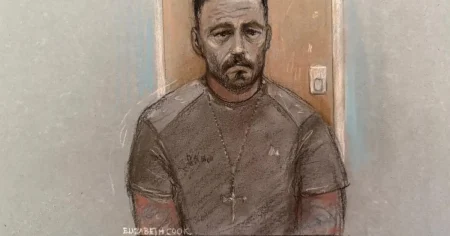
The murder case itself is brutal in its simplicity. Widdecombe was 78 years old when she was found dead at her home in Haytor on Dartmoor, Devon. Kerry was arrested on suspicion of murder on July 11, two days after her body was discovered. At an earlier hearing at the Old Bailey, prosecutors painted a picture that is hard to forget: she had been hit 21 times over the head with a hammer in a “planned and targeted” attack carried out with a “ferocity of violence” in her kitchen. The words themselves are clinical, but the images they invoke are not. A woman in her own home, a room filled with the ordinary tools of daily life, and an act of such extreme violence that it seems to belong to a different world. Widdecombe had been a formidable presence in British public life for decades. She served as a Conservative MP and minister, later became a prominent figure in the Brexit debate, and eventually joined Reform UK, where she remained active enough to take part in election campaigns. In fact, photographs from the Reform UK general election campaign launch show her speaking in Westminster, still engaged and still combative. She was not someone who frightened easily, if the record of her career is anything to go by. And yet none of that mattered at the end. The attack was planned, it was targeted, and it happened in the most domestic of spaces. That is what makes the case so difficult to absorb: if a woman like Ann Widdecombe could be killed in her kitchen, then no one who enters public life can take safety for granted. A provisional trial date for the murder charge has been set for June 8, 2027, but the legal timeline does little to soften the shock. Between now and then, her family, her former colleagues, and the public must live with the knowledge of how she died.
The official response to the new charge reflects how seriously the state is taking it. Frank Ferguson, chief crown prosecutor for the Crown Prosecution Service’s Special Crime and Counter Terrorism Division, said that after carefully reviewing the evidence, the CPS had made the decision to prosecute Kerry for engaging in conduct in preparation of terrorist acts. He added that prosecutors had worked closely with police to establish that there was sufficient evidence to bring the case to court, and that they would continue working with investigators as the case progressed. But the most striking words came from Home Secretary Shabana Mahmood. She said her “profound sympathies” were with Nigel Farage and his family, and then she broadened the message: “Let no one make any mistake: an attack on anyone in politics is an attack on us all.” It is a phrase that cuts through party lines and tribalism. She said the case raises serious questions about the security of those in public life, and she called for the moment to be used as an opportunity to reset. Once Parliament returns, she will update the public on work to strengthen protections for those who choose to serve. The promise of action is important, because words alone will not be enough. Politicians of every party need more than expressions of sympathy; they need practical measures that protect them from violence, without turning their lives into fortresses. That could mean changes to police protection, better security for constituency offices and homes, tougher laws, or at least a serious national conversation about how political opponents are described and treated. This case may finally force that conversation to happen in a way that goes beyond party loyalties. The Home Secretary’s use of the word “reset” was carefully chosen: it acknowledges that the current approach has not been enough, and that something fundamental has to change.
In the end, the story of this conference, this murder charge, and this new terrorism allegation is not just a story about party politics. It is a story about what it means to serve in public life in an age of anger, and about how fragile the line between debate and violence has become. Farage stood on a stage and paid tribute to a woman whose accused killer is now also accused of plotting against him. That is not a normal political moment. It is a moment that should make the whole country stop and think. The courts will do their work, slowly and deliberately, with a murder trial expected in 2027 and a terrorism charge moving through the system. The investigation may still reveal more details, and the police may have more questions to answer about whether earlier warnings were missed. But beyond the legal process, there is a deeper challenge. Every society that expects people to enter politics needs to make sure that doing so does not mean putting their lives at risk. Ann Widdecombe was a woman of strong opinions and a long career; she was also a woman who should have been safe in her own kitchen. Nigel Farage is a man who has always been comfortable with confrontation; he should not have to check his own letterbox for devices designed to burn. Their party, their rivals, and the wider public may disagree about many things, but they should be able to agree on this: no one should die, or live in fear, simply because they chose to serve. That is the real lesson of this terrible case, and the only fitting tribute to the memory of Ann Widdecombe. It is also a promise that has to be kept long after the headlines fade and the court cases conclude. The most decent response to an assault on democracy is to defend the right of every elected representative and every candidate to live without fear while doing their job. If that cannot be guaranteed, then the country has lost something far bigger than one political figure.