


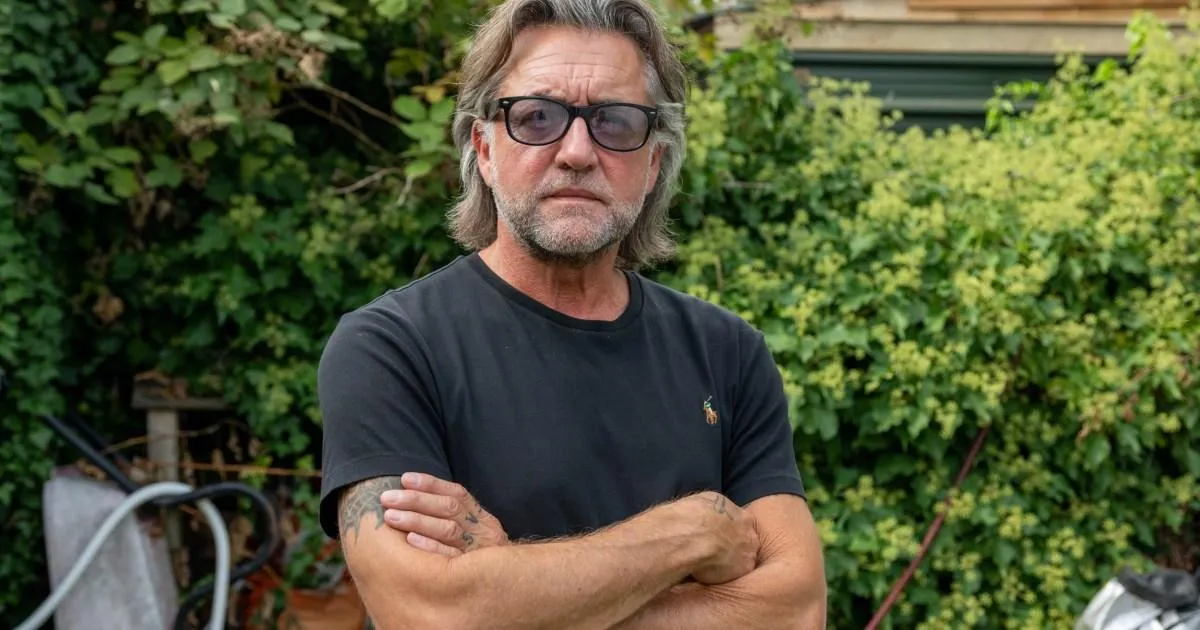
There is a particular kind of loneliness that comes from being the last person left in a place everyone else has abandoned. Ritchie Wood knows it well. At 55, he finds himself the final resident on Manor Road, a short stretch of modest homes in Kempston Hardwick, Bedfordshire, whose fate is already sealed. The street is due to be flattened to make way for one of Europe’s largest theme parks: the £5bn Universal United Kingdom Resort. The project has been championed by politicians as a great national win, a generator of jobs, tourism, and global prestige. But for Ritchie, no amount of press releases can dull the simple grief of losing his home. He has lived in his three-bedroom cottage for 11 years, renting it through changing seasons of his life. The walls hold memories. The street holds his routines. His elderly parents live just six miles away, and he has built his life around being close to them. Now all of that is dissolving. Six of the twelve homes on the road are already empty, their windows dark, their gardens beginning to look forgotten. Another five are said to have been sold to Universal by owners bound by non-disclosure agreements, and the official understanding is that the wrecker’s ball will swing before Christmas. Ritchie remains, carrying on as best he can in a ghost street, trying not to let the silence crush him. He has been through eviction proceedings, legal consultations, and court appearances. A possession order was made against him in September. The next knock on the door might be the bailiffs. “I’m not being taken seriously, and no one will speak to me,” he says. “I feel like an alien, intruding or trespassing.” It is a devastating description of what it means to be rendered invisible by a project too big to notice one man’s life.
The scale of what is coming to Bedfordshire is staggering. Universal Destinations and Experiences, the entertainment giant behind Jurassic Park, Fast & Furious, and Despicable Me, is planning a 476-acre resort that will bring some of Europe’s tallest rides to the English countryside. The attractions are expected to reach 377 feet, or nearly 115 metres, towering over the flat landscape like monuments to a new era of leisure. The park is scheduled to open in 2031, and along with it will come themed lands, a 500-room hotel, retail outlets, restaurants, and entertainment venues. The project promises 20,000 jobs, a figure politicians and business leaders repeat like a mantra. The government has described it as delivering “opportunity and long-term prosperity for Britain.” All of this is exciting on paper. It conjures images of families laughing, roller coasters roaring, and an economic boom radiating across the region. But for the twelve households on Manor Road, the dream has a specific, unglamorous price. Their homes sit directly on the land needed for the park and a new dual carriageway. Ritchie’s cottage is right in the middle. One by one, the residents have gone. Some were rehoused. Some accepted compensation and moved on. Many signed non-disclosure agreements, prevented from speaking about their deals. The street has become a patchwork of empty shells, and soon there will be nothing at all. Universal has been accused by Ritchie of “bullying” his neighbours to sell up, though the company, when contacted for comment, did not respond. Demolition is already underway, with work beginning this month as part of site preparation. The promise of a glittering future rides on the erasure of a small, ordinary road. In the arc of progress, this is often how it happens: something new is born from something old, and the people who lived in the old are expected to simply step aside.
Ritchie is not a protester by nature. He is not a political symbol seeking a cause. He is a man who used to work in construction until ill health forced him to stop, and who now spends much of his energy caring for his parents, both in their eighties, who live just down the road. The proximity is not a convenience; it is the architecture of his life. “My parents are in their 80s, and they live five minutes down the road. I want to stay close to them, but I could end up anywhere,” he says. For eleven years, his cottage on Manor Road has been the base from which he has carried out this quiet, indispensable work. It has held him through health struggles and long days, through ordinary joys and small griefs. A rented home can still be a true home, and Ritchie’s clearly is. He knows the creaks of the floors, the way the light falls in the kitchen, the names of the neighbours who used to wave from their front doors. That community has evaporated. He describes the process of watching nearly everyone move out as “heartbreaking” — a word that feels inadequate when you imagine the slow, painful emptying of a street. The remaining neighbours, he believes, are due to sell and go as well, leaving him entirely alone before the end. The council, meanwhile, advised him to stay put rather than leave voluntarily, precisely so that he would not be classified as voluntarily homeless. It is a logic that traps him in place: to fight for a future, he must endure a present that feels increasingly unbearable. Every day is a quiet performance of normalcy in a house that may have only weeks left. The borrowed time he mentions is not abstract; it ticks audibly in the silence between visits from estate agents, utility workers, and the occasional stranger with a clipboard.
The legal battle that has brought Ritchie to this brink is layered with bitter irony. On April 28, he was served a Section 21 eviction notice — the so-called “no-fault” eviction that has long allowed landlords to remove tenants without giving a reason. The deadline set was July 1. Crucially, this happened just days before the Renters’ Rights Act 2025 came into force, a landmark reform designed to abolish Section 21 and give renters greater security. Ritchie believes his landlord moved quickly to evict him before the new protections took effect. He sought legal advice, hoping the timing would work in his favour. He also contacted his local council, who told him to stay put, to avoid being labelled voluntarily homeless. In early September, he went to court to appeal the notice. The court, however, ruled against him. On September 19, a possession order was put in place. The message was clear: the law, despite its protective intentions, would not save him in time. Ritchie says his landlord has sold the property to Universal, but with a condition attached — the sale is subject to his removal as a tenant. It is a detail that underscores how personal his situation is. He is not merely caught in the gears of a massive infrastructure project; he is a loose thread that must be tied off before a contract can be completed. The new Renters’ Rights Act might have offered him a legal shield, but it came too late. Now he waits for bailiffs, having exhausted the official routes open to him. He is left with the same painful certainty that has shaped this entire ordeal: his home is no longer his, his street is no longer a community, and his future is no longer in his hands.
What makes Ritchie’s story so affecting is not just the legal defeats but the emotional toll of being the last one left. There is a particular kind of desolation in walking down a street where every home but yours is empty, where curtains remain drawn and mail piles up behind doors that will never open again. Ritchie describes it as living on borrowed time, and the metaphor captures the uncanny suspension between past and future. He is still physically present, but the world around him has already moved on. The neighbours he greeted for over a decade are gone. The sounds of domestic life — children, laughter, televisions, arguments through thin walls — have been replaced by the noise of machinery and the hollow echo of an almost abandoned road. He says he feels like “an alien, intruding or trespassing,” as though his own presence has become an offense. The loneliness is compounded by a sense of institutional indifference. “I’m not being taken seriously, and no one will speak to me,” he says. The words carry the weight of countless ignored phone calls, unanswered letters, and meetings where he was the only one pleading for time. His health has already forced him out of the construction industry; now he faces the prospect of homelessness on top of everything else. He is not asking for luxury, only for the chance to stay close to his elderly parents, to keep the fragile stability he has spent years building. That stability is being dismantled one notice, one court date, one demolished wall at a time. The five remaining neighbours, he believes, will soon follow the others, leaving him in a street of ghosts. And when the bailiffs come, he will have nowhere to go. The human cost of a £5bn project is not always visible in the glossy artist’s impressions of roller coasters and hotel spas. Sometimes it looks like a man standing alone in his kitchen, waiting for a knock that will end everything.
As demolition begins this month, the physical erasure of Manor Road has started. Soon the houses will be rubble, then foundations, then a new world of themed lands and towering steel structures. The Universal project is slated for completion in 2031, promising Europe’s tallest rides, a 500-room hotel, and 20,000 jobs. It will no doubt bring enormous change to Bedfordshire and beyond, and many will celebrate it as a triumph. But Ritchie Wood’s story is a reminder that progress is never clean. It is made of individual lives, and some of those lives are broken in the process. Universal Destinations and Experiences was contacted for comment, but did not respond. There are no easy answers. The residents who left accepted deals, signed agreements, and quietly moved on. Ritchie, by contrast, has become the visible face of resistance — not because he wanted to fight, but because he had nowhere to go. His parents are in their eighties; his health has failed him; his home is his anchor. Now he waits for bailiffs with the same stoic resignation that has carried him through this ordeal. It is impossible to know what comes next for him. Perhaps a last-minute intervention, perhaps a housing placement, perhaps the cold uncertainty of homelessness. What is certain is that he has been forced to endure something no one should have to endure: the slow, public unraveling of a life. In the shadow of Europe’s next great theme park, a quiet tragedy is unfolding on a road that will soon exist only in memory. And the last man standing, alone on Manor Road, watches it come down around him.