


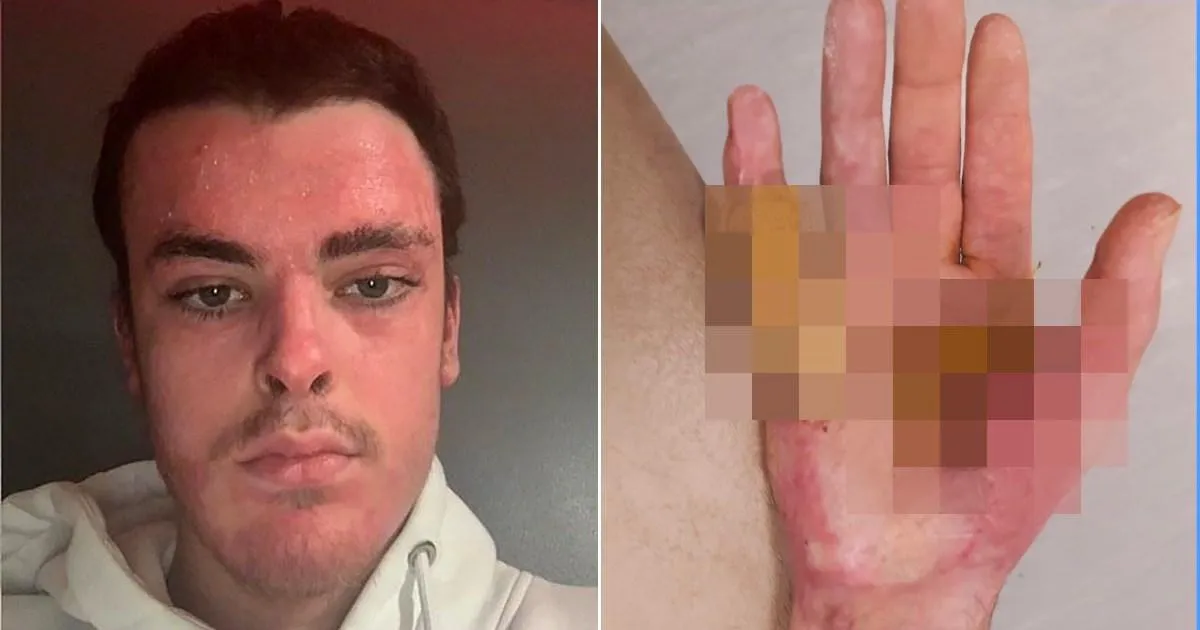
At seventeen, Dwayne Bell had his whole life stretched out in front of him—an apprenticeship, a trade, the promise of a future built with his own hands. But on a grey March morning in 2021, everything changed in the space of a heartbeat. Dwayne was working at Qualfab Steel Ltd, a steel yard in Wigan, Greater Manchester, when he was asked to burn rubbish in a metal bin. It seemed like a mundane chore, the kind of task nobody gives a second thought, but it became the moment that nearly killed him. The pile of wet wood refused to catch, so he reached for paint thinner, never understanding the danger that was lurking beneath the surface. Then came the blast. The world turned orange, the sound roared like a jet engine, and the heat was so ferocious that Dwayne squeezed his eyes shut, terrified that he would be blinded. When his colleagues rushed over and tried to tear off his gloves and overalls, he felt his tracksuit bottoms beginning to melt underneath. He opened his eyes, still alive, and felt an overwhelming rush of gratitude that he could still see. But his face was blackened, his skin was peeling away, and the end of his nose had literally melted in the heat. He was just seventeen years old, and he had been turned into a human fireball.
The injuries Dwayne suffered were catastrophic for someone so young. He was rushed to Whiston Hospital, where doctors found that he had sustained third-degree burns across much of his face, along with serious damage to his nose and ear. The pain must have been unimaginable, and his body was so overwhelmed by the trauma that he was placed into an induced coma for a week. For his mother, those days must have felt like an eternity, sitting beside a hospital bed, watching her son fight for his life, uncertain whether he would wake up or what he would look like if he did. Dwayne spent three weeks in hospital altogether, and when he was finally allowed home, his mother had to become his full-time caregiver, dressing his wounds, managing his pain, and trying to reassure him that life would somehow go on. He has since undergone three skin grafts, and he knows that more surgery lies ahead. Even now, years later, he describes his own body as a prison. Those words carry a weight that is hard to fully grasp. It is one thing to survive a terrible accident, but another to live every single day in a body that bears the memory of that explosion, to look in the mirror and see not the face of a teenager but the scars of a nightmare.
What makes Dwayne’s story even more heartbreaking is that it should never have happened. He was an apprentice, the youngest person on site by twenty or thirty years, and he was essentially left to figure things out on his own. He had spent only one day at Knowsley Tech College before spending the rest of the week at the yard, and no one had given him any real training about the dangers of the work he was doing. No one had handed him personal protective equipment, no safety goggles, no guidance. He was just left to it. That lack of supervision and care is so common in young workers, and it is exactly why workplace accidents happen. Dwayne was burning rubbish without understanding the chemical reactions that could occur, without knowing that paint thinner and smoldering sparks were a deadly combination. When he described the explosion, he said it was like a bomb going off in his face. The sound, the heat, the sheer force of it—everything about that moment was terrifying. But what stands out most is his quiet, almost bewildered statement: “I wasn’t supervised, and no trainee should ever be put in that position.” He knew, even through the shock and pain, that he had been failed by the adults who were supposed to protect him.
In the years that followed, Dwayne has had to navigate a complex and painful path toward justice. With the help of Express Solicitors, he fought for compensation, and a six-figure settlement was finally negotiated. Senior Associate Neil Sagar, who handled the case, made it clear that Dwayne’s recovery has been miraculous, but that he still lives with the consequences of what happened every day. Those ongoing scars will affect his future career, and no amount of money can truly erase what he has been through. But the settlement is important. It is an acknowledgment that someone was responsible, that a young worker was failed, and that there are real consequences when businesses cut corners on safety. It sends a message to companies everywhere that apprentices are not free labour, not disposable workers, and not people who can be left to perform dangerous tasks without training, supervision, or proper equipment. Dwayne’s case is a reminder that behind every statistic about workplace injuries, there is a human being, a family, and a future that has been permanently altered. The phrase “accident waiting to happen” is often used too casually, but in this case, it is exactly right. Everyone who walked past that burning bin without questioning what an untrained teenager was doing shares a little of that responsibility.
Now, at twenty-two, Dwayne is trying to rebuild his life. He is working as an apprentice welder at another firm, which takes incredible courage. It would have been so easy to walk away from the trade altogether, to let fear and trauma win, to find a safer office job and never look at a flame again. But Dwayne is refusing to let the accident define him completely. He is still learning, still working, still pushing forward, even though his body carries the permanent marks of that terrible day. He says he is lucky to be alive, and he means it. But luck is only part of the story. There is also resilience, determination, and a stubborn refusal to give up on the future he dreamed about before the explosion. At the same time, he is honest about the price he has paid. He lives in a body that feels like a prison, and every day is a reminder of what he lost. His scars will never fully fade, and the psychological weight of that experience will stay with him. He will have to undergo more surgery, more recovery, more pain. And yet he continues, which is perhaps the most human thing of all—to carry immense suffering and still choose to move forward, one step at a time.
Dwayne’s story should make every employer pause and think. Young workers, apprentices, and trainees are especially vulnerable because they often don’t know the right questions to ask, don’t want to seem difficult, and don’t have the experience to recognize hidden dangers. It is the responsibility of the people in charge to make sure that no one is ever put in harm’s way because of negligence. Proper training, protective gear, supervision, and a culture where safety comes before productivity are not optional extras. They are the difference between that young person going home at the end of the day and being rushed to a hospital with a melted nose and ear. Dwayne is one of the lucky ones, if you can call it that. He survived. He can still see. He can still work. But he has lost something that can never be measured in a settlement. He lost the easy, carefree days of being a teenager, the feeling of safety in his own skin, and the innocence that comes before you experience something truly horrifying. As he continues to heal, physically and emotionally, his story stands as a powerful warning and an even more powerful tribute to human endurance. He should not have to be a cautionary tale, but now that he is, his voice matters. He is speaking for every young worker who has ever been ignored, under-trained, and left alone with a task they did not understand. And hopefully, because of his courage, other young people will be protected from ever becoming a fireball in the first place.