

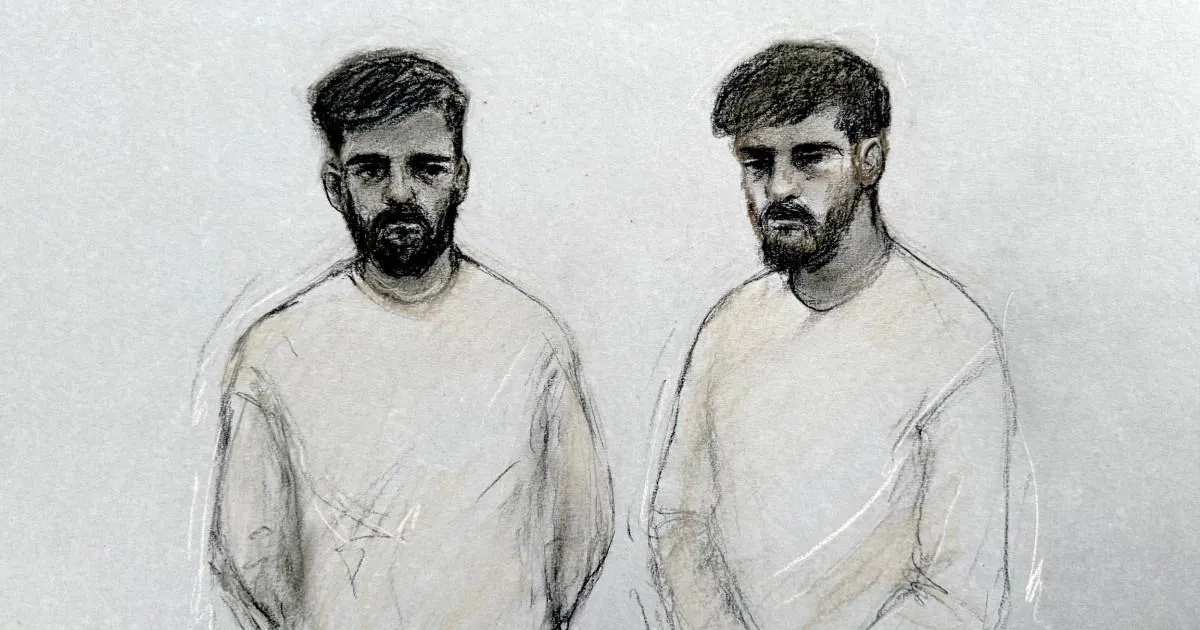
Two Iranian men who came to the United Kingdom by small boat now stand accused of plotting a devastating terrorist attack against the Jewish community in Manchester, a courtroom heard this week. Salam Ahmadyan, 36, from Liverpool, and Rahman Salehi, 34, from Salford, appeared before Westminster Magistrates’ Court, where they were formally charged with engaging in conduct in preparation for terrorist acts. The two men, both Iranian nationals, spoke only to confirm their names, dates of birth, and addresses before District Judge Nina Tempia remanded them into custody. They are due to appear next at the Old Bailey on October 23. The allegations are deeply unsettling: prosecutors say the pair planned to use a homemade explosive device to target Jewish sites in Manchester, specifically naming the Jewish Museum and Heaton Park Synagogue, and that their actions were directed and coordinated by an individual believed to be an Iranian state-linked handler operating inside Iran. The news arrives at a time of already heightened anxiety, because the arrests took place on September 20, 2026, just ahead of Yom Kippur, the holiest day in the Jewish calendar. For many in Manchester’s Jewish community, the thought that such an attack was allegedly being prepared during such a sacred and reflective period has caused profound distress and a painful reminder that antisemitic hatred remains a very real threat in modern Britain.
The details presented in court painted a chilling picture of the alleged planning. Prosecutor Mark Luckett told magistrates that both defendants were observed conducting what the prosecution described as “hostile reconnaissance” within Manchester’s Jewish community, identifying possible targets including the Jewish Museum and Heaton Park Synagogue. They were arrested before they could allegedly move forward with any attack, but investigators believe they had already taken significant steps. Court papers allege the men were in contact with a third party who provided instructions on how to assemble a homemade explosive device and directed the plot from abroad. That individual is assessed to be an Iranian national, most likely operating from within Iran. The alleged device was reportedly a chlorine bomb, a crude but potentially lethal weapon that could have caused mass panic and serious injuries in a crowded space. The prosecution says the men acquired liquids, components, and equipment needed to manufacture or assemble such an improvised explosive device. They are also accused of using the internet to identify and research potential targets, obtaining images, plans, and maps, and conducting physical reconnaissance of locations for a possible attack. The level of preparation allegedly involved suggests this was not a spontaneous act of violence but a calculated, planned operation with outside direction, adding to the seriousness of the threat. At the same time, it is important to remember that these are allegations, not convictions. The men are entitled to a fair trial, and they have not yet had the opportunity to respond to the charges. But for those who live and pray in the targeted communities, the details emerging from court have inevitably stirred fear and anger.
Understanding who these two men are, and how they came to be in Britain, adds a complex layer to the story. The court heard that Salehi arrived in the UK by small boat in 2020, after previously spending five years in Germany and having claimed asylum there. He was granted asylum in the UK in 2023 and currently has leave to remain until July 2028. Ahmadyan, meanwhile, arrived via small boat in 2023 and still has an outstanding asylum claim. These are not recent arrivals who slipped into the country unnoticed; they have been living in British communities for years, in some cases with official status. That reality has inevitably reignited debates about border security, asylum systems, and the dangers of allowing people to enter the country without proper checks. But it also raises uncomfortable questions about how someone who has been through asylum processes in multiple countries could allegedly become radicalized or recruited into a plot directed from overseas. The human story is complicated. Many people who make dangerous crossings in small boats are fleeing persecution, war, or desperate poverty. Some are genuinely seeking safety and want nothing more than to build a peaceful life. Others, as these charges suggest, may be drawn into darker networks or manipulated by foreign actors. The challenge for authorities is distinguishing between the two, while ensuring that genuine refugees are protected and that those who seek to do harm are stopped. For the public, the news that two men who arrived as asylum seekers are accused of planning an attack on a synagogue is deeply unsettling. It feeds into fears that the asylum system may be vulnerable to exploitation, even though the overwhelming majority of refugees pose no threat at all. The case is a reminder that vigilance and security must go hand in hand with compassion and fairness.
The investigation itself has been significant and wide-ranging. Searches were carried out at addresses in Epworth Street in Liverpool and Lancaster Road in Salford, where investigators gathered evidence that led to the charges. Counter Terrorism Policing has not disclosed exactly what was found in those searches, but the prosecution has alleged that the men had obtained the materials and knowledge necessary to construct a bomb. They are also accused of using the internet to research potential targets, which suggests a sustained period of planning and preparation. The arrests, coming just before Yom Kippur, were likely intended to disrupt the plot before it could reach a lethal conclusion. The timing is particularly striking because Jewish communities across the UK had been on alert during the High Holy Days, especially after the anniversary of a separate terrorist attack at Heaton Park Synagogue the previous year. That earlier attack, described as devastating, has already left the community on edge. The fact that this new alleged plot apparently targeted the same area, and at almost the same time of year, has heightened the sense of vulnerability. The men have been remanded in custody, which is standard in terrorism cases, and their next court hearing will take place at the Old Bailey. Legal proceedings will continue over the coming months, and until then, the full extent of the alleged conspiracy may not be known. Investigators are likely to continue examining digital devices, communications, and any connections to individuals overseas. The case also raises serious questions about foreign involvement in domestic terrorism, with the alleged direction from Iran pointing to the possibility of state-sponsored plotting. That would mark a significant escalation in the nature of the threat facing the UK, moving beyond self-radicalized individuals to coordinated operations with international backing.
Home Secretary Shabana Mahmood responded to the charges with a statement that sought to reassure the public while acknowledging the deep anxiety the case has caused. She described the recent events as a stark reminder of the threats posed against the country from both terrorists and foreign state actors. She noted that two suspects had been charged with planning a terrorist attack against Jewish communities in Manchester, and she expressed sympathy for the distress this would cause. “This news will be deeply distressing for our Jewish communities, coming so soon after Rosh Hashanah and Yom Kippur,” she said. She also pointed out that the anniversary of the terrorist attack at Heaton Park Synagogue was approaching, making the timing especially painful. But her statement also touched on the sensitive issue of immigration, drawing a direct link between the fact that both suspects arrived by small boat several years ago and the government’s ongoing efforts to tackle illegal migration. “While numbers are down, I know there is more we must do,” she said. This linking of terrorism and asylum policy is politically charged, and it will likely feature prominently in public debate in the coming days. Some will argue that the Home Secretary is right to highlight the vulnerabilities in the system, while others will caution against painting all asylum seekers with the same brush. For the Jewish community, however, the political arguments may feel secondary to the more immediate need for safety and solidarity. What they want to know is that their places of worship, their community centers, and their streets are being protected. They want to see visible police presence, robust security, and a clear message that antisemitism will never be tolerated. The government’s response, while necessary, must also be careful not to inflame divisions at a time when social cohesion is already fragile.
Deputy Assistant Commissioner Vicki Evans, the senior national coordinator for Counter Terrorism Policing, sought to calm those fears while being honest about the gravity of the situation. She said there was no ongoing threat to the public in relation to the arrests, which will come as a relief to many. But she also acknowledged the broader context: the news of the alleged plot had come during the High Holy Day period, a time of spiritual reflection and gathering, and it coincided with the anniversary of last year’s attack at Heaton Park Synagogue. She also noted the wider trend of increasing antisemitic incidents across the UK, which has left Jewish communities feeling increasingly targeted and isolated. “We are very aware that this will likely increase what were already heightened concerns amongst the Jewish community,” she said. She was careful to point out that this investigation was not connected to the incident at RAF Fairford, which has also been under investigation, but she wanted to reassure the public that Counter Terrorism Policing and its national security partners were using the full range of their capabilities to protect the UK from hostile acts. Her words were measured and professional, but the underlying message was clear: the threat from terrorism is real, evolving, and sometimes linked to foreign actors seeking to harm British society. In the days and weeks ahead, the community will be watching closely, not only for the outcome of the legal proceedings but also for continued efforts to protect Jewish life in Manchester and across the country. People will likely double-check that security measures are in place at synagogues and community spaces, and they may look at one another with a mix of sorrow and defiance. For many, the best response to such hatred is to continue living openly and proudly as Jews, refusing to let the fear of terrorism dictate how they worship, gather, or celebrate. The arrests have undoubtedly shaken the community, but they have also reminded the wider public that the fight against antisemitism is not over. The two men remain in custody, awaiting trial, and the justice system will now do its work. But the emotional impact of this case, and the anxiety it has caused, will linger long after the court proceedings have concluded. What matters most now is that communities feel safe, that authorities remain vigilant, and that the message is sent loud and clear: hatred and terrorism will never be allowed to win.