


Amid the vast, snow-covered landscape of Siberia, a quiet but urgent crisis is unfolding in the city of Shelekhov. A pall of fear and confusion hangs over this otherwise unremarkable industrial town, following reports of an outbreak of a “particularly dangerous infectious disease” that has already claimed one life. The authorities are closing ranks, orchestrating a response that is heavy on quarantine measures but light on transparency, fueling speculation that they are attempting to manage, or even conceal, the true scale of the threat. The specter of a modern-day plague, a disease most associate with the history books, has suddenly become a very real, clandestine threat in the 21st century, forcing the region into a lockdown that has all the hallmarks of a high-stakes, secretive emergency.
The focal point of this drama is the Irkutsk Anti-Plague Research Institute, a name that sounds like a relic of the Cold War but serves as a frontline defense against biological threats in the region. It is here that a 28-year-old laboratory assistant, Daria Shipilova, is believed to have been exposed to the deadly pathogen. Two conflicting narratives have emerged to explain her tragic infection. The first, a more scientific-sounding account, suggests she contracted the disease during an expedition along the rugged, remote border between Russia and Mongolia, where the plague bacterium is known to circulate in wild rodent populations. The second, which has become the subject of widespread ridicule and suspicion, is that she accidentally broke a test tube containing the pathogens, leading to her exposure within the supposedly secure confines of the lab. This less-credible story, which critics dismiss as a convenient fantasy, has done little to quell the anxiety, instead painting a picture of an institution where either meticulous safety protocols failed or where the official explanation is being tailored for public consumption.
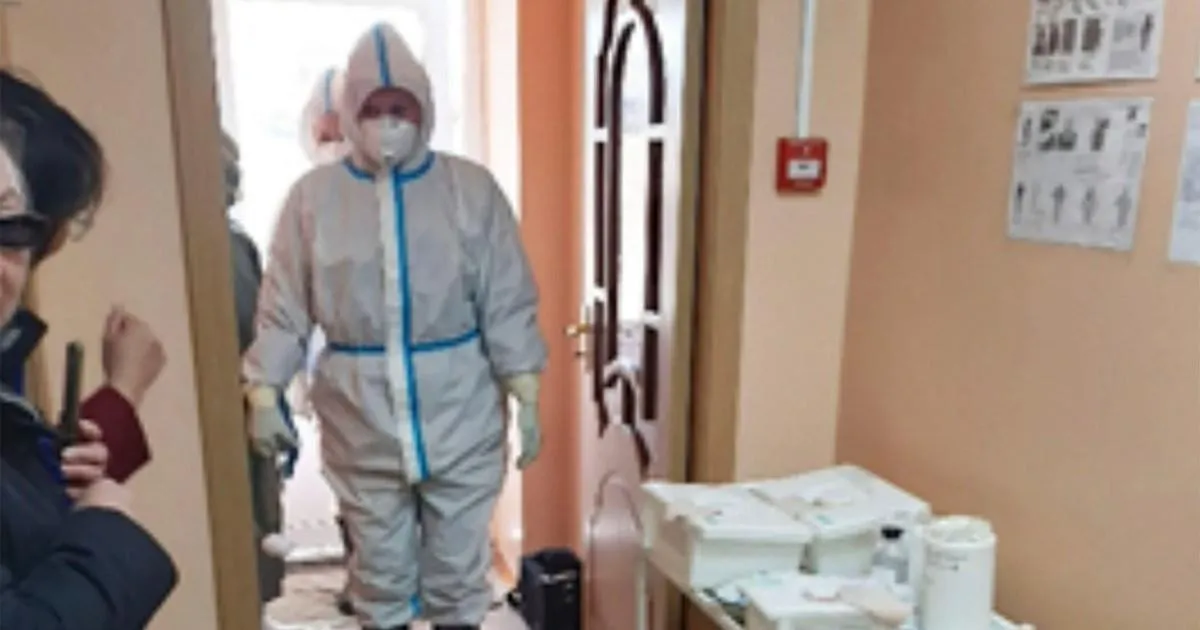
The consequences of this single tragic death have rippled outward with astonishing speed. Shelekhov District Hospital, where Daria died, has been placed under strict quarantine, along with the Institute itself. A staggering 189 people have been forced into lockdown, their lives abruptly halted as they are monitored for signs of the disease. The local governor, Igor Kobzev, confirmed that all mass events in the region have been cancelled, an admission that speaks to the seriousness of the situation. Residents of the nearby city of Baikalsk were issued a terse, urgent warning to avoid all travel to Shelekhov, a directive that was mysteriously deleted shortly after being posted, deepening the sense of uncertainty and distrust. The removal of this crucial public health advisory is perhaps more damning than the advisory itself, suggesting a central authority that is rethinking its communication strategy or actively seeking to tamp down on externally verifiable signs of an emergency. Whispers of a run on antibiotics at local pharmacies have also begun to circulate, painting a picture of a public that is taking the threat far more seriously than their government’s public statements would suggest.
The gravity of the situation is underscored by the reported arrival of Anna Popova, Russia’s Chief State Sanitary Physician and the country’s foremost authority on infectious diseases. Her presence in Irkutsk is a major tell. This is not the kind of figurehead who is dispatched for minor, contained incidents; her appearance signals that the Kremlin views this as a top-tier emergency. It has also sent a chill through the international community of epidemiologists, who see her presence as proof that the official responses are a facade. Mikhail Favorov, a Russian epidemiologist living in the United States, has openly voiced his deep concern, stating that Popova’s presence indicates a “terrible, critical situation.” He has been scathing in his criticism of the official handling of the affair, calling the test-tube story “laughable” and accusing the authorities of a cover-up. He argues a simple splash wouldn’t easily cause infection if safety gear is worn, and that the public will readily believe the proffered explanation, no matter how implausible it is. His dismissive tone reflects a broader conviction that the truth is being deliberately obscured, and that the world will never learn what actually happened within the walls of that institute.
This veil of secrecy has invited unflattering comparisons to the very beginning of the COVID-19 pandemic. Telegram channel Nezygar, a source of viral rumor and geopolitical gossip, notably drew a parallel between the situation in Shelekhov and the early days of the Wuhan outbreak in China. The implication is clear: a government in crisis is attempting to manage a disease outbreak through opacity, leading to a situation where rumors (such as the “broken test tube”) fill the void left by a lack of honest facts. The comparison is apt in highlighting the primary fear: that the Russian government is prioritizing its reputation and trying to control the narrative over the immediate safety and information needs of its citizens. It raises a litany of critical, unanswered questions: How did a disease with an established animal reservoir in the region cross over into a human population? Was this a lab accident or a natural spillover? Before the deceased, how many people had unknowingly been exposed? The lack of clear, transparent answers from a centralized authority is what creates a fertile ground for fear and suspicion.
The central tragedy is that this crisis, along with the human cost of the outbreak itself, has also become a crisis of trust. The Russian state, by engaging in what many perceive as an obfuscation of the facts, is not only failing to effectively manage the outbreak but is actively undermining its own people’s faith in the institutions meant to protect them. The cancellation of public events, the medical lockdowns, and the frantic travel advisories are all visible signs of panic within the state apparatus, yet the public is starved of the very details that would allow them to make sense of it all. The fate of the 189 people under quarantine hangs in the balance; are they merely experiencing an inconvenience, or are they sitting on a ticking biological time bomb? The world watches this drama unfold in Siberia, a stark reminder that even in an era of advanced science, the threat of plague still exists. The real plague, in this instance, may prove to be the systemic secrecy that obscures the threat, prevents a coherent response, and leaves a terrified population to guess at the shape of the terror that has arrived in their midst.