

In the quiet hours of a Spanish morning, the world of a small medieval village was turned upside down. San Vicente de la Sonsierra, a picturesque settlement perched along the River Ebro in La Rioja, is the kind of place where life moves slowly and neighbors know each other by name. It is a village of stone, tradition, and tight-knit community, where the local bar is more than just a place to drink — it is the heart of social life, the spot where people gather to celebrate, commiserate, and share the stories of their day. Bar Tempranillo, named after the famous Spanish grape, was one such place. In the early hours of the morning, while most of the village slept, as many as fifty people were inside, perhaps enjoying a late night after a shift, or chatting over glasses of wine. Then, without warning, the floor and the ceiling gave way at once. The building suddenly collapsed in on itself, trapping patrons under rubble and scattering furniture and glass across a space that moments earlier had been full of warmth and laughter. By the time the dust began to settle, a dozen people had been rushed to hospitals, and the idyllic quiet of the village was shattered by sirens, shouts, and fear.
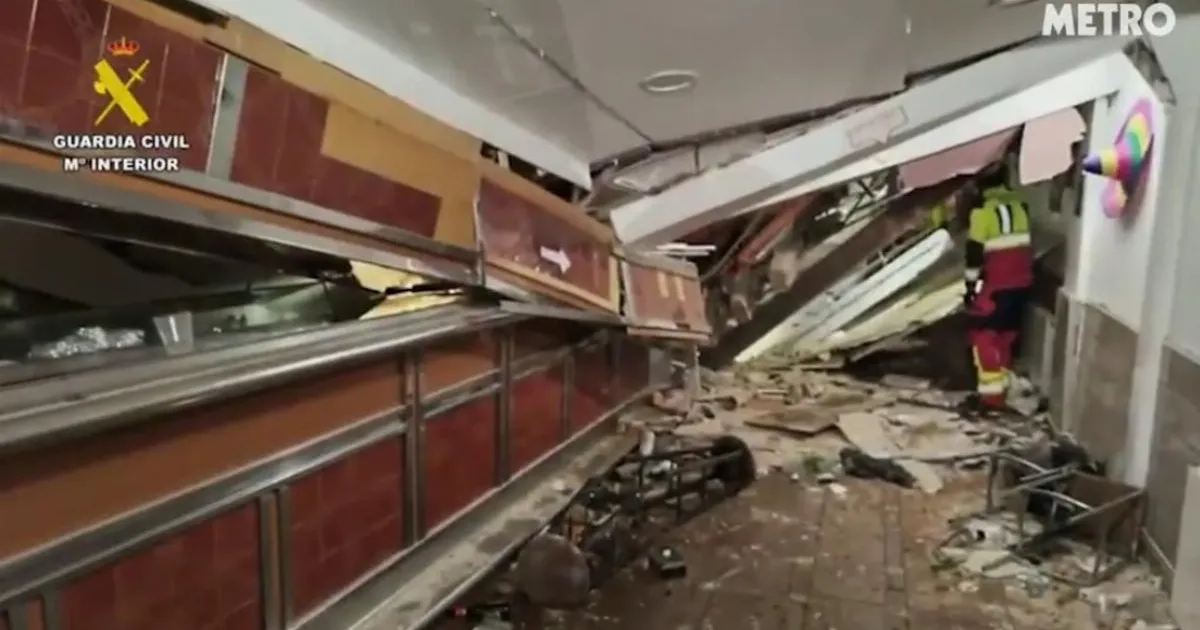
The emergency call came at around 5:25 a.m., and within minutes, rescue teams were racing toward the scene in San Vicente de la Sonsierra. The exact cause of the collapse was not immediately clear, but the destruction was immense. Two adjacent buildings, located at numbers 8 and 10 Zumalacárregui Street, had partially collapsed, leaving a tangle of stone, concrete, and timber that had once been walls and roofs. Up to fifty people were believed to have been inside the bar at the time, and the idea of so many souls buried beneath the wreckage was almost too much to comprehend. Firefighters from CEIS Rioja arrived quickly, along with agents from the Guardia Civil, crews from the Rioja Health Service, and volunteers from the Red Cross. The first responders were faced with a terrifying scene: a building that had literally caved in, with the ceiling resting on the ground and the bar itself completely unrecognizable. Yet they did not hesitate. They climbed over the debris, listening for cries, digging with their hands where machines could not yet reach, and pulling survivors from the rubble one by one. In those first chaotic minutes, the difference between life and death was measured in speed, and the rescuers moved with extraordinary urgency.
As the morning wore on, the scope of the tragedy began to take shape. A total of twelve people were taken to hospital, each of them carrying the physical and emotional weight of the collapse. The Guardia Civil confirmed that six of the injured had been transferred to the San Pedro hospital in Logroño, a city roughly thirty-five kilometers away, where they could receive more specialized care for a variety of injuries. Another two survivors were taken to the Haro health centre, a closer facility, for treatment. The remaining four were accounted for through other medical channels, though the exact details of their conditions were not immediately released. For the families and friends of those who were inside, the news must have arrived with a sickening mix of relief and despair: relief that a loved one had been pulled out alive, but despair for those still missing or gravely injured. The Red Cross, ever present in times of crisis, dispatched two ambulances, two logistical support vehicles, and eight paramedics to assist survivors at the scene. These teams worked alongside local emergency services, providing immediate medical attention, triaging the wounded, and offering comfort to those in shock. In a village as small and close as San Vicente de la Sonsierra, the injured were not strangers — they were brothers, sisters, friends, and neighbors — and every stretcher carried a familiar face.
Even after the last survivors were pulled from the wreckage, the work was far from over. Firefighters continued to scour the rubble, searching for anyone who might still be trapped beneath the heavy debris. The destroyed building had become a maze of jagged edges and unstable voids, and every movement carried the risk of another collapse. The initial footage of the scene showed the ceiling completely caved in, with the bar’s fittings and furniture smashed into splinters beneath the weight of the structure. It was a sight that no one in the village would ever forget. The search and rescue operation was supported by a specialist Search and Rescue Dog Unit, whose highly trained dogs could sniff out signs of life beneath the rubble and alert their handlers to any trapped survivor. A Civil Protection technician also arrived to help coordinate the response, along with municipal services that quickly moved to secure the area and keep curious onlookers at a safe distance. The atmosphere was one of intense concentration and quiet urgency. Spectators gathered at the edge of the cordons, watching in silence as rescue teams carried out their delicate work, hoping and praying that the final count would not rise further. Every few minutes, a hush would fall over the crowd whenever a rescuer called out or a dog barked, and then the tension would break again when the search resumed.
In a statement issued later that day, local authorities tried to piece together what had happened. The Emergency Coordination Center had received several reports of the partial collapse of two buildings on Zumalacárregui Street, in the heart of the village. The spokesperson explained that SOS Rioja had mobilized all available resources, including firefighters, the Civil Guard, emergency medical teams, the Red Cross, the Search and Rescue Dog Unit, and municipal services. The coordinated response was swift and comprehensive, but the collapse itself raised difficult questions. San Vicente de la Sonsierra is a medieval village, a place of narrow streets and centuries-old architecture, where many buildings were constructed long before modern safety standards existed. The structure that failed was likely a mix of old stone and newer additions, and the fact that two buildings collapsed together suggested that the failure was not contained to a single wall or floor, but involved the whole interconnected structure. For the residents, the collapse was not just a physical disaster but a deep shock to their sense of home. The bar had been a place of safety, a familiar refuge, and now it had become a source of danger. As night fell, the village remained in a state of disbelief, with many refusing to leave the area, standing vigil while firefighters worked by floodlight.
The story of the Bar Tempranillo collapse is, at its heart, a story about people. It is about the men and women who were enjoying an ordinary night when extraordinary tragedy struck. It is about the emergency responders who rushed toward danger while everyone else ran away, and the neighbors who heard the crash and came running in the dark to help. It is about the twelve people now recovering in hospital, each with their own story of survival, and about the dozens more who will carry the memory of that morning with them for the rest of their lives. In the coming days, investigations will begin to determine exactly why the building gave way, and officials will examine whether anything could have been done to prevent it. But for now, the focus is on healing. The survivors will need time to recover from their physical injuries, no matter how small, and the entire community will need space to process the trauma of watching a beloved gathering place turn into a tomb. Yet even in the midst of such heartbreak, there is evidence of the resilience that defines small villages. Neighbors have opened their doors to those displaced by the collapse, local businesses have offered food and drink to rescue crews, and people have gathered in the streets to support one another. The building may be in ruins, but the spirit of San Vicente de la Sonsierra is not. And as the village begins the long road to recovery, the world can only hope that the final toll remains what it is now: a terrible accident, but not an even worse one. The name Tempranillo will always be associated with this night, but in time, it will also be remembered as a place where, in the darkest hour, humanity shone brightest.