



South Kensington is one of those London stations that feels less like a transport hub and more like a time capsule. Tucked beneath the pavements of one of the capital’s most cultured neighbourhoods, it has been quietly carrying millions of people since Christmas Eve 1868, making it the second oldest station in London to serve the predecessors of the Metropolitan and District lines. The station was opened at a time when steam trains still rumbled through cut-and-cover tunnels, and the surrounding area was rapidly becoming a centre of learning and culture. Its long, tiled tunnels lead not only to the District, Circle and Piccadilly lines, but also to some of London’s greatest cultural treasures: the V&A, the Natural History Museum and the Science Museum. For generations, schoolchildren have clutched parents’ hands as they emerged from its Victorian depths into museum galleries; commuters have rushed through its corridors; tourists have stopped to photograph its distinctive arcade. There is a romance to the place, a sense that you are stepping into history every time you descend the stairs. But the station has also become a byword for congestion. With tens of millions of passengers passing through every year, including many heading to specialist hospitals and Imperial College London, the old layout is no longer fit for purpose. The platforms are narrow, the corridors are cramped, and for anyone with mobility problems the station can be a nightmare. After years of planning and false starts, however, change is finally on the way. Transport for London has awarded a contract to Costain, an infrastructure solutions company, to deliver a £1.2 billion upgrade that will transform the station and its surroundings. It is a project that has been in the works for several years, and now, at last, the Victorian station is set to be dragged, gently but firmly, into the twenty-first century.
The most significant change will be accessibility. At the moment, South Kensington is a station where step-free access is virtually non-existent, and that has long been a source of frustration for disabled passengers, parents with buggies, travellers with heavy suitcases and older people who find stairs increasingly difficult. Under the redevelopment, the entire station will be made step-free, with lifts installed to platforms, the ticket hall and the subway tunnels. The currently disused platform 1 will also be reopened, giving District and Circle line passengers more space and flexibility. This is not just a cosmetic improvement; it is a fundamental rethinking of how the station works. For anyone who has ever struggled to manoeuvre a pram through a narrow ticket gate, or watched a wheelchair user have to take a long detour just to reach a platform, the promise of step-free access is life-changing. It also eases the chronic overcrowding that makes the station so stressful during peak times and school holidays. When the museums are at their busiest, the station can feel like a rugby scrum, with bodies pressed together in the tunnels and people anxiously checking departure boards. Reopening platform 1 and improving the flow of passengers through the station should make a noticeable difference, allowing thousands more people to move through safely and comfortably every day. For visitors arriving from abroad, many of whom are seeing London for the first time, it will also change the first impression they get of the city. Instead of being herded through gloomy passageways, they will be able to move through a bright, open, welcoming station that treats accessibility as a basic right, not an afterthought. It is the kind of change that will not only make daily life easier for regular commuters, but also open up the city to people who have been excluded from parts of the network for far too long.
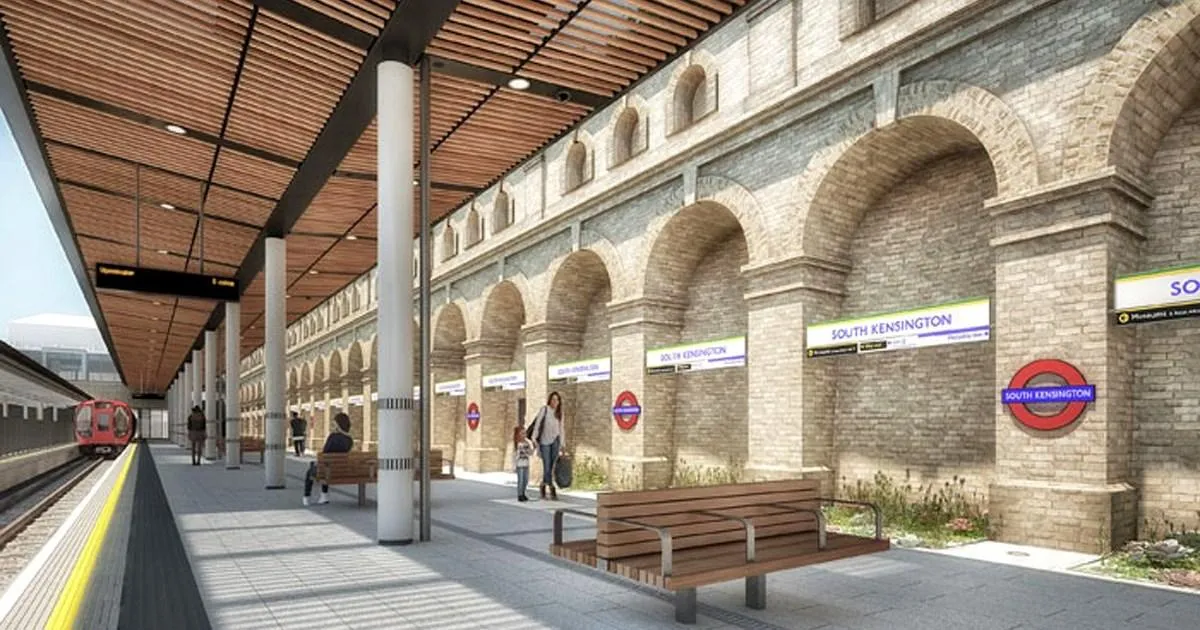
But the upgrade is not just about function; it is also about preserving the character that makes South Kensington so loved. The station’s heritage features will be carefully restored across all platforms, and the iconic arcade will be revamped. The Grade II-listed entrance on Cromwell Place, next to the old station building, will also undergo maintenance. There is something reassuring about the fact that TfL is not simply ripping everything out and starting again. Instead, the plan is to bring the best of the old and new together. The revetment arches, those curved brick recesses that give the platforms their distinctive Victorian feel, will be softened with low-maintenance planting, adding a touch of green to the underground environment. New TfL roundels will replace outdated signage, while the number of advertisement panels will be reduced, which should give the station a cleaner, less cluttered feel. New lighting and speakers will modernise the atmosphere, making the platforms feel brighter, safer and more welcoming. For regular travellers, these details matter. A station is not just a place to catch a train; it is a public space, and the quality of that space affects how people feel about their journey. By restoring the heritage features and upgrading the environment, the project aims to make South Kensington a station that people can be proud of, rather than one they simply endure. It is a delicate balancing act: how do you modernise a Victorian station without stripping away its soul? The answer, at least according to these plans, is to work with the existing architecture, to celebrate it, and to make sure that the new additions feel like natural extensions of the old. If done well, the result will be a station that honours its past while serving the future, and that is exactly what a city as layered as London deserves.
The changes will extend beyond the station itself. Outside, on Pelham Street, 50 new homes will be built, with provision for some affordable housing. This is a significant addition to an area where housing is notoriously expensive, and the inclusion of affordable homes is likely to be welcomed by those who worry that London’s development projects too often cater only to the wealthy. At the front of the station, a new four-storey building called ‘The Bullnose’ will rise, featuring cafes, restaurants and offices. No retail units have been confirmed for the space yet, but the potential is exciting. Imagine stepping out of the station and being greeted by the smell of fresh coffee, with a lively street scene and a mix of local businesses. The Bullnose is intended to be a gateway to the neighbourhood, a place where commuters, museum visitors and residents can linger rather than rush away. It is part of a wider vision for South Kensington as a destination in its own right, not just a passageway to other attractions. Of course, any major development in London comes with questions about gentrification and the impact on local communities. But the inclusion of affordable housing and the focus on public spaces suggests that the project is trying to strike a balance. The station and its surroundings are being upgraded not for the sake of it, but to serve the people who live, work and visit here. For local residents, the promise of new homes and improved amenities is a double-edged sword: it brings investment and vitality, but also the risk of rising rents and displacement. The next few years will show whether the promises are kept. For now, the plans offer a glimpse of a more connected, more liveable South Kensington, one where the station is not just a place to pass through, but a place to be.
The timeline is ambitious but clear. Work on the station will begin this year, and the upgrades are expected to be completed by 2031. That date is not arbitrary: it will mark the 150th anniversary of the Natural History Museum, one of the very institutions that make South Kensington so important. It is a nice piece of symmetry, a reminder that the station and the museums have grown up together. But it also means that passengers will have to be patient. Major infrastructure projects are never quick, and anyone who has lived through London’s recent transport upgrades knows that disruption is often part of the deal. Still, those involved are confident. Alistair Geddes, the Rail Sector Director for Costain, said the company has been working hard to support early-stage planning and mobilisation, and is ready to deliver upgrades that will improve London’s transport network and enhance the passenger experience for decades to come. Transport for London Commissioner Andy Lord echoed that optimism, saying he is delighted that plans to transform the internationally important station are fully progressing. He highlighted the fact that the contract with Costain, working alongside Native Land and Places for London, will deliver step-free access for the first time, as well as improved space for businesses. It is the kind of language that is often used in press releases, but behind the corporate phrases there is a genuine sense of momentum. After years of talk, the project is finally moving. The contract has been awarded, the teams are in place, and the first shovels will soon be in the ground. For anyone who has ever stood on a crowded South Kensington platform, watching the minutes tick by and wondering why nothing ever changes, that is a very welcome sight indeed.
South Kensington is just one of many transport upgrades happening across London, but it is arguably one of the most significant. The station sits at the heart of a cultural and educational district that draws visitors from around the world, and its condition reflects how London treats its heritage and its passengers. For too long, people have put up with cramped corridors, inaccessible platforms and a general sense that the station was stuck in the past. This project is a chance to change that. When the scaffolding comes down and the new lifts are running, when platform 1 is open and the arcade is shining, South Kensington will be a different place. It will still have its Victorian soul, but it will also be a station for the twenty-first century: accessible, spacious, welcoming. The £1.2 billion price tag is enormous, and there will inevitably be debates about whether the money could have been spent elsewhere. But for the millions of people who use this station every year, the investment will be visible and tangible. It will mean not having to plan a journey around stairs. It will mean less pushing and shoving at rush hour. It will mean arriving at a station that feels as special as the museums it serves. And when the Natural History Museum celebrates its 150th anniversary in 2031, South Kensington station will be ready to welcome another generation of visitors, just as it has since 1868. That is worth waiting for. The station has survived more than 150 years of change, and with a little care, it will serve London for another 150. This upgrade is not just about concrete and steel; it is about respecting the past, embracing the future, and making sure that everyone, regardless of ability, can experience the wonder that lies just above ground.