

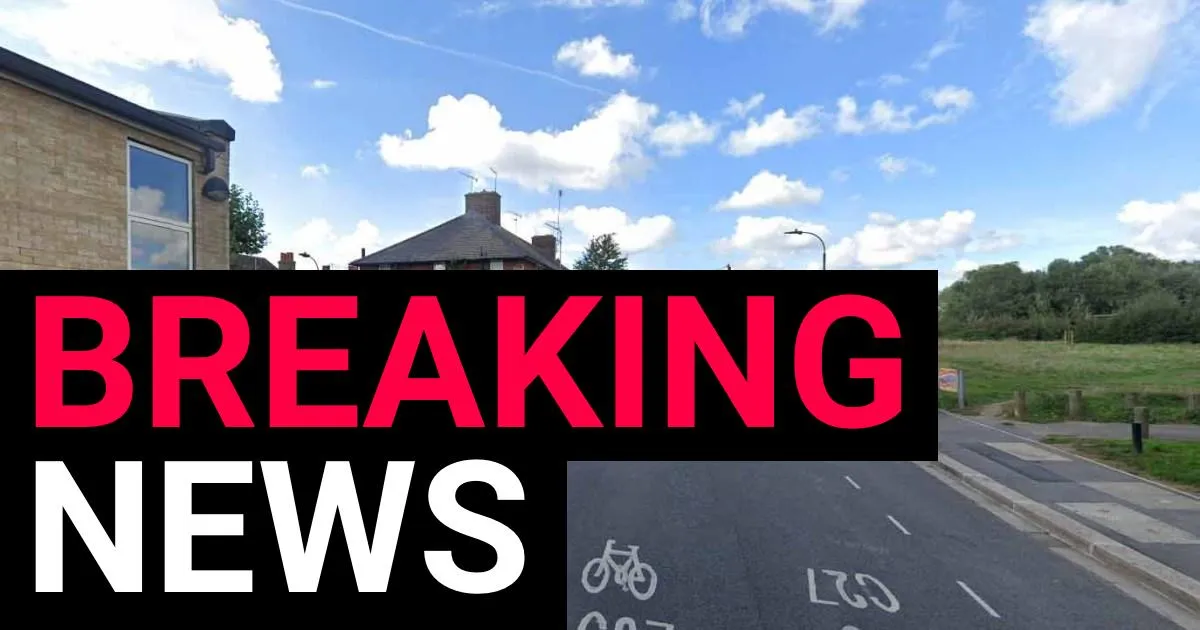
On an ordinary Friday evening in East Acton, a neighbourhood in West London not far from Wormwood Scrubs, the peace was shattered by the sound of gunfire. Police have launched a murder investigation after a 40-year-old man was shot dead at the junction of Braybrook Street and Erconwald Street, W12. The Metropolitan Police said the shooting took place at around 7.45pm, and the London Ambulance Service immediately responded. Paramedics fought to save the wounded man, but despite their best efforts he was pronounced dead at the scene. His family have been informed and are being supported by specialist officers, while a post-mortem examination has been scheduled to establish the exact cause of death. Investigators believe the victim suffered a gunshot wound, and for now the area remains sealed off as forensic teams search for clues. No arrests have yet been made. The killing has been described as a “senseless act of violence”, a phrase that reflects the frustration and sorrow of those who have seen yet another life end on London’s streets. For the people who live and work in this part of East Acton, the news has been deeply unsettling. This is a residential area, a place where children play and neighbours know each other. The sound of multiple shots, followed by the arrival of emergency vehicles, transformed a familiar landscape into a crime scene. The victim, a man in the prime of his life, has been taken from his family without warning. His loved ones are now left with questions that may take days, weeks or even months to answer. Police are determined to provide those answers, but first they must find the person or people responsible. The investigation is still in its early stages, but detectives say they are working at pace, following every possible line of inquiry and trying to reconstruct the final moments of a life that ended far too soon.
Compounding the tragedy is the fact that at the time of the shooting, a memorial service was taking place nearby. Police believe between 40 and 50 people, including children, were present when the incident occurred. What should have been a time to come together in remembrance, to comfort one another and honour someone who had died, instead became a scene of terror. Members of the public reported hearing multiple shots and a disturbance, and the chaos that followed must have been overwhelming. Imagine the confusion, the fear, the instinct to shield children and run for safety. A gathering that was supposed to be about grief and solidarity suddenly became another source of grief. The memorial service will now be forever linked to a second death, and everyone who was there will carry that memory with them. The police have acknowledged the cruelty of this timing. Detective Chief Inspector Brian Howie, who is leading the investigation, said: “Our thoughts are with the family and friends of a man whose life was taken in a senseless act of violence. We understand a large number of people had gathered for a memorial service, and what should have been a time to come together in remembrance has instead left a family devastated.” His words capture the bitter irony that lies at the heart of this case: a community already mourning one loss has been forced to endure another. The presence of children makes it even more heartbreaking. Young witnesses have been exposed to something no child should ever see, and their parents must now help them process images and sounds that would trouble even the strongest adult. The ripple effects of the shooting will spread far beyond the victim’s immediate family. Neighbours will feel less safe. Local parents will wonder whether it is safe to let their children play outside. The sense of security that once defined this community has been shaken, and rebuilding it will take time, patience and, above all, justice.
The investigation itself is complex and painstaking. Detectives are working “at pace”, according to the Met, but they are also mindful that the answers likely lie within the community. No arrests have been made so far, and the crime scene on Braybrook Street remains in place while forensic officers examine the area for evidence. The post-mortem examination will formally determine the cause of death, but there appears to be little doubt that the victim sustained a gunshot wound. In the meantime, officers are reconstructing the timeline: who arrived at the memorial service, who was seen in the area, who left quickly after the shots, and whether anyone was seen behaving unusually. DCI Howie has made a direct and emotional appeal to the public: “We believe between 40 and 50 people, including children, were present when this incident occurred. Someone knows what happened, and we need them to come forward.” This is the central plea of any murder investigation: the truth is out there, hidden in the minds of witnesses who may not even realise they hold a crucial piece of the puzzle. The detective’s use of the phrase “senseless act of violence” speaks to the frustration and anger that so often accompany such tragedies. A man is dead. A family has been torn apart. And for what? The police are not just looking for a perpetrator; they are looking for reasons, motives, connections and anything that can explain how a memorial service could erupt into gunfire. They are also aware that witnesses may be scared. Some may fear reprisals. Others may have been involved in activities they do not want to admit to. That is why the appeal is so broad and why detectives stress that no piece of information is too small. The smallest detail, a passing remark, a car speeding away, a person on a bicycle lingering too long, could be the key to unlocking the case. The Met has urged anyone who saw people carrying or concealing weapons, or acting suspiciously, to come forward immediately.
To assist the investigation, police have asked anyone who was in the area between 6pm and 8pm on the evening of the shooting to think carefully about what they saw. Specifically, they want to hear from people who were around Erconwald Street, Braybrook Street, the surrounding roads, or the Wormwood Scrubs playground. The two-hour window is significant: it covers the period before the memorial service, the moment of the shooting itself, and the immediate aftermath. Someone may have seen the shooter arrive, or flee, without realising what they were witnessing. Perhaps they noticed a group of people acting strangely, a bicycle rider weaving through the streets, or a vehicle being driven at speed. Maybe they saw someone concealing an object under their clothing, or watched a person hurry away from the scene after hearing a noise. Police are asking potential witnesses to revisit those moments, to think about who was in the area, to consider whether anything felt off. In the chaos of the moment, it is easy to dismiss a detail as irrelevant, but in a murder investigation, relevance can be discovered later. The police understand that human memory is fragile, especially under stress, which is why they are encouraging people to reflect rather than react. They are also aware that some witnesses may not come forward immediately because they are in shock, or because they fear becoming involved. DCI Howie’s appeal was designed to reassure them: no matter how insignificant it may seem, the smallest piece of information could prove crucial. This is not just a generic request; it is a lifeline. The investigation team is working around the clock, and every phone call, every online submission, every anonymous tip brings them closer to the truth. They are asking the community to be their eyes and ears, to help identify those responsible, and to ensure that the victim’s family receives the justice they deserve.
The range of evidence sought goes beyond eyewitness accounts. Police want to see any photographs, video, dashcam footage, doorbell camera recordings, or mobile phone footage captured before, during, or after the incident. They also want to know about anything relevant seen on social media. In today’s world, almost everyone has a camera in their pocket, and the chances are that someone captured something important without even knowing it. A doorstep camera might have recorded the sound of gunshots or the sight of people running. A dashcam mounted on a car driving down Braybrook Street might have caught the seconds before the shooting. A phone video taken at the memorial service might show a face in the crowd, a confrontation, or a suspicious figure lurking nearby. The police are urging people to upload any material to the major incident portal, or to contact them via 101, quoting CAD 7011/2Oct. Alternatively, the independent charity Crimestoppers can be reached on 0800 555 111 for those who wish to remain anonymous. This option is especially important, because fear can be a powerful silencer. Someone may know exactly who was involved, but may be terrified of the consequences of speaking publicly. Crimestoppers allows that person to share what they know without revealing their identity, offering a safe channel for conscience. The police have been careful to say that they are not judging anyone; they simply need information. They also know that the memorial service itself may have been linked to the victim or to the wider events, and that the truth might be tangled in personal relationships, old grievances, or neighbourhood tensions. Untangling that web requires patience and public cooperation. The appeal is not just to those who saw the shooting, but to those who know the history, the rumours, the names whispered in the aftermath. It is time, the police say, to speak up.
Ultimately, this is a story about loss and the search for meaning in the aftermath of violence. A 40-year-old man went out on a Friday evening and never came home. His family now faces a future without him, while trying to comprehend a death that defies logic. The community of East Acton, already shaken by the event, must find a way to heal. The memorial service that was being held when the shooting occurred is itself a reminder of how fragile life is; now it carries an additional weight, as witnesses of that service must also process what they saw. Children who were present will carry the memory of gunfire for the rest of their lives. Parents will struggle to make sense of a world where attending a memorial can end in another death. The police cannot undo the damage, but they can pursue justice, and that pursuit is now their priority. They have promised to support the victim’s family, to keep the public informed, and to follow every lead. The coming days will bring tributes, vigils, and calls for an end to violence, but those gestures will not bring the victim back. What they can do is demonstrate that the community refuses to be silenced. Someone, somewhere, knows who fired the shot. That person may be a witness, a friend, or even a relative of the suspect. The police are asking that person to find the courage to contact them. It may feel like a betrayal; in truth, it is a gift to a grieving family. Justice is not abstract. It is the result of ordinary people deciding that some things cannot be allowed to stand. The investigation is active, the detectives are determined, and the door to truth is open. Anyone with information can still call 101, quote CAD 7011/2Oct, upload evidence online, or speak to Crimestoppers anonymously. But no amount of time will diminish the urgency. A man is dead. His family deserves answers. The community deserves safety. And the person responsible must be held to account.