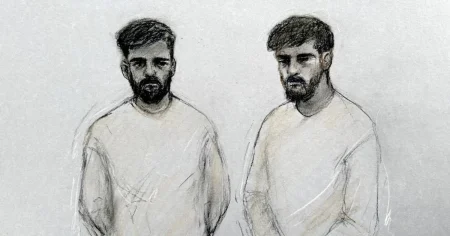
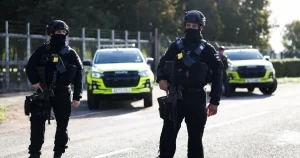

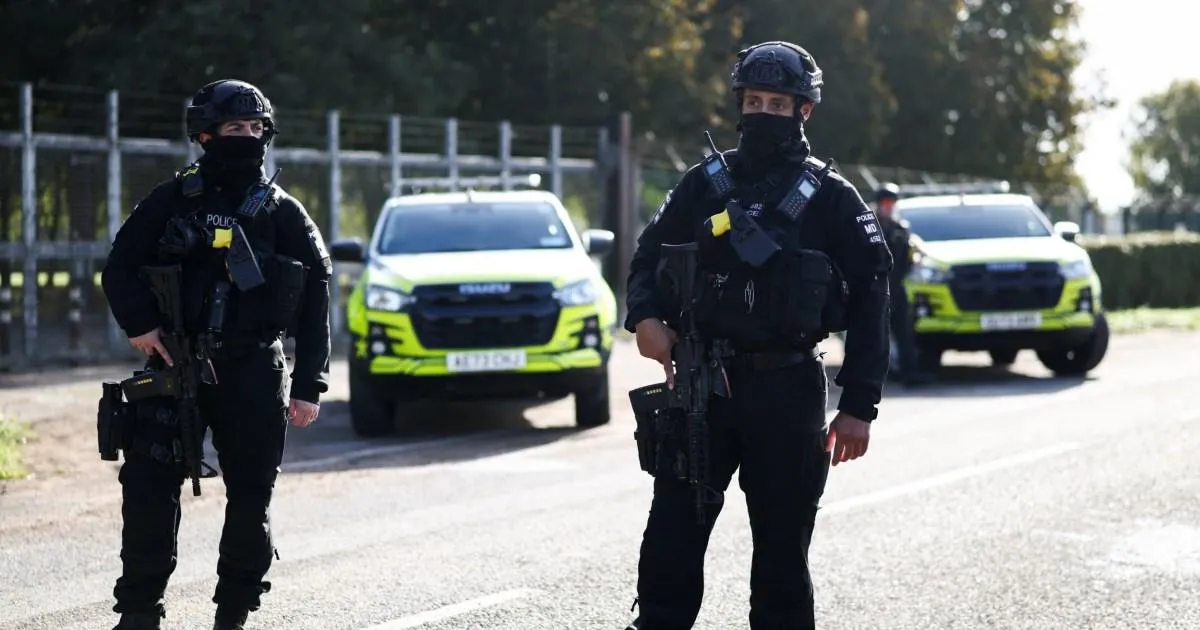
The rolling green fields and quiet lanes around RAF Fairford in Gloucestershire are not accustomed to the glare of international media, nor to the sight of armed officers standing guard at the end of a farm track. Yet in recent days, this unassuming stretch of English countryside has become the focal point of a major counter-terrorism investigation, one that has reached all the way to Westminster and drawn attention from across the Atlantic. A 25-year-old UK-Iranian national, arrested in the heart of London on suspicion of preparation of terrorist acts under Section 5 of the Terrorism Act 2006, has been released on bail while inquiries continue. Counter Terrorism Policing has confirmed that two properties in the same area were searched, though they have not disclosed what, if anything, was found. The arrest was part of a wider operation that began after a farmer reported suspicious activity near the base over the weekend of September 27. That report, perhaps made with a sense of duty rather than alarm, triggered a chain of events that would see police swoop on three vans and arrest five men in their mid-20s. For the local community, the presence of police tape, forensic teams, and uniformed officers has been deeply unsettling. The base, which has been used by US bombers flying missions to Iran, is a symbol of Britain’s military alliance with the United States, and now a potential target for those who wish to disrupt those operations. The release of the 25-year-old on bail is not an end to his ordeal, nor an indication that he is innocent; it simply means that, for now, he is allowed to return to some semblance of normal life while the investigation grinds on. But normal life, for him and for the community, may never quite feel the same again.
The five men arrested in the vans are all UK nationals in their mid-20s, a detail that has added a troubling dimension to the case. These are not foreign operatives slipping into the country unnoticed; they are, on paper, British citizens, young men who may have been radicalised, coerced, or simply in the wrong place at the wrong time. They were arrested on suspicion of explosives offences and terrorism, and after questioning, they too have been released on bail. Police have been careful to stress that no explosives were found in the vehicles, but a quantity of petrol was recovered. That distinction matters, because it suggests the men may have been in the early stages of a plot, or perhaps involved in something that looked suspicious but was not what it seemed. The decision to release them has not been without controversy. US President Donald Trump, never one to shy away from a strong opinion, criticised the move, expressing surprise that individuals arrested in connection with a suspected terror incident would be allowed to walk free, even temporarily. In response, Andy Burnham insisted that the bail conditions imposed on the men were the “tightest possible”, suggesting that they are not truly free, but are living under a set of restrictions that would make further plotting, if that was their intention, extremely difficult. For the families of the five men, the past few days must have been a nightmare of confusion and fear. Imagine receiving a call that your son has been arrested in connection with terrorism, then watching his face on television as he is led away, and then learning that he has been released but cannot tell you what is happening. The legal process is slow, secretive, and overwhelming. Bail conditions may include curfews, electronic tagging, surrender of passports, and restrictions on contact with certain individuals. The men are likely to be under near-constant surveillance. The public may see their release as a lenient decision, but the reality is far more restrictive than most people realise.
Perhaps the most explosive element of this case is the suggestion of foreign state involvement. Andy Burnham said there were “strong indications” that Iran played a part in the incident, a statement that immediately escalated the matter from a domestic security concern to an international diplomatic crisis. Iran, for its part, has denied the accusation, but the denial has done little to calm the waters. The timing is significant: RAF Fairford has been used by US bombers flying missions to Iran, and the base has become a flashpoint for tensions between Washington and Tehran. If Iranian agents or sympathisers were indeed behind the suspicious activity, it would represent a brazen attempt to strike at the heart of the US military presence in Britain. Counter Terrorism Policing has been careful not to jump to conclusions, with senior national coordinator Vicki Evans describing the investigation as “hugely complex” and saying that specialist teams are “interrogating multiple lines of enquiry”. She acknowledged that they are looking at “all possible angles, including possible foreign state involvement.” That careful language reflects the difficulty of proving state sponsorship. It is one thing to arrest a group of young men with a quantity of petrol; it is quite another to trace their actions back to a foreign government, to establish a chain of command, and to gather evidence that would stand up in court. The geopolitical backdrop makes this case even more sensitive. The United States and Iran have been locked in a cycle of confrontation for years, and any suggestion that Tehran is operating on British soil would be a major escalation. It could lead to diplomatic expulsions, increased sanctions, or even military retaliation. For the men arrested, the accusation of being pawns in a larger game is both terrifying and dehumanising. They are not just suspects; they are pieces on a chessboard, their lives and futures caught up in struggles far bigger than themselves. The investigation will need to determine whether they acted on their own, were directed by a foreign power, or were manipulated by someone they trusted. Each possibility leads down a very different path.
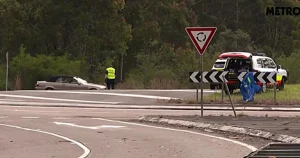
The sequence of events that led to these arrests began with a single phone call from a farmer. Over the weekend of September 27, the farmer noticed something that did not feel right near the perimeter of RAF Fairford and reported it to the authorities. That report set in motion a rapid and coordinated response. Counter Terrorism Policing officers swooped on three vans, arresting the five men before they could go anywhere or do anything. The speed and precision of the operation suggests that intelligence was already being gathered, or that the farmer’s report was detailed enough to allow police to act immediately. Doorbell camera footage appeared to capture one of the vans involved, giving investigators a visual record of the vehicle and possibly its occupants. Such evidence can be crucial in establishing timelines, routes, and connections. The recovery of petrol from the vans, but no explosives, has led to speculation about what the men intended to do. Petrol can be used to make incendiary devices, but it can also be carried for entirely innocent reasons. The investigation is ongoing, and CTP has not revealed whether the petrol was in containers, how much was recovered, or where exactly the vans were stopped. For the local community, the presence of so many police officers has been both reassuring and worrying. Reassuring, because it shows that the authorities are taking the threat seriously; worrying, because it confirms that something very real was happening in their midst. Vicki Evans thanked the public for their “continued support and patience”, a reminder that counter-terrorism investigations often rely on the vigilance of ordinary people. The farmer who made the call may never know the full impact of his actions, but he may well have helped prevent a tragedy. The doorbell camera, too, is a reminder of how modern life, with its constant surveillance, can become an unexpected ally in the fight against terrorism. Every camera, every witness, every small detail matters.
RAF Fairford is not just any military base. It is a key asset in the United States’ global military infrastructure, a place where American bombers land, refuel, and launch missions. In recent months, it has been used by US bombers flying missions to Iran, making it a highly visible symbol of American power and a potential target for anyone wishing to disrupt those operations. The base’s presence in the quiet Gloucestershire countryside has always been something of a paradox: a facility designed for war, sitting in the middle of a peaceful landscape. Local residents have grown used to the occasional roar of aircraft overhead, but they have never grown used to the idea that their home could be a target. The suspected terror incident has brought that fear to the surface. For the men arrested, the base was presumably the objective, whether they planned to attack it directly, gather intelligence, or carry out some other act of sabotage. The fact that they were arrested before reaching the base suggests that the security perimeter held, and that the response was effective. But it also raises uncomfortable questions about how much more might have been planned. Was this a one-off operation, or part of a wider network? Were there other cells waiting to act? The investigation will need to answer these questions, and that will take time. In the meantime, the base remains operational, with US bombers continuing to come and go. The sight of a B-1 Lancer taking off from Fairford, once a source of local pride or annoyance, now carries a heavier weight. Every mission to Iran is a reminder of the stakes involved, and of the fact that the men arrested in this case were, in some way, connected to that larger conflict. The international dimension of the story cannot be separated from the local one. The farmer who made the call, the neighbours who saw the vans, the families of the men arrested: they are all part of a narrative that stretches from the Gloucestershire countryside to the corridors of power in Washington and Tehran.
As the investigation continues, the case raises profound questions about security, justice, and the nature of modern terrorism. The decision to release the suspects on bail, despite criticism from President Trump, reflects a legal system that values due process and the presumption of innocence. It is a system that can seem frustratingly lenient in the face of a serious threat, but it is also a system that seeks to avoid wrongful convictions and to gather enough evidence to secure a proper outcome. The bail conditions, described as the “tightest possible”, are a compromise: the suspects are not in custody, but they are not free either. They are living under restrictions that would make most people feel suffocated, but which are necessary to protect the public. The investigation will continue to examine “multiple lines of enquiry”, including the possibility of foreign state involvement. If Iran is found to be behind the incident, it would be a significant escalation in the shadow war between Tehran and the West. If the men acted alone, it would be a reminder that radicalisation can happen anywhere, even in the UK. Either way, the incident has shown that the threat is real, and that the people who protect us are working tirelessly to keep us safe. The public has a role to play, too. The farmer who reported suspicious activity did exactly the right thing, and his actions may have saved lives. The doorbell camera that captured one of the vans is a reminder that we are all, in some small way, part of the security apparatus. As the investigation grinds on, the community around RAF Fairford will try to return to normal, but the memory of those days in late September will linger. The sight of police officers standing guard, the sound of helicopters overhead, the rumours and speculation: these are not easily forgotten. For the men arrested and their families, the ordeal is far from over. They face an uncertain future, with the possibility of further arrests, charges, and a trial. But for now, they are at home, under the watchful eye of the state, waiting to see what happens next. In the end, this is a story about people: a farmer who noticed something wrong, young men caught up in something dangerous, and a community trying to make sense of it all. It is a story that is still being written.