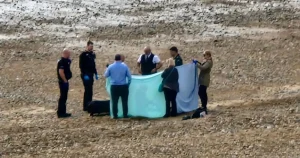



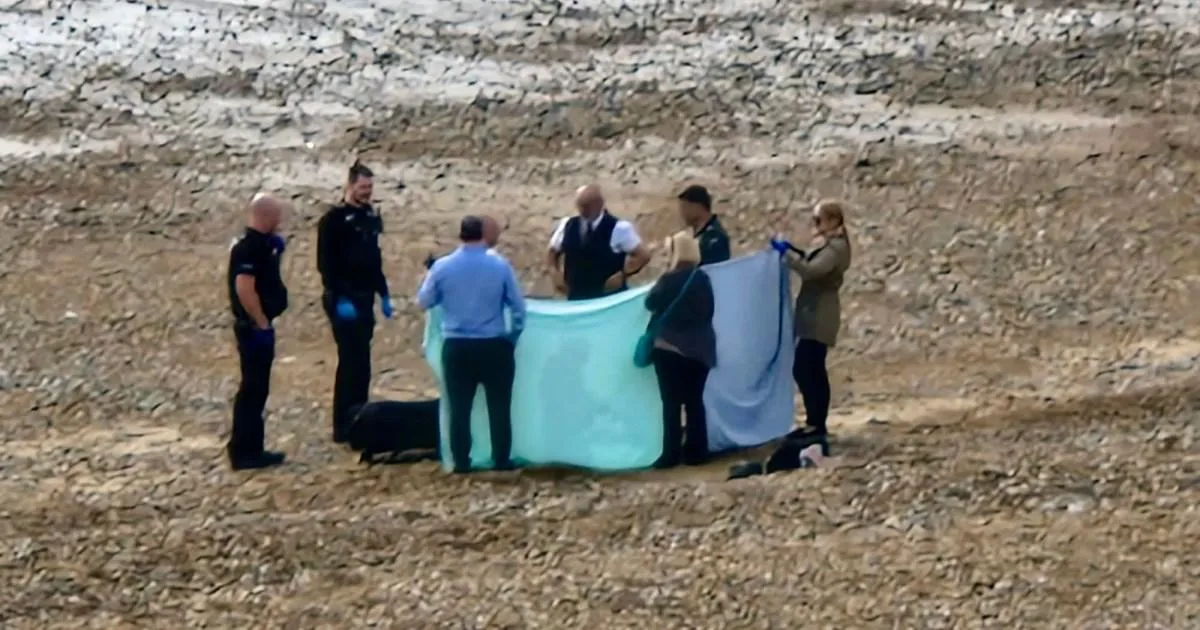
The cold, grey light of an Eastbourne morning was pierced by the urgent sound of helicopter blades, a sound that has now become inseparable from a tragedy that has left a community reeling. The body of a person was found on the beach near the western side of the town, bringing an agonizing end to a search that had begun the previous day under a cloud of uncertainty. What had started as a welfare concern on Thursday, serious enough to warrant the dispatch of helicopters and the mobilization of multiple emergency services, reached its sorrowful conclusion on Friday morning when the shoreline revealed its secret. For the police officers, coastguard rescue teams, and the dedicated volunteers of the RNLI who had scoured the area, it was not a victory of coordination or professionalism, but a heartbreaking reminder that even the most determined efforts cannot always bring the news everyone hopes for. The discovered body was quickly covered with sheets, a quiet but compassionate gesture by authorities to protect the dignity of the deceased from the curious eyes of passersby. A witness told The Argus, a local newspaper, that the person was found wearing a wetsuit, suggesting that they may have been participating in some form of water sport such as surfing, swimming, diving, or paddling. The detail set off a ripple of speculation, but more importantly, it evoked an overwhelming sense of sadness, for the wetsuit was not just an item of clothing; it was a sign of someone who had been living their life, likely doing something they loved, perhaps seeking the refreshment and freedom that the sea brings to so many. In the span of a single morning, a place usually associated with joy and relaxation became the scene of an intimate, devastating human loss.
The timeline of the tragedy is a slow accumulation of worry, dread, and finally, grief. It began on Thursday, when authorities received information that led to serious concerns for the welfare of an individual. Such reports are never taken lightly; they represent the moment when the mundane world is interrupted by an acute awareness that something might be terribly wrong. Helicopters were dispatched, and their crews scanned the coastline and the waters beyond, their eyes straining for any movement, any clue that could solve the mystery before it had a chance to deepen. The search was made more urgent by the discovery of unattended items towards the west of Eastbourne. It is hard to imagine the chilling recognition that comes with finding belongings abandoned in a way that suggested their owner had not intended to leave them. The RNLI later explained that Solent Coastguard had requested their volunteer crew to assist with a multi-agency search after these items had been located. The wording was official and careful, but beneath it lay the raw and human reality that someone, somewhere had noticed that a person had not come home, lived a moment of terrible concern, and raised the alarm. Throughout Thursday night and into Friday morning, the search continued without rest. Volunteer lifeboat crews, who so often give up their time to help complete strangers, joined local coastguard rescue teams from Birling Gap and Eastbourne, along with the coastguard helicopter known as Rescue 363 and officers from Sussex Police. Every hour that passed without news carried its own particular weight, a mixture of hope and hopelessness that only those who have waited for word of a missing person can truly understand.
When the body was finally discovered, the formal operation shifted into a different phase, one characterized by careful handling, forensic examination, and the quiet administration of death. Police were seen shielding the body from view, a detail that may seem small but speaks volumes about the importance of preserving human dignity even in the most tragic circumstances. The wetsuit, now a key piece of evidence, would be examined for anything that might explain what happened. For the community, however, the discovery was not a matter of evidence, but of emotion. There is something deeply unsettling about a death on a beach; beaches are places we associate with holidays, with laughter, with children building sandcastles and couples walking barefoot at sunset. When a body is found there, the boundaries between the beauty of the environment and the fragility of human life are suddenly and cruelly exposed. Onlookers stood in silence, some holding hands, others clutching phones, unsure of what to say or do. The emergency services worked methodically, but even they, hardened by experience, were not immune to the weight of the moment. Every life lost is a story left unfinished, and the person who was found on that Eastbourne shore had dreams, routines, people who loved them, and a future that is now gone. Families often hear news like this in the most private and devastating of moments, and while the public watches from the sidelines, the real tragedy is unfolding in a living room somewhere, far away from the crash of the waves.
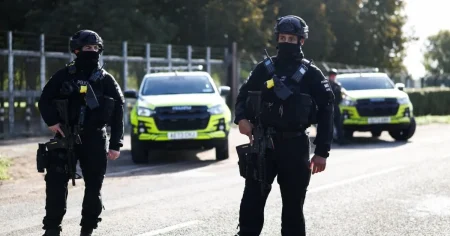
The response to this incident brings into sharp focus the incredible work of organizations like the RNLI and the coastguard, whose members routinely put themselves at risk to rescue others. The Eastbourne RNLI lifeboat was launched as part of the shore line search, with the ILB, or inshore lifeboat, navigating the shallows that larger vessels cannot reach. The crew worked alongside the local Coastguard Rescue Teams, the HM Coastguard helicopter, and Sussex Police officers, illustrating the strength that comes from collaboration in moments of crisis. Behind each of these agencies are real human beings, many of them volunteers. They left their workplaces, their families, and their quiet Thursday evenings to respond to a call that might have meant the difference between life and death. When the outcome turned out to be the worse possible one, they packed up their equipment and returned to their normal lives, carrying with them the memory of a solemn and sorrowful morning. It is impossible to quantify the emotional toll such incidents take on these responders. For every successful rescue, there are these moments of quiet sadness, and yet they continue. They continue because they believe in the value of every human life, because their communities rely on them, and because the sea, while beautiful, can be merciless. Their presence on that beach was not just about doing their jobs, but about extending care to a person they never met, to a family whose name they did not yet know, and to a community that needed to see that everything possible was being done.
Across Eastbourne, the ripple effects of the discovery were felt immediately. Residents woke up to news alerts and social media posts, and the conversations that usually revolved around local plans and weather were replaced by hushed whispers of shock and sorrow. The beach, which is such an integral part of Eastbourne’s identity, seemed a little more fragile. People walked their dogs a little closer to the promenade, avoiding the precise spot where the tragedy had occurred. Others stopped to look out at the water, perhaps reflecting on the unpredictable nature of the sea, which can change from calm to dangerous with terrible speed. This was not the first tragedy in the area, and it will likely not be the last, but each loss deserves its own recognition and its own moment of community grief. In a world that increasingly values speed and distraction, it is important to pause and acknowledge the human being at the center of the story. The person found on the beach was not just an incident, not just a headline, not just a subject for comment sections. They were someone who likely had loved ones waiting that Thursday, someone who had plans for the weekend, someone who may have felt the warmth of the sun or the coolness of the water in their final moments. Until formal identification is made, and until their family is informed, there will be an absence, a space in the lives of those who knew them. The community, however wide, holds that space with compassion, hoping that the family finds strength in the coming days, even if that strength feels impossible to find.
As the investigation continues, Sussex Police have been contacted for further information, though their immediate focus will be on establishing the identity of the deceased, contacting next of kin, and understanding the circumstances that led to this tragic outcome. Inquests and forensic examinations will likely follow, giving the family the closure of facts, even when those facts are difficult to bear. But beyond the official procedures, there is a deeper need for humanity, for kindness, for the willingness of strangers to offer their sympathy to people they will never meet. This tragedy is a reminder that life is fragile, and that every day we are given is precious. It also serves as a sobering reminder of the power of the sea. Whether somebody is a strong swimmer or a novice, whether they are in a wetsuit or simply taking a walk, the water demands respect. In the aftermath of this sorrowful event, local authorities and lifeboat organizations will likely renew their calls for water safety, urging people to be mindful of changing tides, cold water shock, and hidden currents. But for now, as the police tape comes down and the beach slowly returns to its routine, there remains a person whose life ended too soon, and a community that mourns them. It is perhaps the greatest tribute to that person to remember that they were not alone at the end; even as the sea claimed them, a network of rescue teams, police, and quiet volunteers were searching, hoping, and caring. In their final moments, and in the moments after, there were people who stopped, who looked, who shielded, and who grieved. That is what carries us through such immense loss: the knowledge that none of us truly faces the end alone, and that even in the most tragic of circumstances, the human heart will always reach out to one another.