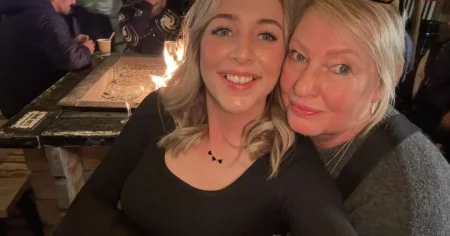


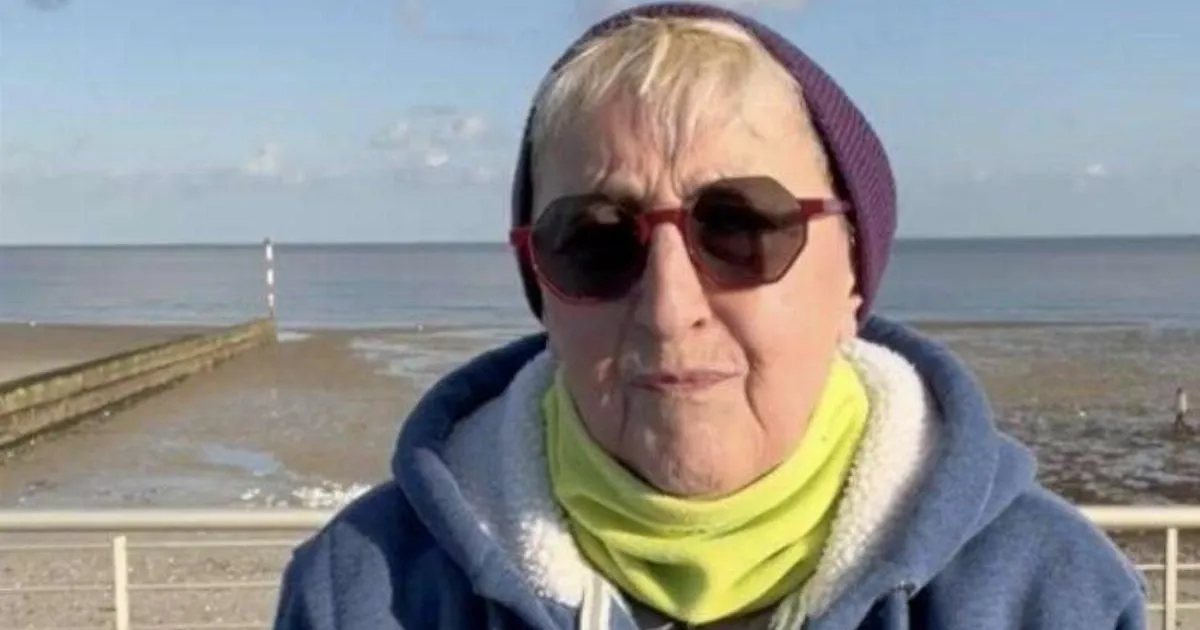
On an ordinary day, Lyn Pearman, a 70-year-old British pensioner, did what millions of tourists do each year: she visited Auschwitz-Birkenau, the former Nazi concentration and extermination camp in Poland, to pay her respects and to witness the place where more than a million people were murdered. It was meant to be a solemn, meaningful journey, a chance to connect with history in a deeply personal way. But after her tour, she and her daughter stopped at a café near the museum’s visitor services centre, operated by an external provider, and bought a couple of drinks. What happened next transformed Lyn from a quiet visitor into an international headline. She posted a short TikTok video, captioned “Prices at Auschwitz,” in which she complained that the two drinks cost around £9, that the café did not offer decaf coffee or non-dairy milk, that her strawberry smoothie tasted “very watered down,” and that her daughter’s lemonade smelled “like toilet cleaner.” Her practical advice to other visitors was simple: take your own drink with you. It was, to her, an innocent, everyday grumble about overpriced refreshments, no different from complaining about a cup of tea at a motorway service station. But the internet did not see it that way. The video quickly racked up more than four million views, and news outlets from the UK to Israel picked up the story. Lyn found herself at the centre of a global controversy she never anticipated, trapped between her own ordinary perspective and the immense, sacred weight of the place she had just visited.
The backlash was fast and ferocious. Thousands of commenters accused Lyn of insulting the memory of the more than one million people, mostly Jewish, who were killed at Auschwitz during the Holocaust. To many, her complaint seemed incomprehensibly tone-deaf. One TikTok user wrote that Auschwitz is “a site where you go to remember the victims, preserve their stories and educate people about one of the darkest moments in history. This focus should be on respecting their memory, not turning the experience into a personal review.” Another commenter recalled visiting the camp in 2011 and said that they and their companion were too upset and shocked to even think about eating or drinking. “It’s not a theme park,” they wrote. “It’s a memorial site to one of the biggest human atrocities ever. These two need to get a grip.” Alex Hearn, co-director of Labour Against Antisemitism, told The Times that the incident “highlights how some people have become disconnected from the true horror of the Holocaust and the death camps.” The outrage was not just about Lyn’s words; it was about a wider cultural anxiety that sacred spaces are being treated as consumer experiences, judged and rated like hotel rooms or airport lounges. For people who have lost family members in the camps, or who carry the collective trauma of the Holocaust, seeing someone complain about the quality of a lemonade on the grounds of such a place felt like a painful trivialisation of unimaginable suffering. It seemed to reduce Auschwitz to a backdrop for a bad day out, and that hurt.
But Lyn has not simply accepted the criticism. In interviews, she has defended herself, insisting that her video was misunderstood. “I wasn’t disrespecting the Jews or Poland – I think Poland is a lovely country,” she said. “But if you pay for food or drinks anywhere, you expect what you pay for; just because it’s a concentration camp doesn’t make any difference. I visited Auschwitz to pay my respects and because it’s historical and I find historical things interesting.” She tried to push back against the flood of angry comments, but the more she responded, the deeper she felt she sank. “I was trying to put them right but the more I tried, I dug a hole for myself,” she admitted. “The response has been quite shocking. And all this for an innocent video.” It is difficult not to feel some sympathy for her. She is a 70-year-old woman, not a social media influencer, and she seems genuinely stunned that her grumble about a smoothie could cause an international storm. Many of us, in our daily lives, complain about overpriced food and poor service without a second thought. Lyn simply did what people do in the age of social media: she turned her experience into content. But the setting made all the difference. At any other café, her criticism would have been unremarkable. At Auschwitz, it collided with history, memory, and collective grief. The gap between her intention and the world’s interpretation became a chasm, and she fell into it. Her defensiveness, though understandable, only deepened the problem, because it revealed a stubborn refusal to see why others might be upset. Yet beneath that stubbornness was perhaps embarrassment, confusion, and the pain of being labelled something she never imagined being called: an antisemite or a Holocaust denier.
To understand why her words caused such a profound reaction, it is essential to remember what Auschwitz was and what it continues to mean. The camp, located in German-occupied Poland during the Second World War, was the largest of the Nazi death camps. An estimated 1.1 million people were murdered there, the overwhelming majority of them Jewish men, women, and children, killed in gas chambers or through starvation, disease, exhaustion, and brutality. But the victims also included Poles, Roma and Sinti people, Soviet prisoners of war, and others deemed enemies of the Nazi regime. The name Auschwitz-Birkenau has become a universal symbol of the Holocaust, of human cruelty at its most extreme, and of the devastating consequences of hatred and indifference. The Auschwitz-Birkenau Museum was formally founded in 1947, and in 1979 it was designated a UNESCO World Heritage Site. Today, millions of people from around the world walk through its infamous gates, beneath the sign that reads “Arbeit macht frei,” to see the barracks, the ruins of the gas chambers, the piles of hair, shoes, and eyeglasses that belonged to the dead. It is a place that demands silence, reflection, and humility. Yet it is also, physically, a real place with a car park, a visitor centre, restrooms, and a café. The ordinary logistics of mass tourism have transformed it into something that must accommodate the living, offering drinks and sandwiches to people who may be tired, overwhelmed, thirsty, or simply hungry. That contrast is one of the strange realities of memorial sites: the sacred and the mundane are forced to coexist. For some visitors, eating a snack after witnessing such horrors feels natural, a way of reconnecting with their own humanity. For others, the idea of reviewing that snack on social media feels obscene. The café itself is, of course, not the camp. It sits outside the visitor services centre, and its presence does not diminish the horror of what happened within the wire fences. But when Lyn posted her review, she placed a consumer lens over a place that many believe should remain above such everyday judgments. In doing so, she inadvertently treated Auschwitz as if it were a stop on a sightseeing itinerary, complete with refreshments to be critiqued.
Perhaps the most important lesson from this strange, uncomfortable story is the need for deeper education and thoughtfulness when visiting places of atrocity. Karen Pollock, chief executive of the Holocaust Educational Trust, offered a gentle but powerful response in The Times. “My advice to anyone planning to visit is to spend time reading and listening to the testimony of eyewitnesses and survivors, such as Primo Levi and Elie Wiesel, and learning about the horrors inflicted on those sent to this infamous site,” she said. “It is through these personal stories that the true scale of the destruction becomes clear.” Her words are a reminder that Auschwitz is not just a historical artefact to be ticked off a list; it is a graveyard, a witness, a warning. Visitors who arrive unprepared may find themselves emotionally overwhelmed, or, conversely, emotionally disconnected. They may not know what to feel, and so they cling to the familiar: the price of a coffee, the taste of a smoothie, the inconvenience of the gift shop. This does not make Lyn a monster. It makes her human, and fallible, and perhaps a little naive. Many of us would benefit from asking ourselves how we would react in her shoes. Would we, in the exhaustion and sadness of a day at Auschwitz, be tempted to grumble about a disappointing lunch? Would we perhaps open our phones and share that grumble without thinking about how it might be received? It is easy to condemn from a distance, but harder to imagine our own lapse of judgement. That does not mean Lyn was right; the sensitivity of Holocaust memory demands that we be careful, compassionate, and aware of the significance of our words. But it does mean that the global outrage, while understandable, might itself benefit from a little grace. After all, the best response to ignorance is not merely anger, but education. The best way to honour the dead is not only to police the words of others, but to ensure that every visitor understands what they are walking through before they arrive.
In the end, Lyn Pearman’s story is about the collision between two worlds: the world of ordinary human inconvenience and the world of profound historical trauma. Her video was small, awkward, and thoughtless, but it opened a vast conversation about how we remember the Holocaust, how we treat its memorial sites, and what we expect from those who visit them. The cafeteria near Auschwitz will continue to serve drinks to weary tourists. Visitors will continue to feel hunger and thirst, laughter and tears, confusion and anger, all mixed together in the shadow of unimaginable history. The question is not whether people should eat or drink at such places, but whether we can learn to do so with humility, and with an awareness that we are walking on ground that is still sacred. Lyn has said she meant no disrespect, and perhaps we should believe her. She made a mistake, and she has paid a heavy price for it in reputation and peace of mind. But the controversy can still serve a greater purpose if it reminds us that places like Auschwitz demand more of us than a casual review. They demand memory, respect, and the willingness to truly listen to the voices of the past. They demand that we set down our phones for a moment, not to ignore the world, but to remember why the world must never forget. The millions who were murdered there cannot speak for themselves; it is our responsibility to speak for them, carefully and truthfully. Lyn’s moment of thoughtlessness cannot undo that responsibility, but it can remind us how easily we fall short of it. Let us learn from her, not by joining the mob, but by reflecting on our own behaviour and by striving, every day, to treat the memory of the victims with the reverence it deserves.