



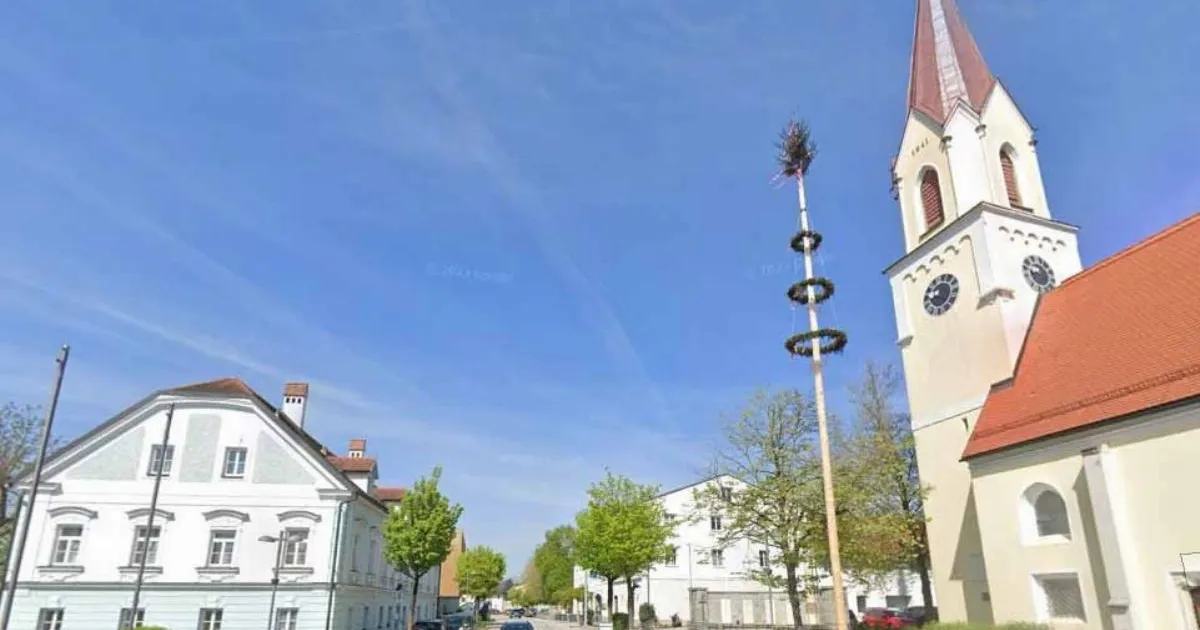
The Austrian town of Marchtrenk now carries a sorrow that feels almost impossible to put into words. It is a place where neighbors once exchanged quiet greetings, where children played in the streets, where life moved with the ordinary rhythms of a small community. But that ordinary life has been shattered by a horror that no one saw coming. A 39-year-old woman is dead, found covered in blood by her own young daughter on June 25, and the details emerging around her death have left the town reeling. What first appeared to be a tragic accident quickly revealed itself to be something far darker. Emergency services were called to the family home on that warm June morning, only to discover a woman whose life had ended not in some random act of violence, but allegedly at the hands of the very person who had promised to love and protect her. Her husband, a 51-year-old man whose face now appears in police reports, initially told responders that his wife had suffered “an accident during rough sex.” That explanation, so casual and so dismissive of her dignity, was the first crack in a story that would soon collapse entirely. The woman did not die because of a careless moment shared between partners; investigators now believe she was drugged, violated, and passed around by men who saw her as nothing more than an object to be used. And the most chilling part is that this betrayal may have been going on for some time, hidden behind closed doors, disguised by ordinary life.
The investigation into her death did not take long to expose the husband’s lies. He was not initially a suspect, because in those first confusing hours, the police had no reason to doubt the man standing in the doorway of his own home, grief and shock painted across his face. But when detectives searched his phone, the mask began to slip. They found that he had deleted a messaging app, a small act of digital concealment that only made investigators more curious. Then they discovered he had disposed of the very bed on which his wife had been found, erasing the stage on which the alleged crime had taken place. Most damning of all were the searches he had made in the days before her death. The words “how to drug someone” were sitting in his search history, cold and clinical, as if he were looking up a recipe for dinner rather than planning the violation of his own wife. It also emerged that he was suspected of allowing men to come to the home and rape her in exchange for money, reportedly around £430 per encounter. The woman, who had been living her life as a mother and partner, had no idea, authorities believe, that her body was being treated as a commodity. The betrayal is almost too vast to comprehend. This was not a stranger lurking in the shadows; it was her husband, the man who slept beside her, who shared her meals, who should have been her safest place. To think that she was being drugged and attacked while the person she trusted most stood by, or worse, orchestrated the entire nightmare, is a violation not just of her body but of her very soul. The town of Marchtrenk is left to wonder how such cruelty could hide in plain sight.
The police investigation soon led to another arrest: the couple’s own neighbor, a man who lived only steps away from the family. He is accused of raping the woman on the night she died, and his presence in the case adds a disturbing layer of familiarity to the horror. This was not a random stranger from the internet, at least not in the final moments; it was someone who knew the family, someone who likely crossed paths with the woman in the street, someone who may have smiled at her daughter. The text messages uncovered on the husband’s phone paint a grotesque picture of the relationship between these two men. In one message, the husband allegedly wrote to the neighbor: “I’ll get her properly drunk. Then you can have sex with her again. The way she was whining the other day was amazing.” The cruelty of those words is almost unbearable. “Whining” — as if her pain, her involuntary sounds of distress, were entertainment. In another message, he reportedly said: “If it worked, if I had date rape drugs, I would regularly make her available for you to rape.” The casual use of the word “regularly” reveals a plan that was not a spontaneous lapse of judgment, but a cold and calculated scheme. This was not a man who had lost control; it was a man who believed he owned his wife’s body, who thought he had every right to do with it as he pleased, even if that meant destroying her. The neighbor, for his part, is now behind bars, accused of participating in the final attack that took the woman’s life. But the blame cannot rest solely on the men who carried out the physical violence. The person who should have been her protector is the one who handed her over, and the betrayal is so profound that it feels almost mythological in its evil. How does a human being look into the eyes of the person they married, the mother of their children, and decide that she is merely a vessel for someone else’s pleasure? It is a question that will haunt everyone who reads this story.
This case cannot help but draw comparisons to the desperate story of Gisele Pelicot, a woman whose name has become a symbol of courage in the face of unimaginable suffering. For nearly a decade, Gisele was repeatedly drugged by her ex-husband, Dominique Pelicot, and then raped by dozens of men he recruited online, all while she was unconscious and completely unaware of what was happening to her. The abuse only came to light in September 2020, when Dominique was arrested for taking upskirt photographs of women in a supermarket. It was during the investigation into that petty crime that police discovered thousands of photographs and videos on his computer, stored in a folder chillingly named “abuse.” Those images showed Gisele being violated by stranger after stranger, her body limp and defenseless, her mind lost in a chemically induced fog. When the trial finally began, Gisele made the extraordinary decision to waive her right to anonymity, insisting that shame must belong to the perpetrators, not the victims. She walked into the courtroom, looked the men who had assaulted her in the eye, and told the world what had happened. Her courage sparked a movement, a reckoning with the hidden reality of drug-facilitated sexual violence, and she became an unwitting feminist icon simply by refusing to stay silent. Dominique Pelicot was found guilty, convicted of repeatedly drugging and raping his wife and of inviting dozens of men to rape her over a period of ten years. The parallels between his case and the one unfolding in Marchtrenk are impossible to ignore. Here again is a husband, a man in a position of trust, allegedly using chemical substances to render his wife helpless and then inviting others to take advantage of her. Here again is a woman whose body was treated as a shared secret, a toy for men to use while she remained unconscious. It is a pattern that is more common than many people want to believe, and it reveals a deep rot in the way some men view women: not as human beings with hopes and fears and dreams, but as objects to be conquered, used, and discarded.
The broader, more uncomfortable truth is that these stories are not isolated anomalies. They are extreme and horrifying, yes, but they exist on a continuum of violence against women that stretches from casual disrespect and harassment to rape and murder. A woman’s body is still, in so many parts of the world, treated as a territory to be claimed, a prize to be taken. What happened in Marchtrenk and what happened to Gisele Pelicot are the terminal points of that continuum, the places where everyday misogyny curdles into pure evil. But the systems around these cases also fail women. When a husband claims his wife died in a “rough sex” accident, why is that initially accepted? When a woman seems confused, tired, or distant, why do doctors, friends, and family members so often attribute it to stress or mood instead of asking whether she is safe at home? Why are date rape drugs so easy to obtain, and why are so many victims unable to remember the attacks that were carried out against their own bodies? These are questions that demand answers. The legal system must treat drug-facilitated sexual assault with the seriousness it deserves, and society must stop looking away. Women need to be believed, not interrogated. They need support, not suspicion. And men, especially, need to examine their own behavior, the jokes they laugh at, the comments they tolerate, the silence they maintain when other men behave badly. The Husband in Marchtrenk did not become a monster overnight. He likely spent years nurturing a sense of entitlement, convincing himself that his needs mattered more than his wife’s autonomy. No one stopped him. No one asked the uncomfortable questions. And a woman paid for that collective blindness with her life.
In the end, the person at the heart of this story is not the husband, or the neighbor, or the investigators who are now piecing together the evidence. It is the woman who died, the mother who will never see her daughter grow up, the wife who will never have the chance to tell her own story. She remains unnamed in reports, an anonymity that can feel like a final erasure of her humanity, but we should not mistake it for a lack of identity. She was someone’s child, someone’s friend, someone’s whole world. She was a person who, like all of us, wanted to be loved and safe and happy. Instead, her final moments were stolen from her, her body violated, her dignity stripped away. And her daughter, the young girl who found her mother covered in blood, will carry that image for the rest of her life. She will grow up with questions no child should have to ask: Why did my father do this? Why didn’t someone save her? Could I have done anything to stop it? The trauma of this loss will ripple outward for decades, touching every milestone, every holiday, every ordinary Tuesday afternoon. As the legal proceedings unfold in Austria, the world will watch to see whether justice is done. But no verdict can bring back the woman who was lost. No sentence can erase the terror she endured. What can happen, though, is that her story becomes a catalyst for change. Her death can be the reason another woman recognizes the red flags in her own marriage. Her suffering can push friends and family members to speak up when something feels wrong. Her memory can serve as a reminder that violence against women is not a private matter, but a public emergency that demands attention, resources, and outrage. In the quiet streets of Marchtrenk, people will mourn. They will lay flowers, perhaps, and hold vigils. But the most meaningful tribute they can offer is to refuse to look away, to insist that the woman’s life mattered, and to fight for a world where no one else has to die in such a cruel and senseless way. Her story may have ended in tragedy, but it does not have to end in silence.