

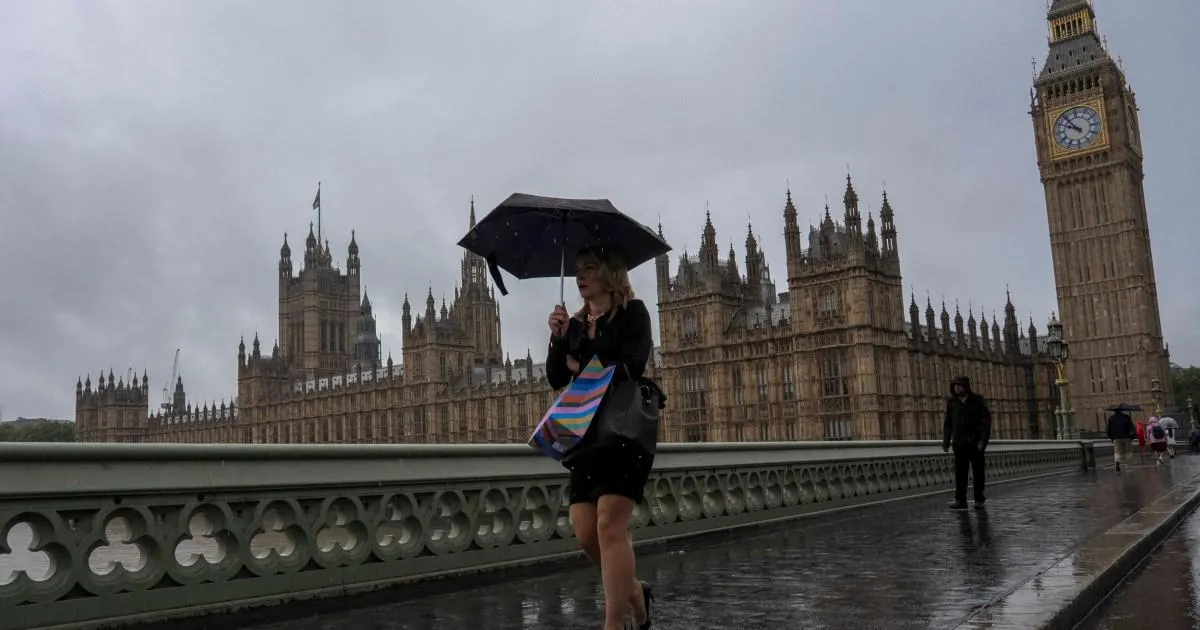
Across London and much of the United Kingdom, the summer of 2022 has become a strange and exhausting blur of cloudless skies, relentless sunshine, and a landscape slowly losing its colour. It is a peculiar irony for a country that usually loves to complain about the rain: after weeks of back-to-back heatwaves, the British public is now desperately hoping for a few grey clouds to drift overhead. Parks that were once lush and green have turned brittle and yellow, fields have dried into dusty patches, and even the most resilient gardens are beginning to show signs of fatigue. The spring and summer have been dominated by one scorching heatwave after another, each seeming more intense than the last, and as the fifth heatwave of the season began to grip large parts of England and Wales, temperatures climbed to a staggering 38°C in some areas. For many, the simple act of stepping outside has become an endurance test, while those without access to gardens or green spaces have found themselves trapped in homes that feel more like greenhouses. The situation has become so severe that drought conditions have been officially declared across more than two-thirds of England, following a record-dry July and more than a month of scant rainfall. Rivers have dropped to unusually low levels, reservoirs have shrunk, and the countryside is increasingly reminiscent of a Mediterranean summer rather than the damp, temperate Britain people know so well. Yet, despite the discomfort and the worry, there is a feeling in the air that change is coming — that the blistering grip of this unprecedented heat may finally begin to loosen.
According to meteorologists, relief may be closer than it appears. Jim Dale, founder of the British Weather Services, has suggested that the UK is likely to “get a break” from the heat at the turn of next week, offering a glimmer of hope to those who have spent weeks searching for shade and fanning themselves in front of open windows. The temperatures, he explains, will start “leaking away” as early as tomorrow, although the South East, East Anglia, and London will still find themselves within the heat zone, with temperatures possibly pushing to 35°C before settling around 30°C early next week. For those in the most parched regions of the country, the wait may feel agonisingly slow, but the forecast suggests that a meaningful shift is on the horizon. Jim’s prediction points to Tuesday as the moment when the weather really begins to turn, with rain potentially arriving in the north and west before gradually moving south-eastwards, where the ground is most barren and the need is greatest. “That is your first taster,” he said, hinting that this initial rainfall could be the beginning of a more substantial change. After weeks of dry, dusty air and a sun that refuses to relent, the prospect of rain falling on thirsty ground is almost enough to make people weep with relief. But this is not just about comfort; it is about survival for farmers, wildlife, and the countless people who rely on natural water sources. The rain, when it comes, will be welcome, but it will arrive with its own complications, as the ground that has been baked hard by weeks of intense heat will not simply absorb the water with open arms.
Once the rain passes through, the weather is expected to turn fresher, offering what Jim describes as a more traditional British summer — a season of stop-and-start sunshine and showers that can change from one hour to the next. This may not sound particularly glamorous, but after the relentless, oppressive heat of recent months, it feels like a luxury. The gradual rainfall could help “alleviate some of the difficulties like dust and wildfire problems,” which have become increasingly serious in an unusually dry landscape. Wildfires have broken out across parts of the country, turning heathland and grassland into charred, smoking reminders of how fragile the natural world has become under such strain. Dust hangs in the air, coating cars and windowsills, and the usually vibrant British countryside has taken on an almost apocalyptic palette of browns and greys. The arrival of rain, even in modest amounts, would bring a much-needed pause to this cycle of dryness and danger. However, as Jim is quick to point out, this alone will not solve the underlying crisis. “It’s going to take weeks of sustained rain to get us back to where we need to,” he warned, “and the damage has been done – economic damage and damage to the crops.” Farmers have faced ruinous conditions, with harvests withered in the fields and livestock suffering from thirst and heat stress. Supermarket shelves have already begun to show signs of shortages, with fruit and vegetables appearing smaller or scarcer than usual as growers struggle to cope with the conditions. Even if the rain comes and the weather becomes more pleasant, the scars of this summer will take a long time to heal, and the impact on food prices, livelihoods, and the natural environment will be felt for many months to come.
Yet there is another, more troubling side to the much-anticipated rain. When a parched landscape suddenly meets heavy downpours, the ground — hard and compacted from weeks without moisture — struggles to absorb the water. Instead of soaking gently into the soil, the rain tends to sit on the surface, quickly pooling and running off into streets, drains, and low-lying areas. This is the recipe for flash flooding, and it is a risk that forecasters are already monitoring closely. Jim cautions that a big downpour could easily lead to sudden flooding, particularly in the south, where the earth has been baked into a hard, crust-like layer. The famous heatwave of 1976, which remains one of the most memorable in British history, was eventually followed by widespread floods brought on by prolonged rain and thunderstorms. Many experts believe that history could repeat itself this summer, at least in some parts of the UK. For homeowners and businesses located in flood-prone areas, the arrival of rain is therefore tinged with anxiety rather than pure relief. The same weather system that brings blessed relief from the heat may also bring blocked drains, waterlogged roads, and damage to property. This strange and unsettling combination of drought and deluge has become a hallmark of a changing climate, where extremes are no longer exceptions but part of the new normal. The risk of flash flooding is not just an inconvenience; it is a reminder that the natural world operates in delicate balances, and when those balances are disrupted, the consequences can be swift and severe.
Looking further ahead, there is some cautiously good news for those who are utterly exhausted by the heat. Jim predicts that once the temperatures begin to drop next week, “that could be it as far as major temperatures are concerned.” He adds, with a degree of confidence, that he cannot currently see a sixth heatwave forming on the horizon. This will come as a relief to many, but it should not be mistaken for a return to the calm, predictable summers of decades past. Extreme weather, including longer and more severe heatwaves, is increasingly becoming the norm, driven by climate change and the continued burning of fossil fuels. This summer has been a stark warning of what lies ahead if greenhouse gas emissions continue to rise. The heatwaves that have struck the UK in 2022 have not simply been uncomfortable; they have been deadly, with hospitals reporting spikes in heat-related illnesses and the UK Health Security Agency issuing repeated alerts. The idea that this could become a regular feature of British summers is a deeply unsettling thought. While people may be relieved to hear that a sixth heatwave is unlikely this year, there is no escaping the broader trend. The rain that is coming next week is a temporary reprieve, not a solution. The long-term challenge of adapting to a warmer world will require far more than a few showers, and it will test the resilience of communities, infrastructure, and the natural environment in ways that are only beginning to be understood.
In the end, the story of this British summer is a story of contradictions — a nation that usually moans about grey skies and drizzly afternoons is now praying for them, torn between the desire for relief and the fear of what that relief might bring. It is a moment that forces people to confront their relationship with the weather and with the planet itself. The British have always loved to talk about the weather; it is a social lubricant, a way of connecting with strangers, and a source of endless mild comedy. But this year, the weather has become a serious topic, a source of genuine concern for farmers, families, and all those who care about the future. When the rain finally arrives, it will likely be greeted by a collective sigh of relief, and perhaps even a few smiles turned skyward. Yet the flood risk, the crop failures, the wildfires, and the parched reservoirs will remain, serving as reminders that this is not simply a strange season but a sign of deeper changes. The hope is that the coming weeks will bring enough rain to ease the most immediate pressures, and that the traditional British summer of showers and sunshine will make a welcome return. But even as the rain falls, the memory of this scorching, dusty season will linger, along with the knowledge that the country must adapt, prepare, and ultimately do far more to address the climate crisis that is reshaping life as we know it. In the meantime, all anyone can do is hold on, stay hydrated, and watch the sky — waiting, perhaps for the first time in weeks, for the unmistakable sound of raindrops on the roof.