


Here is a summary and humanization of the provided text, structured into 6 paragraphs as requested.
In a surprising and characteristically provocative move, Donald Trump has publicly criticized a major joint military exercise between the United States and South Korea. Using his preferred platform of social media, the former president expressed his displeasure with the large-scale drills, arguing that they are too expensive and send the wrong message. He framed the exercises as a costly burden on the American taxpayer and, more notably, as an unnecessarily hostile provocation. This public rebuke of a long-standing security alliance is particularly striking given that these joint exercises have been a cornerstone of the US-South Korea defense relationship for decades, designed to deter aggression from the North.
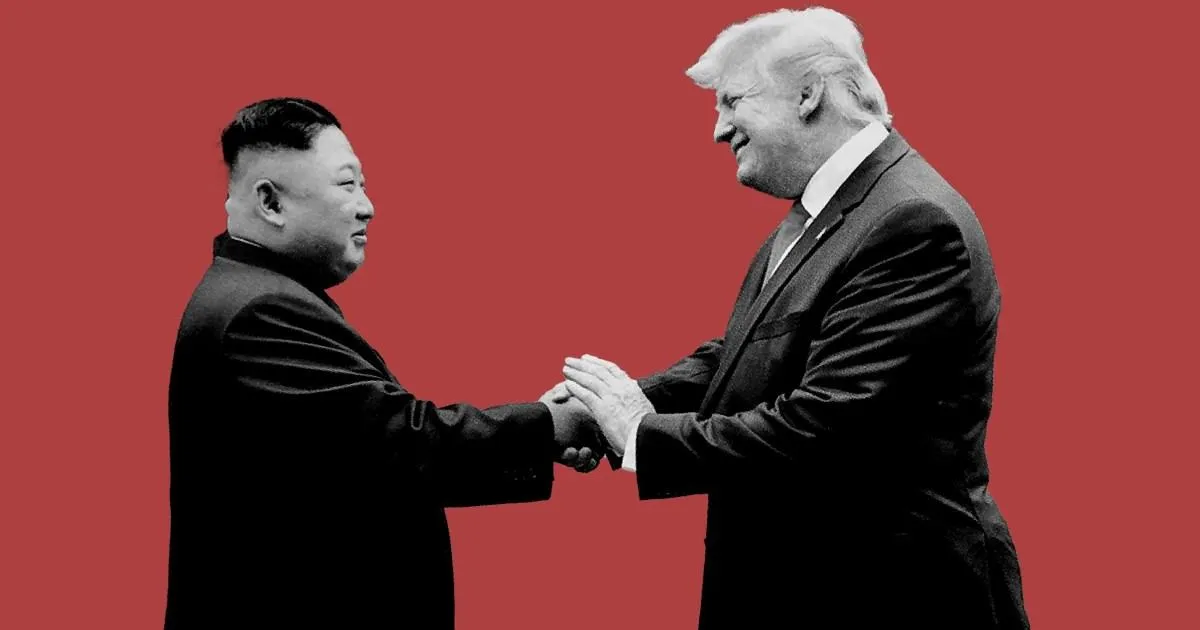
What makes Trump’s comments even more eyebrow-raising is his simultaneous praise for North Korean leader Kim Jong Un. In his social media post, Trump went out of his way to describe Kim as a leader who has been “unthreatening and respectful” during his time in office, a stark contrast to the international perception of the North Korean regime as a belligerent and repressive dictatorship. This praise comes despite North Korea’s continued development of nuclear weapons and ballistic missiles—programs that the US and its allies have spent years trying to curtail. The juxtaposition of criticizing the US’s own defensive measures while lauding a hostile foreign leader has raised questions about Trump’s motivations and his personal rapport with the North Korean dictator, a relationship that has always been a point of intense fascination and concern.
Experts who study political propaganda and the psychology of leadership see a clear pattern in Trump’s behavior. Dr. Ian Garner, a historian and analyst, suggests that Trump’s affinity for figures like Kim Jong Un isn’t merely a political strategy, but stems from a personal identification with strongmen. Garner argues that Trump sees a reflection of himself in autocratic leaders who wield power without constraint. He points to Trump’s long history, from his days as a New York real estate mogul in the 1980s to his time as host of The Apprentice, and concludes that his admiration for those who can command absolute authority and bend rules to their will has been a consistent thread throughout his life. In this view, Trump’s posture towards Kim is less about diplomacy and more about a mutual recognition between two men who respect raw, unaccountable power.
Furthermore, this perspective suggests that Trump fundamentally misunderstands the nature of these relationships. By openly praising Kim and expressing skepticism about American military alliances, Trump may believe he is building personal bridges that can lead to a historic deal. However, analysts caution that this approach is dangerously naive. Garner points out a significant risk: by showing that he is willing to undermine his own allies and defense posture to curry favor with a dictator, Trump might actually be giving leaders like Kim less reason to negotiate in good faith. If the North Korean regime perceives that the American president is desperate for a legacy-defining agreement and is willing to make unilateral concessions, they are likely to stiffen their demands and continue their weapons development, knowing they hold the upper hand.
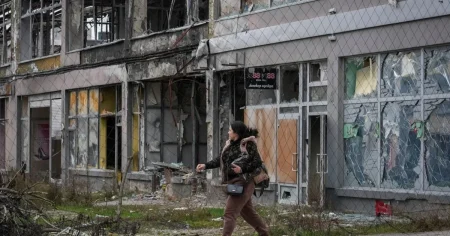
The implications extend beyond North Korea and have a global ripple effect, particularly concerning the war in Ukraine. The article highlights that North Korea has been sending thousands of troops to support Russia’s invasion, a direct and tangible example of the growing axis between authoritarian nations. Trump’s history of praising both Kim and Russian President Vladimir Putin leads experts to believe that he would not be a reliable deterrent against such aggression. His inclination to see things from the strongman’s perspective and his lack of respect for traditional international norms could embolden leaders like Putin, who might conclude that they have little to fear from a US administration that appears to be less committed to its allies and more open to understanding the “logic” of its adversaries.
Ultimately, this episode paints a complex and troubling picture of the former president’s worldview. His public stance seems to be guided less by a coherent foreign policy doctrine and more by personal chemistry and a transactional view of global power. By valorizing an unthreatening and respectful Kim Jong Un—a man who heads a totalitarian regime—Trump appears to isolate himself from the broader international community, which sees North Korea as a grave threat and a flagrant violator of human rights. This approach, which prioritizes personal affinity over strategic alliances, creates significant risks for the US so long as Trump holds sway over its foreign policy. It signals to enemies that their behavior may be excused and to friends that their loyalty may not be guaranteed, fundamentally altering the delicate balance of power in a more volatile and unpredictable world.