


A Family’s Desperate Wait: The Search for the Sahus in Nepal’s Deadly Floods
In the quiet suburbs of London, a family’s world has been turned upside down by an agonizing silence that stretches on with each passing day. The Sahus, who once seemed to have everything—wealth, beauty, intelligence, and a future brighter than most could imagine—now cling to the faintest hope that their loved ones will somehow emerge from the chaos that has engulfed Nepal’s breathtaking but treacherous Himalayan landscape. Santosh Sahu, a self-made millionaire whose story embodies the immigrant dream, along with his wife Surabhi, a former beauty queen whose grace and intelligence matched her husband’s ambition, and their two remarkable children, Spandan and Syna, have vanished into the aftermath of one of the most devastating natural disasters the region has witnessed in recent memory. Their journey, which began as a celebration of academic achievement and a spiritual pilgrimage to one of the world’s most sacred sites, has transformed into a nightmare that has gripped the hearts of not just their family, but everyone who has followed their story.
The last time Murali Sahu, Santosh’s brother, heard from the family, their voices were filled with the unmistakable joy of discovery and adventure. It was Tuesday, and the family were reveling in the wonders of Kathmandu, the ancient capital city that serves as the gateway to the Himalayas. The phone call was filled with laughter and excitement, two emotions that now seem like distant echoes in a world that has become consumed by worry and dread. Murali’s voice cracks as he recalls that final conversation, the ordinariness of it now haunting him with its simplicity. The family were doing what families do on vacation—sharing stories, planning their next adventure, basking in each other’s company. Little did they know that this would be their last moment of carefree happiness before the mountains themselves would unleash their fury upon the valley below. The Sahu family, like so many others, had no warning of the catastrophe that was about to unfold.
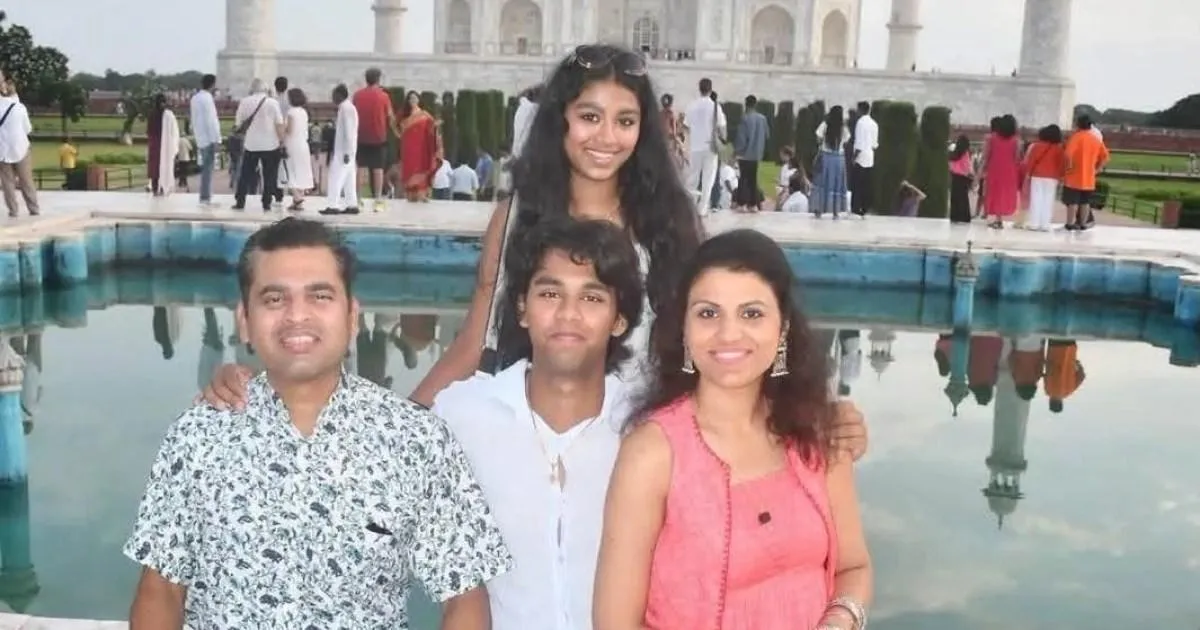
What makes this story particularly poignant is the remarkable journey that brought Santosh Sahu to this point in his life. Those who know him describe a man who embodies the very essence of perseverance and determination, someone who arrived in Britain with nothing but dreams and the willingness to work harder than anyone else to achieve them. His friend Mahadev Semwal, speaking from his home in Reading, paints a picture of a man who built an empire from the ground up, whose entrepreneurial spirit and relentless work ethic transformed him from humble beginnings into the successful businessman he is today. But wealth was never Santosh’s primary achievement; rather, his greatest accomplishments sit beside him in every family photograph—his wife Surabhi, whose own remarkable journey from beauty queen to devoted mother and wife mirrors her husband’s rise, and their two children who represent the brightest hopes of a family that has already achieved so much.
Spandan, the elder child at eighteen, had just completed his A-levels at the prestigious Royal Grammar School in Guildford, one of the country’s most respected educational institutions. His academic performance earned him a place at university to study philosophy, politics, and economics—a testament to a brilliant mind that his father watched develop with immense pride. This trip to Nepal and Tibet was meant to be their final family adventure before Spandan embarked on the next chapter of his life, a rite of passage that would see him leave the family home and forge his own path in the world. The symbolism of this journey was not lost on the family; it was a pilgrimage in every sense of the word, both spiritually and personally. For young Syna, at just thirteen years old, the trip represented a world of learning and discovery, feeding a curiosity about the world that her family says is insatiable. She wanted to understand everything, to explore every idea, to see every corner of the globe—a thirst for knowledge that her parents nurtured with pride and joy.
The family’s last known photograph captures a moment of pure happiness. There is Syna, flashing a peace sign and smiling with the infectious enthusiasm of youth, surrounded by fellow travelers from Britain and South Africa who would share their journey on the tour bus of Alpine Eco, the company that organized their expedition. The photo shows a group of people on the adventure of a lifetime, unaware that tragedy lurked just around the corner. They had been to Mount Kailash, a peak considered sacred by both Hindus and Buddhists, a destination that holds deep spiritual significance for the family and millions of others around the world. The experience of being in the presence of such natural and spiritual majesty would have been overwhelming, a moment of connection with something greater than themselves. But their pilgrimage was about to take a terrifying turn as they crossed the border back into Nepal, heading toward what they thought would be the final stages of their journey home.
The hours after that last photo was taken now seem painfully prophetic. The group, which included other British and South African travelers, posed for photographs that would become their last known visual record—young Syna smiling brightly and flashing a peace sign, the family looking healthy and happy, unaware that within hours their lives would be thrown into chaos. As their tour bus crossed the border into Nepal, their WhatsApp messages ceased, the digital silence a harbinger of the physical isolation that would follow. When the floodwaters came, they came with a fury that no one could have anticipated, carving through the Himalayan valleys like a knife through butter, sweeping away everything in their path. The glacier collapse that triggered the disaster unleashed an unprecedented deluge of ice, rock, mud, and debris that decimated entire communities, turning once-verdant valleys into graveyards of mud and stone.
The scale of the tragedy is almost incomprehensible to those of us watching from the safety of our homes. Nearly a thousand people have been confirmed dead, with close to five thousand more still unaccounted for. Among the missing are more than five hundred tourists, including thirty-three Britons, people from all walks of life who had come to witness the majesty of the world’s highest mountains. The Sahu family is among them, their names added to a list of the disappeared that grows longer with each passing hour. Rescue teams from Nepal, aided by experts from China and India, are engaged in a desperate race against time to reach nearly a thousand people believed to be trapped inside blocked hydropower tunnels, where they took refuge from the flood only to find themselves imprisoned by the very waters they sought to escape. Each passing hour diminishes the chances of finding survivors, yet the rescuers press on, driven by the knowledge that somewhere in the darkness below, people are waiting to be found.
The emotional toll on the Sahu family left behind in London cannot be overstated. Murali’s plea—”For God’s sake, please call just once”—carries the weight of a man who has exhausted every other option and now turns to prayer and social media as his only remaining tools. The embassy has been helpful, he says, but helpfulness cannot replace the sound of a loved one’s voice, cannot ease the terror of not knowing whether your brother, his wife, and their children are alive or dead. Every unread message becomes a torment, every hour of silence an eternity. The family shared their photograph across social media platforms, a digital desperate plea to anyone who might have seen them, might have information, might somehow provide the miracle they so desperately seek. In the warm, humid air of Nepal’s plains, bodies are being buried in shallow graves because they are decomposing too quickly to wait for proper identification procedures, adding a macabre urgency to the search that makes the passage of time even more cruel.
For those who know the Sahu family, the tragedy is compounded by the knowledge of who these people are. Semwal’s description of Santosh as someone who came from a very humble background and built his life through determination and hard work speaks to the very essence of the immigrant success story that Britain has come to celebrate. Surabhi is described as equally remarkable, together forming what Semwal calls “a wonderful couple” whose children are their greatest pride. Spandan’s intelligence and energy, Syna’s curiosity and eagerness to learn—these are the qualities that parents dream of in their children, the fulfillment of every sacrifice made along the way. The trip to Nepal was supposed to be a celebration of all they had achieved, a moment to pause and appreciate the journey before embarking on the next chapter. Now, instead of celebrating Spandan’s university placement and golden future, his family is holding vigil, praying for any news, any sign, any miracle that might bring them home. The irony is almost too painful to contemplate—that a journey meant to strengthen family bonds might instead have shattered them forever, that the brilliance of a young man with the world at his feet might be extinguished before he ever takes his first university lecture. But amidst the despair, there remains hope—the stubborn, irrational hope that defines the human spirit, the belief that somewhere in the rubble and mud, the Sahu family might still be fighting, might still be waiting for rescue, might still find their way back to the family in London who refuses to give up on them, even as the days stretch on and the silence grows ever more deafening, because to abandon hope would be to abandon them, and that is simply not an option.