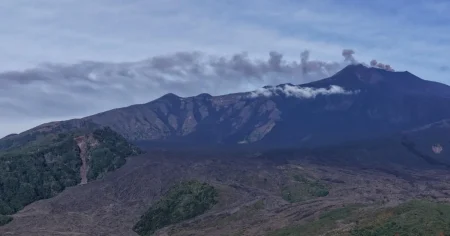
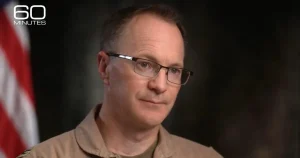

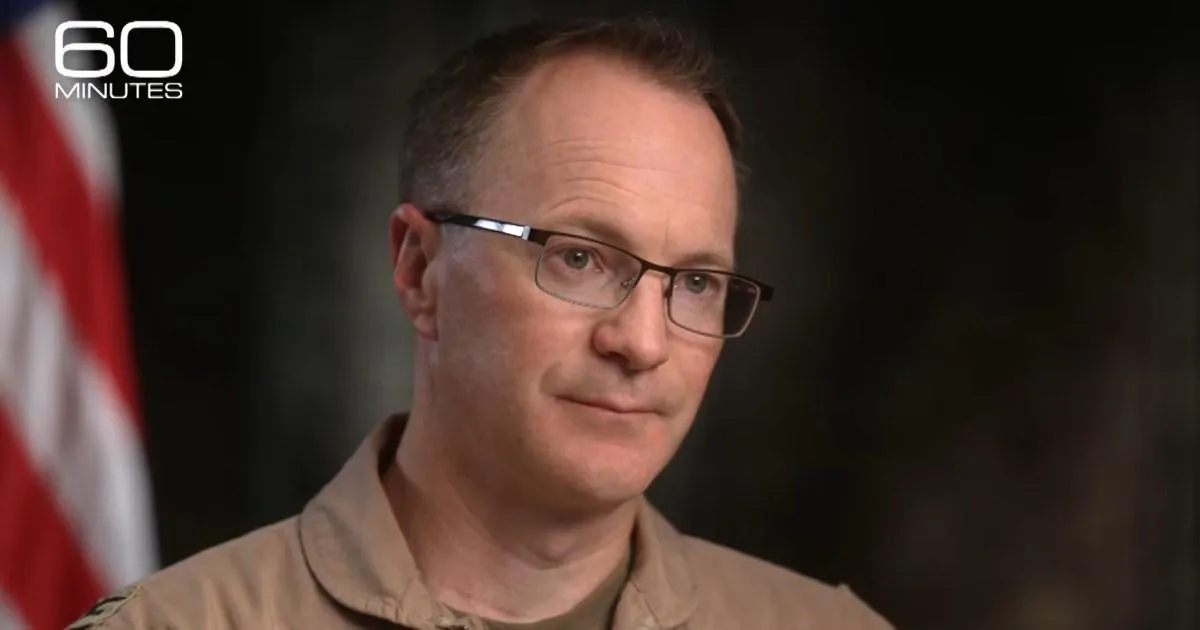
In the rugged, unforgiving mountains south of Isfahan, where the silence is broken only by wind and the distant sound of search parties, an American pilot lay broken and disoriented after a catastrophic ejection from his stricken aircraft. Known only by his mission call sign Bravo, he had been flying an F-15E strike jet alongside his fellow airman, Alpha, when a shoulder-fired missile tore through the multimillion-pound aircraft over Iran. The explosion sent the two men hurtling into the sky, separated by miles and the chaos of the moment. Bravo hit the ground with a violence that he would later describe as landing “somewhere between 70 and 100mph.” The impact shattered his back, shoulder and arm, leaving him crumpled in a mountainous region south of Isfahan, five miles from where Alpha had come down. Around them, Iranian forces were already moving, their hunt for the downed pilots beginning almost before the dust settled. For Bravo, the first instinct was terror. He remembered looking up after the ejection and seeing no parachute above him—only open sky and the terrible pull of gravity. “When I looked up and saw no parachute, that was the most terrifying thing I’ve ever seen,” he told CBS News’ 60 Minutes. In that suspended moment between life and death, he paused, prayed, and asked for help, not knowing whether the next breath would be his last. It was the beginning of an ordeal that would test his faith, his body, and his will to survive.
Bravo’s survival, he insists, was nothing short of a miracle. Broken and bleeding, unable to move properly and with every breath sending fire through his shattered frame, he somehow managed to evade the Iranian forces sweeping the area. He had been trained for survival, evasion, resistance and extraction, but no training could fully prepare him for the reality of being alone behind enemy lines with a broken back and a dislocated sense of time. Every sound was a threat. Every distant voice was a potential capture. The mountains offered cover, but they also slowed him down, forcing him to crawl and drag his injured body over rocks and through scrub, all while trying to stay ahead of the search. He later recalled the terror of looking up and seeing no parachute, and then the strange calm that followed his prayer. “So I paused, right then, and I prayed, ‘Lord, your will be done. But if I’m getting through this, I need help.’” That prayer, he said, carried him through the worst hours of his life. He described the aftermath of the crash as a testament to God’s provision, not in preventing injuries, but in preventing the catastrophic, life-ending damage that would have left him unable to crawl, hide, or breathe. The broken bones would heal, he believed, but the moment of striking the earth at that speed should have ended everything. Instead, he was alive, conscious, and moving. For 48 hours, Bravo stayed hidden in enemy territory, evading capture while American forces worked frantically to bring him home. He survived on training, adrenaline, and the stubborn belief that his country would not leave him behind.
Meanwhile, Alpha’s rescue was unfolding far faster, though it came at a terrible cost in courage and ammunition. Alpha had been down for only six hours before a massive American operation was launched to get him out. The mission was so dangerous that it required extraordinary audacity: a daylight insertion behind enemy lines in an area crawling with hostile forces. Chairman of the Joint Chiefs of Staff Dan Caine described the decision plainly: “Anytime you go behind enemy lines in daylight, it’s gonna be dicey. But given the threat to 44 Alpha, the decision was taken to boldly go behind enemy lines in daylight to make sure that we could get to him before anybody else could.” The risk was real. The mission was not a quiet extraction but a fight, and Secretary of Defense Pete Hegseth did not sugarcoat it. “It was a gun fight all the way in and all the way out,” he said. “But they got Alpha back.” Declassified video footage of the operation shows the breathtaking scope of the rescue: American aircraft swarming the area, smoke and dust rising, and the makeshift extraction unfolding in full view of anyone who cared to look. In total, the United States sent 21 aircraft into the region to retrieve Alpha. The sheer number of planes was a statement not just of tactical necessity but of commitment—an unspoken promise that no American service member would be left behind, even if it meant risking dozens more lives and igniting a wider conflict. The pilots who flew that mission knew the odds. They went anyway. The footage, grainy and chaotic, captures a few moments of what must have been hours of terror, courage and precision.
For Alpha, the ordeal left him with an overwhelming sense of gratitude rather than bitterness. He declined to be interviewed by 60 Minutes, preferring to stay out of the spotlight, but he released a statement that carried the weight of a man who had looked into the abyss. “Words cannot capture how thankful my family and I are and how proud I am to serve alongside each and every one of them,” he said. That sentence, spare as it is, speaks to the deep bond that forms between soldiers in combat, and between the rescued and the rescuers. It also speaks to something larger: the knowledge that his survival was bought with the courage of others. The two men had been flying an F-15E, a two-seat jet built for deep strikes and air superiority, a machine worth around £22 million. But on that day, the machine was reduced to scrap metal by a relatively simple missile fired from the ground. The technology failed them, yet the mission succeeded because of human beings—the pilots, the search and rescue teams, the commanders who approved the risky daylight incursion, and the anonymous men and women in the aircraft overhead who coordinated a rescue under fire. Alpha’s gratitude extends beyond the operation itself. It is a gratitude for the chain of decisions and sacrifices that began the moment the missile hit and ended only when he was safely back on friendly soil. He knows, better than most, that courage is not the absence of fear but the decision to act anyway. His family, safe at home, owes their joy to men and women they will never meet.
Bravo’s rescue, by contrast, took far longer, and his 48 hours behind enemy lines remain the core of his story. During that time, he did not merely survive physically; he wrestled with his own mortality and his faith. The prayer he uttered in the air, when he looked up and saw no parachute, became a anchor for him on the ground. He recalled the moment with a rawness that still seems fresh: “When I looked up and saw no parachute, that was the most terrifying thing I’ve ever seen.” The image—a man falling through the sky, helpless, waiting for the ground to decide his fate—is almost unbearable to contemplate. Yet Bravo did not die. He landed hard enough to break his back, but not hard enough to break his spirit. He later said that he believed it was a testament to God’s provision in his life, a provision that did not prevent injuries but prevented the catastrophic ones that would have taken away his ability to survive. That distinction matters. It is the difference between a miracle that saves you from all pain and a miracle that gives you just enough strength to endure the pain you cannot avoid. Bravo endured. He hid in the mountains, drank from whatever water he could find, and kept moving despite his injuries. Every movement sent agony through his broken body, but staying still meant capture or death. He spoke of the experience not with anger toward the enemy but with a profound sense of having been carried through something far larger than himself. When the rescue finally came, it was not a clean, surgical operation. It was messy, dangerous, and fought for every inch. But it worked. Bravo was brought home—broken, battered, but alive.
In the end, the story of Bravo and Alpha is more than a tale of combat and rescue. It is a story about the value of a single human life, the bonds that hold soldiers together, and the lengths a nation will go to bring its people home. For Bravo, the word “miracle” does not feel exaggerated. He survived an impact that should have killed him, evaded a pursuing enemy for two days with a broken back, and was pulled out of a hostile wilderness by pilots and troops who risked everything under fire. For Alpha, the rescue was a testament to the unbreakable brotherhood of arms and the skill of an American military that refused to accept a worse outcome. Their ordeal also carries a quiet reminder of the costs of conflict. The F-15E was destroyed, a weapon of war reduced to debris, but the two men inside it were not. They represent the human side of every headline, the names and call signs behind every story of downed aircraft and daring missions. Bravo’s prayer—“Lord, your will be done”—was answered in a way that he could never have predicted: through pain, through endurance, through the courage of strangers, and through the stubborn, irrational hope that got him through the darkest hours. He described the rescue as a miracle, but it was also a triumph of the human spirit, both his and those who came for him. In the mountains south of Isfahan, two men fell out of the sky. In the end, two men came home. That is the story that matters.